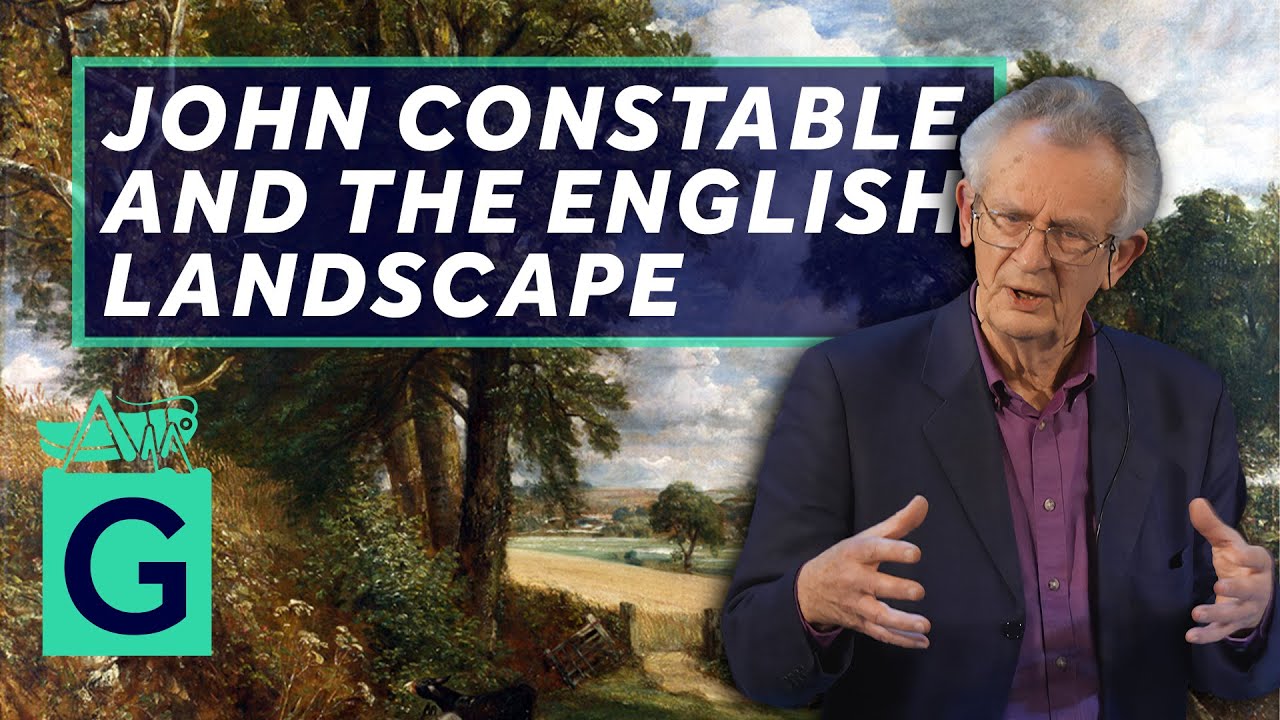
Constable's "The Cornfield": A Bicentenary Harvesting
Keywords
Summary
135 words
Critical Evaluation
Malcolm Andrews delivers a scholarly and engaging lecture that offers a comprehensive analysis of Constable’s ‘The Cornfield’ on its bicentenary. The lecture is well-structured, moving from the painting’s genesis to its artistic influences, reception, and contemporary relevance. Andrews demonstrates deep knowledge of Constable’s life and work, drawing on primary sources such as Constable’s letters and the biography by Charles Leslie. He provides insightful interpretations of the painting’s composition, symbolism, and emotional resonance, situating it within the broader context of landscape painting traditions and aesthetic theory. The discussion of the ‘picturesque’ and the balance between ‘il riposo’ and ‘irritation’ is particularly illuminating, showing how Constable synthesized classical and Dutch influences to create a uniquely English vision. The lecture also addresses the painting’s role in shaping national identity and its relevance to current environmental concerns, adding a contemporary dimension. While the lecture is primarily art historical, it touches on cultural and environmental themes, making it accessible to a general audience. The speaker’s expertise is evident, and the content is well-supported by references to specific artworks, letters, and historical documents. The lecture is balanced, acknowledging uncertainties and offering nuanced interpretations. The only minor weakness is that the lecture could have benefited from more visual analysis of the painting’s formal qualities, but overall it is a rich and thought-provoking exploration of a beloved masterpiece.
220 words
Title / Content Match
The title accurately reflects the content: a bicentenary lecture on Constable's painting, covering its history, reception, and contemporary relevance.
Quality & Reliability
8/10
Lecture by a recognized academic (Emeritus Professor) with deep expertise in Victorian and visual studies. The content is well-researched, drawing on primary sources (Constable's letters, biographies) and art historical scholarship. The lecture is balanced, acknowledging uncertainties and offering nuanced interpretations. The source is a reputable institution (Gresham College) with a long history of public lectures.
Chapters
- // Introduction & Bicentenary Context
- // The Birth of “The Cornfield” (1826)
- // What Has Made the Painting Endure?
- // Mapping the Landscape: Suffolk & Memory
- // Feeling, Nature, and Painting from Life
- // Artistic Influences: Dutch Masters & Claude
- // Repose vs. Irritation: Constable’s Visual Balance
- // Titles, Meaning & the Power of Noon
- // Critical Reception & Artistic Legacy
- // Constable and English National Identity
- // Tourism, Memory & “Constable Country”
- // Trust, Home, and the Emotional Life of the Painting
- // The Post-Nature World & Environmental Anxiety
- // A Fragile Balance: Nature, Humanity & Time
- // Conclusion: One Moment Preserved Forever
Cited Sources
- Gresham College website — General institution website
- Gresham College support page — Support page for Gresham College
- Lecture transcript and downloadable versions — Transcript and downloadable versions of the lecture
- Q&A session — Q&A session following the lecture
Concurring Sources
- Gresham College website — Institution hosting the lecture
Contribution & Novelties
The lecture offers a fresh perspective on Constable’s ‘The Cornfield’ by examining its bicentenary significance and its relevance to contemporary environmental anxieties. Andrews provides new insights into the painting’s composition, its balance between repose and irritation, and its role in constructing English national identity. He also traces the painting’s reception history, showing how it became an iconic image of English countryside.
Pour aller plus loin :
- John Constable (Wikipedia) — Overview of Constable’s life and work.
- The Cornfield (Wikipedia) — Specific article on the painting.
- Picturesque (Wikipedia) — Aesthetic concept discussed in the lecture.
- Claude Lorrain (Wikipedia) — Influence on Constable.
- Dutch Golden Age painting (Wikipedia) — Influence on Constable.
110 words
Radar Profile
The radar profile shows high scores in information quantity, quality, and reliability, with a moderate technical level. This indicates a well-researched and authoritative lecture that is accessible to a general audience.