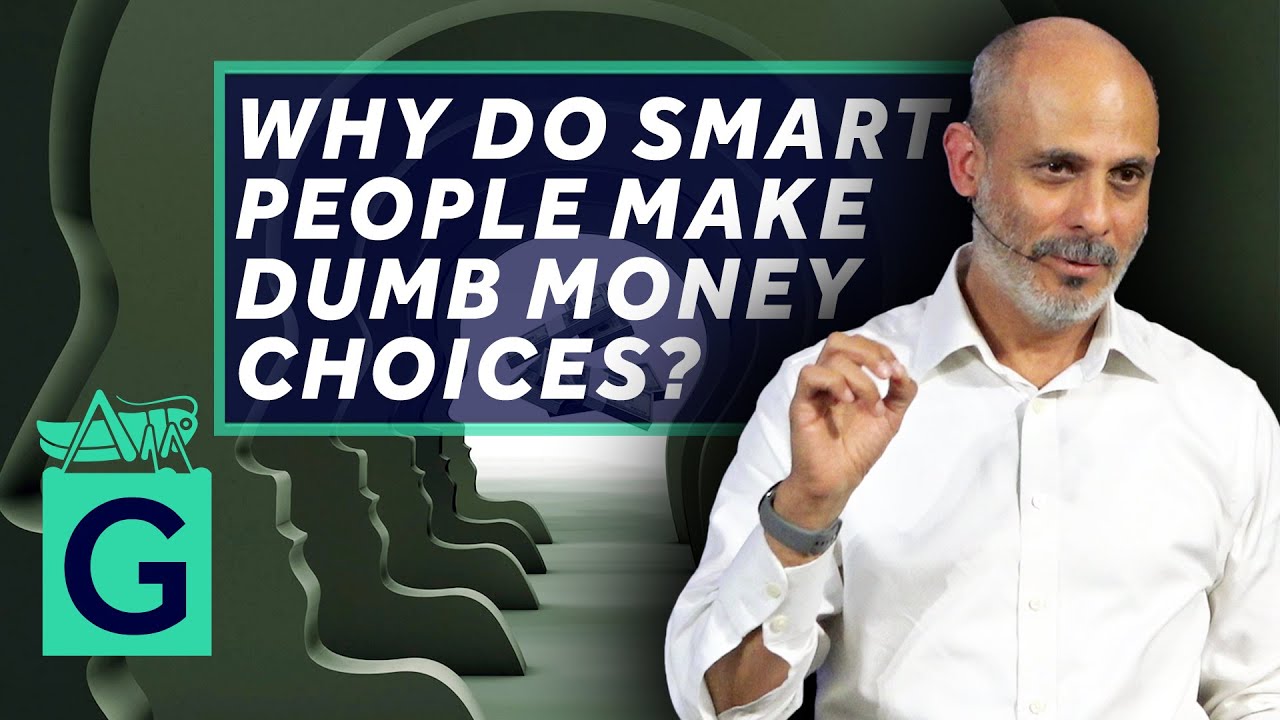
Outsmart the System: How Psychology Hacks Your Money Decisions
Keywords
Summary
115 words
Critical Evaluation
The lecture provides a solid overview of behavioral finance, drawing on well-established research and presenting practical applications. Professor Rau’s expertise is evident, and he effectively communicates complex concepts to a general audience. The argumentation is coherent, building from the identification of biases to the design of solutions. However, the lecture is not a rigorous scientific review; it simplifies some findings and does not systematically cite all sources. For instance, the discussion of loss aversion relies on the classic Kahneman and Tversky work but does not delve into nuances or recent debates. The quality of information is high, but the presentation is more persuasive than critical. The sources cited are primarily the speaker’s own work and classic studies, which are reliable but not exhaustive. The title accurately reflects the content, and the lecture stays on topic. Overall, it is a valuable educational resource, but viewers should seek additional sources for a more critical and comprehensive understanding.
155 words
Title / Content Match
The title accurately reflects the content, which focuses on how psychological biases affect financial decisions and how to design systems to overcome them.
Quality & Reliability
8/10
Lecture by a renowned professor of finance, based on established behavioral finance research, with references to key studies (Thaler & Benartzi, Madrian & Shea). However, it is a popular lecture without systematic citation of all claims, and some examples are simplified.
Chapters
- // Welcome & Behavioral Finance Overview
- // Why We Make Bad Financial Decisions
- // Choice Architecture: Designing Better Financial Systems
- // Save More Tomorrow: A Behavioral Approach to Saving
- // Defaults, Inertia & Loss Aversion in Finance
- // Pricing Tricks & Commitment Traps
- // Framing, Salience & Mental Accounting
- // Building Financial Slack & Emergency Planning
- // How Governments Use Behavioral Nudges
- // Complexity and Hidden Taxes
- // Making Stimulus Payments Work Better
- // When Behavioral Nudges Backfire
- // Nudges in the Workplace & Ethical Questions
- // Final Thoughts on Behavioral Finance
Cited Sources
- Gresham College Lecture Page — Official page for the lecture, including transcript and related resources.
- Q&A Session — Follow-up Q&A session for this lecture.
- Gresham College Website — Main website of Gresham College, offering free public lectures.
- Gresham College Donation Page — Page for supporting Gresham College's mission.
- Gresham College Bluesky Profile — Social media profile for Gresham College.
Concurring Sources
- Save More Tomorrow: Using Behavioral Economics to Increase Employee Saving — The original study by Thaler and Benartzi, which the lecture discusses in detail.
- The Power of Defaults in Retirement Savings — Madrian and Shea's research on automatic enrollment, supporting the lecture's points on defaults.
Contribution & Novelties
The lecture synthesizes well-known behavioral finance concepts into a coherent framework for practical application, emphasizing the role of choice architecture in overcoming biases. It offers a clear explanation of how defaults, inertia, and loss aversion can be harnessed to improve financial outcomes. The ‘Save More Tomorrow’ program is presented as a concrete example, and the lecture extends to government and workplace nudges, including potential pitfalls.
Pour aller plus loin :
- Save More Tomorrow: Using Behavioral Economics to Increase Employee Saving — The original paper by Thaler and Benartzi.
- The Power of Defaults in Retirement Savings — Madrian and Shea’s study on automatic enrollment.
- Nudge: Improving Decisions About Health, Wealth, and Happiness — Thaler and Sunstein’s influential book on nudging.
- Prospect Theory: An Analysis of Decision under Risk — Kahneman and Tversky’s foundational paper on loss aversion.
136 words
Radar Profile
The radar profile shows high scores in quantity and quality of information, with a moderate technical level, indicating a well-balanced lecture that is informative but accessible. The reliability score is also high, reflecting the speaker's expertise and use of established research.