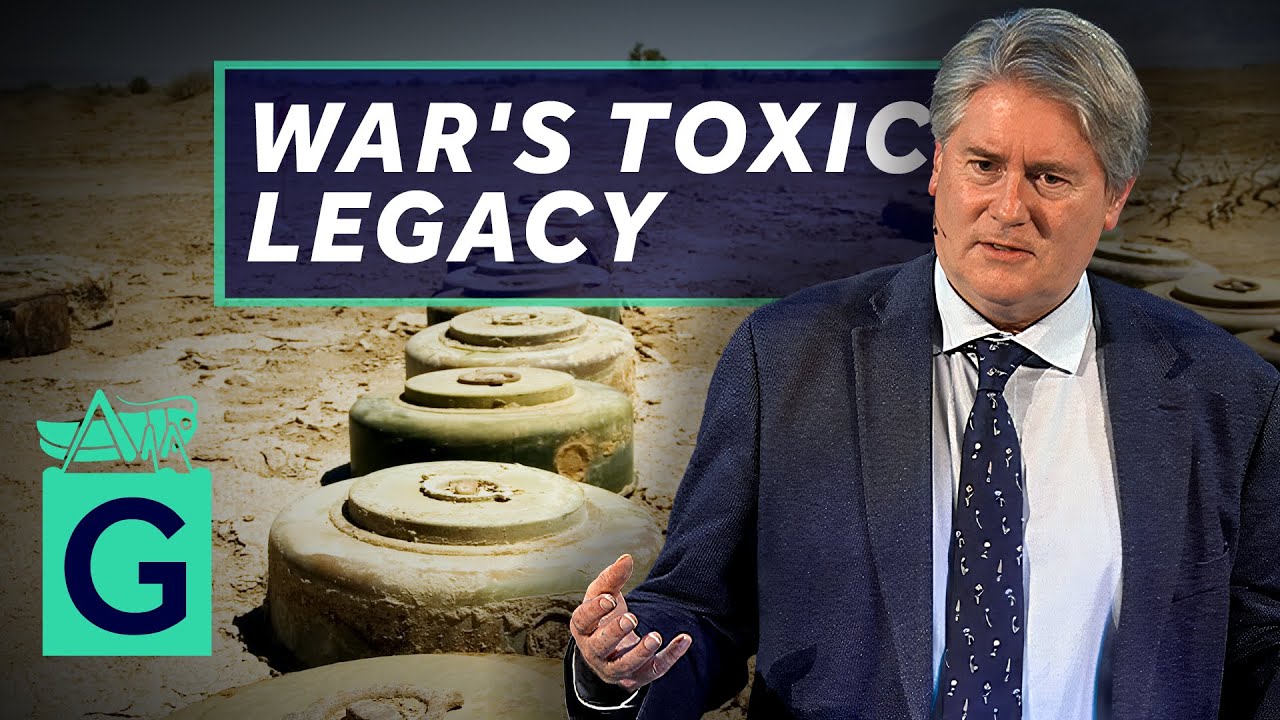
War's Toxic Legacy
Keywords
Summary
173 words
Critical Evaluation
The lecture provides a compelling and comprehensive overview of the often-neglected public health consequences of war. Mudway effectively uses the exposome framework to integrate various types of exposures, from chemical pollutants to psychosocial stress, and applies it to the extreme context of war zones. His emphasis on children and the developmental origins of disease is particularly strong, as he connects immediate malnutrition and toxic exposures to long-term health outcomes and even transgenerational effects via epigenetics. The use of case studies from Iraq, Syria, and Gaza grounds the discussion in real-world evidence, and he appropriately highlights the lack of comprehensive environmental health assessments in conflict zones. However, the lecture is largely based on expert opinion and synthesis of existing literature rather than presenting new original research. While he references specific reports and concepts, he does not always provide detailed citations, which limits the ability to verify all claims. The discussion of epigenetics is simplified, which is appropriate for a general audience but may oversimplify the complexity of the science. The lecture also touches on the military’s carbon footprint and the arms industry, but these are not explored in depth. Overall, the argument is well-structured and persuasive, but the lack of specific references and the reliance on anecdotal evidence in some parts slightly reduce its scientific rigor. The title accurately reflects the content, and the lecture delivers on its promise to explore the toxic legacy of war.
235 words
Title / Content Match
The title accurately reflects the content, which focuses on the long-term health and environmental consequences of war.
Quality & Reliability
8/10
The lecture is delivered by an expert in environmental toxicology and public health, referencing established concepts (exposome, DOHaD, epigenetics) and specific case studies (Iraq, Syria, Gaza). While it is an opinion-based lecture, it draws on scientific literature and reports, though specific citations are not always provided.
Chapters
- // Welcome & lecture overview: War’s Toxic Legacy
- // Gaza ceasefire footage (Jan 25, 2025) & what we’re missing
- // The overlooked impact on civilians & the myth of neat war timelines
- // Urban destruction as a sea of toxins: air, soil, water
- // Lessons from Iraq, Syria & Kuwait oil fires
- // Public health lens: the exposome in war zones
- // Global conflicts 1989–2024: why “wars” are rising
- // Counting deaths since 1989 & post-9/11 indirect mortality
- // Deadliest theaters: Syria, Ethiopia, Afghanistan, Ukraine—plus ignored wars
- // The arms industry & the military carbon footprint
- // Studying extreme exposures in the most vulnerable (children)
- // Direct vs indirect harms: trauma, SGBV, displacement, disease
- // Broken systems: sanitation, immunization, and medical care collapse
- // Child malnutrition in conflict: wasting & stunting (Iraq, Yemen, Somalia, Syria)
- // Lifelong health trajectories set early: vulnerability that lasts
- // Gaza environmental assessment (Apr–May 2024): scale of rubble
- // Dust, heavy metals & POPs: exposures from pulverized buildings
- // Fires & smoke plumes: an unrecognized air-quality crisis
- // Destroyed infrastructure: solar park, greenhouses, and tree cover loss
- // Beyond body counts: the true long-term public health cost
- // Law & norms: protecting the environment in war (UN 2022 principles)
- // Aftermath obligations: assess, quantify, remediate (who pays?)
- // Why dust matters: Hiroshima/Nagasaki’s long-lag health effects
- // Iraq & Syria case studies: bombardment, depleted uranium & burn pits
- // Birth defects evidence & biomarkers (lead, mercury, uranium)
- // Pediatric cancer spikes & infant mortality signals
- // DOHaD: developmental origins of disease in conflict settings
- // Three-generation exposure: epigenetics made simple
- // Trauma as an exposure: October 7 survivors & mental health data
- // Biology of stress: HPA axis, FKBP5, and intergenerational effects
- // Takeaways: war’s multigenerational health legacy
- // Closing reflections & Jimmy Carter’s warning
Cited Sources
- Gresham College — Main website of the institution hosting the lecture.
- Support Gresham College — Page for supporting the college.
- Watch Now — General page for Gresham College lectures.
- War's Toxic Legacy - Lecture Page — Specific page for this lecture.
- Related Lecture — A related video, possibly another lecture in the series.
Concurring Sources
- Gresham College — The institution hosting the lecture, which is a reputable academic body.
Contribution & Novelties
The lecture provides a novel synthesis of existing knowledge on the environmental and health impacts of war, framing it through the exposome and DOHaD concepts. It emphasizes the multigenerational consequences of war, which are often overlooked. The call for environmental remediation and the integration of public health into post-conflict planning is a valuable contribution.
Pour aller plus loin :
- Exposome — The concept of the exposome is central to the lecture’s framework.
- Developmental Origins of Health and Disease (DOHaD) — Key concept for understanding long-term effects of early-life exposures.
- Epigenetics — The lecture discusses transgenerational epigenetic effects.
- Depleted uranium — Mentioned in the context of Iraq and Syria.
- Burn pits — Discussed as a source of toxic exposure.
118 words
Radar Profile
The radar profile shows high scores in quantity of information, quality of information, and reliability, with a slightly lower but still strong score in technical level. This indicates a well-balanced lecture that is both informative and scientifically sound, though it may require some background knowledge to fully appreciate the technical aspects.