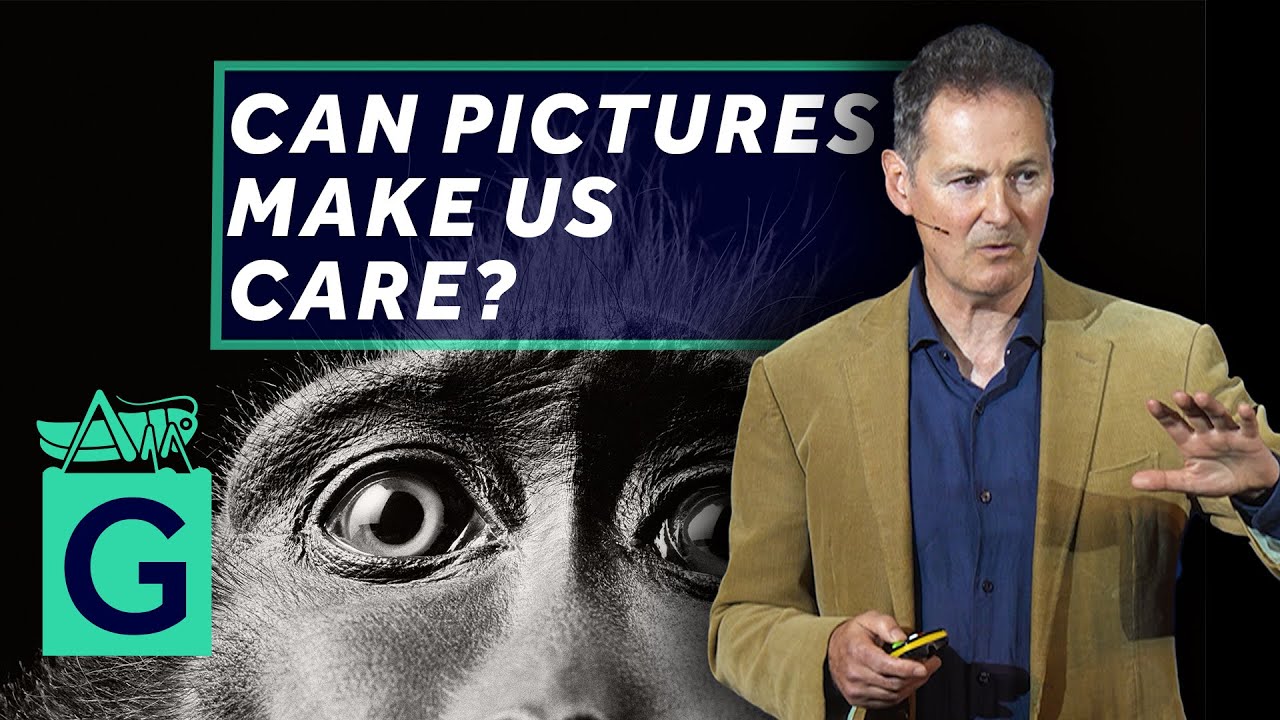
Evoking Empathy through Animal Portraiture - Tim Flach
Keywords
Summary
179 words
Critical Evaluation
The lecture offers a compelling and insightful perspective on the intersection of art, science, and conservation. Tim Flach’s expertise as a photographer is evident, and his collaboration with social scientists lends credibility to his claims. He references specific studies, such as the work by Linda Kalof and Cameron Whitley, which demonstrated that anthropomorphic portraits on black backgrounds evoke higher empathy than traditional wildlife images. This evidence-based approach strengthens the argument that visual storytelling can be a powerful tool for conservation. However, the lecture is primarily an expert opinion, and while Flach cites research, he does not provide detailed methodology or statistical results, which limits the scientific rigor. The discussion of visual perception, including saccades and the left-side bias, is fascinating and well-illustrated with examples, but it is presented in a simplified manner that may not fully capture the complexity of the research. The adéquation between title and content is strong, as the lecture consistently focuses on evoking empathy through animal portraiture. The inclusion of AI and deepfakes adds a timely and relevant dimension, though it is not explored in depth. Overall, the lecture is informative and thought-provoking, but it would benefit from more explicit citations and a more critical examination of the limitations of the studies mentioned. The public comments, if any, were not provided, so no analysis of audience reception is included.
223 words
Title / Content Match
The title accurately reflects the content, as the lecture focuses on how animal portraiture can evoke empathy and promote conservation.
Quality & Reliability
8/10
The lecture is delivered by a renowned photographer with collaborations with social scientists, referencing specific studies (e.g., Kalof & Whitley) and concepts (e.g., Goldilocks theory, saccades). The content is well-structured and grounded in research, though it is primarily an expert opinion based on personal experience and selected studies.
Chapters
- | Introduction – Can Photography Make Us Care About Nature?
- | Storytelling, Symbolism, and Empathy in Wildlife Photography
- | The Science of Seeing – How Perception Shapes Emotion
- | The Power of Cuteness and Emotional Connection
- | Images That Changed How We See the World
- | The Last Northern White Rhino – The Cost of Extinction
- | AI, Deepfakes, and the Future of Authentic Imagery
- | Conclusion – Making Nature Personal Again
Cited Sources
- Gresham College - Animal Portraiture Lecture Page — Official page for the lecture, providing additional resources and information.
- Q&A Session — Follow-up Q&A session related to the lecture.
- Gresham College Website — General website of Gresham College, hosting lectures and educational content.
Concurring Sources
- Gresham College - Animal Portraiture Lecture Page — Official page for the lecture, providing additional resources and information.
Contribution & Novelties
The lecture provides a unique perspective on using animal portraiture to evoke empathy and drive conservation, backed by collaborations with social scientists. It offers practical insights into how photographers can manipulate visual perception (e.g., left-side bias) to enhance emotional engagement. The discussion on AI and deepfakes adds a contemporary dimension to the authenticity of wildlife imagery.
Pour aller plus loin :
- Anil Seth - Controlled Hallucinations — Neuroscientist whose concept of perception as controlled hallucination is referenced.
- Linda Kalof - Washington State University — Sociologist whose research on animal images and empathy is cited.
- Saccade - Wikipedia — Explanation of rapid eye movements discussed in the lecture.
107 words
Radar Profile
The radar profile shows high scores in quantity and quality of information, with moderate technical level and high reliability. This indicates a well-informed and credible lecture that is accessible to a general audience while still providing depth.