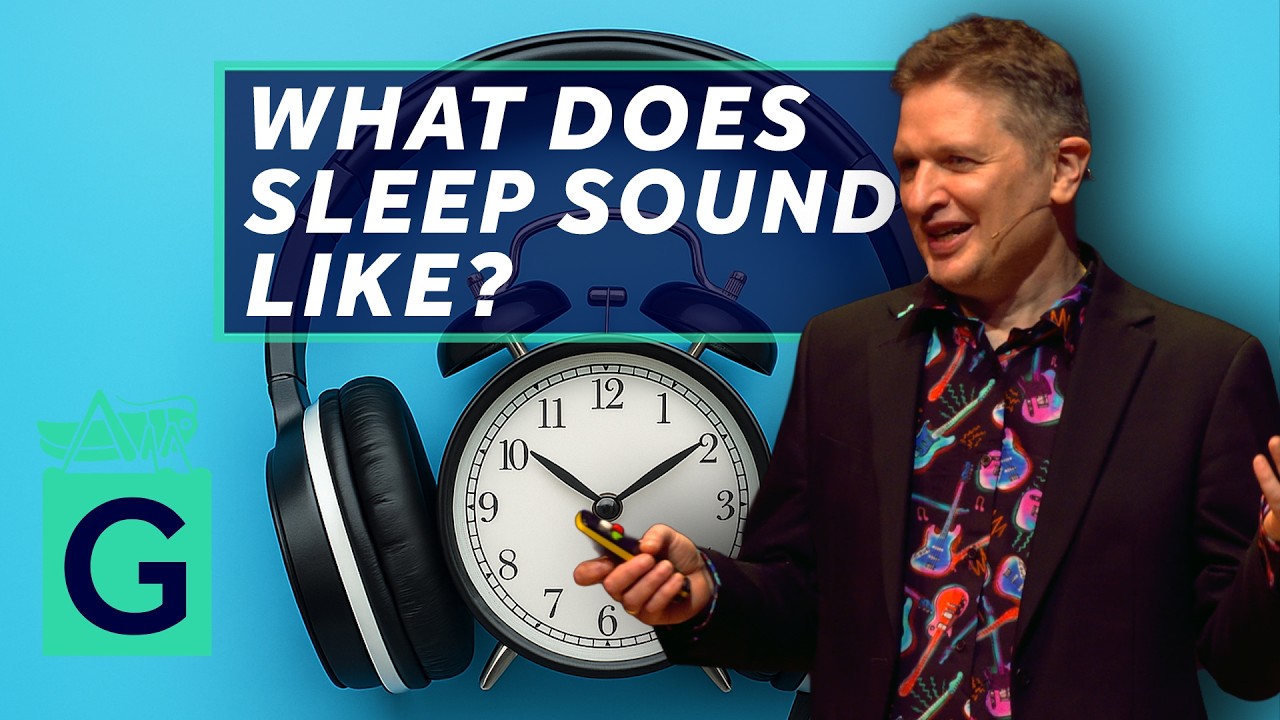
Music of Sleep and Dreams
Keywords
Summary
201 words
Critical Evaluation
Value of the Information & Strength of the Argument
The lecture provides a rich synthesis of cultural, historical, and scientific perspectives on the relationship between music and sleep. The argumentation is well-structured, moving from mythological and historical examples to contemporary scientific applications. The speaker’s personal project of sonifying sleep data adds an original and compelling dimension, demonstrating a practical application of the concepts discussed. The use of musical examples and live demonstrations strengthens the argumentation, making abstract concepts tangible. The discussion of lullabies from various cultures is particularly valuable, highlighting the universal and culturally specific aspects of this musical form. The lecture successfully argues that music and sleep are deeply intertwined, both in our conscious and unconscious lives.
Scientific Rigor, Source Quality, Title Accuracy
The lecture demonstrates a high level of scholarly rigor, drawing on historical anecdotes, musical analysis, and scientific research. The speaker, a professor of music, provides specific examples and references, such as the ancient clay tablet with a lullaby and the work of Tartini and McCartney. However, the lecture lacks formal citations to peer-reviewed literature, relying more on anecdotal evidence and personal experience. The title accurately reflects the content, which comprehensively explores the relationship between music and sleep. The lecture is well-structured and the content is consistent with the title. The speaker’s expertise is evident, and the lecture is delivered with clarity and enthusiasm.
227 words
Title / Content Match
The title accurately reflects the content, which explores the relationship between music and sleep, including lullabies, dream-inspired compositions, and the sonification of sleep data.
Quality & Reliability
8/10
Lecture by a professor of music, combining historical, cultural, and scientific perspectives. The speaker cites specific examples (Tartini, McCartney, Hendrix) and describes a personal scientific project (sonification of sleep data). The content is well-structured and plausible, but lacks direct citations to peer-reviewed sources.
Chapters
- // Why Are Sleep & Music So Connected?
- // Ancient Myths Linking Music and Sleep
- // How Composers Create Dreamlike Music
- // Debussy's Secret to Dreamy Sound
- // The Hidden Power of Lullabies
- // What Lullabies Reveal About Culture
- // Does Music Exist While We Sleep?
- // Famous Songs Inspired by Dreams
- // Can We Recover Music From Dreams?
- // Turning Sleep Into Music with Science
- // Sleep, Creativity & Mental Health
- // Music as a Tool for Healing
- // Why Music Gives Us Hope
- // Final Thoughts
Cited Sources
- Gresham College lecture page — Official page for the lecture, including transcript.
- Q&A session — Follow-up Q&A session related to the lecture.
Concurring Sources
- Gresham College — Institution hosting the lecture, known for public education.
Contribution & Novelties
The lecture offers a unique interdisciplinary perspective on the connection between music and sleep, blending musicology, psychology, and neuroscience. The concept of ‘autocreativity’ and the ‘Dream Music Retrieval Agency’ are original ideas that bridge artistic creation and scientific inquiry. The sonification of sleep data is a novel approach that could have applications in both music and medicine.
Pour aller plus loin :
- Lullaby — Provides background on the universal and cultural aspects of lullabies.
- Polysomnography — Explains the sleep study technique used in the sonification project.
- Hypnagogia — The transitional state between wakefulness and sleep, relevant to dream-inspired creativity.
99 words
Radar Profile
The radar profile shows high scores in information quantity and quality, reflecting the lecture's rich content and scholarly approach. The technical level is moderate, making it accessible to a general audience while still providing depth. The overall reliability is strong, though the lack of formal citations slightly lowers the score.