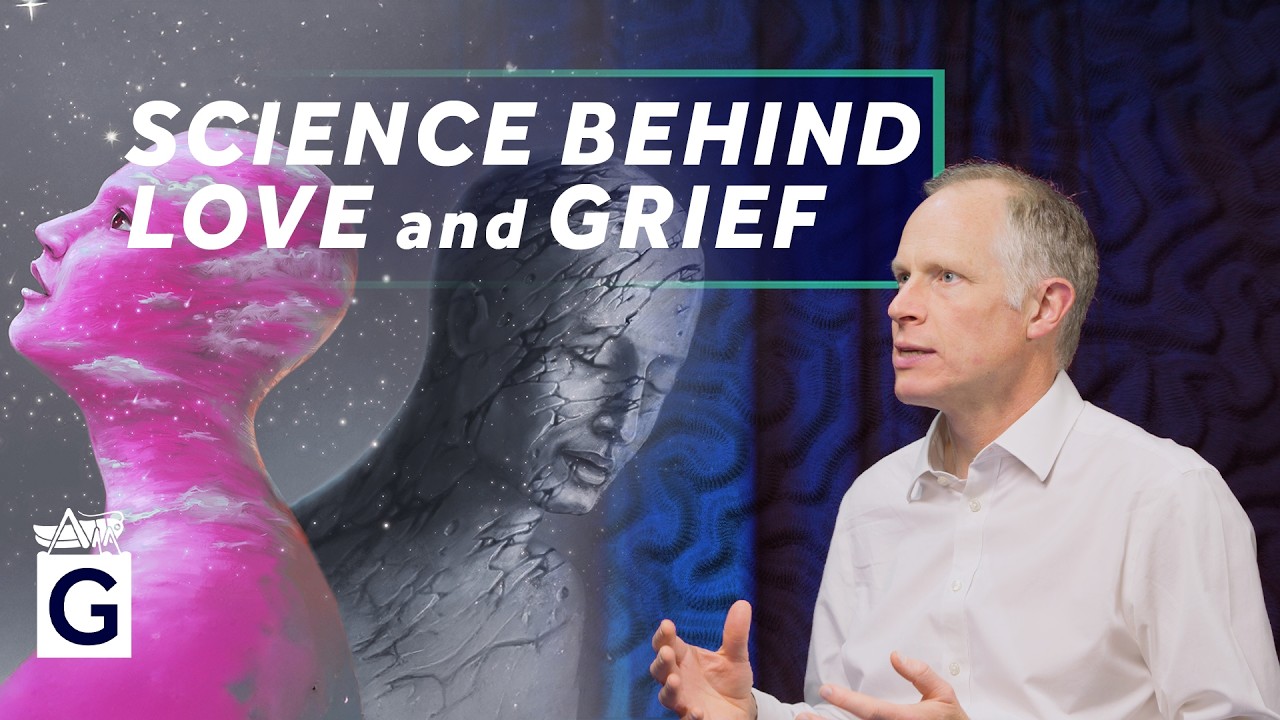
Science behind Love and Grief - Podcast with Robin May
Keywords
Summary
187 words
Critical Evaluation
The podcast provides a comprehensive and accessible overview of the scientific perspectives on grief and love, grounded in evolutionary biology and neuroscience. Professor May demonstrates strong command of the subject, weaving together evidence from animal studies, neuroimaging, and psychological theories. The discussion is well-structured, moving logically from defining grief to its evolutionary and neurological underpinnings, then to love and its parallels with grief. The use of specific brain regions like the nucleus accumbens and amygdala adds scientific credibility, and the references to attachment theory and the concept of love as addiction offer depth. However, the informal podcast format means that specific studies and sources are not cited, which limits the ability to verify claims. Some topics, such as the evolutionary reasons for grief, are presented with plausible explanations but without rigorous evidence. The host’s questions are engaging and help clarify complex ideas, but at times the conversation remains at a high level without delving into methodological details. The discussion of ritual burial is intriguing but speculative, and the distinction between normal and prolonged grief is acknowledged as subjective. Overall, the content is scientifically sound and thought-provoking, though it would benefit from more explicit references to research. The title accurately reflects the content, and the podcast successfully bridges scientific concepts with everyday experiences.
212 words
Title / Content Match
The title accurately reflects the content, which explores the scientific underpinnings of love and grief.
Quality & Reliability
8/10
The podcast features Professor Robin May, an infectious disease expert, discussing grief and love from evolutionary, neurological, and psychological perspectives. The content is well-structured, references scientific concepts (nucleus accumbens, amygdala, attachment theory), and includes historical and cross-species evidence. However, it is an informal podcast without formal citations, and some claims are presented without specific references.
Chapters
- | Introduction: The Science of Grief and Love
- | Meet Professor Robin May
- | What Is Grief? Defining the Emotion
- | Why Grief Is Different from Ordinary Sadness
- | Can You Understand Grief Without Experiencing It?
- | The Evolutionary Reason We Grieve
- | Why Grief Persists Into Adulthood
- | Do Other Animals Grieve?
- | Ritual Burial: Grief 78,000 Years Ago
- | What Happens in the Brain During Grief
- | Prolonged Grief: The Nucleus Accumbens
- | The Physical Toll of Grief on the Body
- | People Who Don't Show Grief — Resilience or Something Else?
- | How to Support Someone Who Is Grieving
- | Tamagotchis, Chatbots & Grieving AI Companions
- | Attachment Theory and How We Grieve
- | Transitioning to Love: What Are the First Signs?
- | Butterflies, Heartbeats & the Stress of Falling in Love
- | Love and the Brain: Reward Systems and the Amygdala
- | The Honeymoon Phase: Why It Fades After 12–18 Months
- | From Infatuation to Companionship: What Changes in the Brain
- | Is Romantic Love Just Repurposed Parental Attachment?
- | Love as Addiction — Useful Framing or Reductive?
- | Is Love Just Brain Chemicals — Or Something More?
- | Audience Q&A: Anxiety, Autism, and Love
- | Is Love an Attachment System Repurposed?
- | Preview: The Next Lecture on Manipulating Emotions
Cited Sources
- Gresham College — Official website of Gresham College, the institution hosting the podcast.
- Support Gresham College — Page for supporting Gresham College's educational initiatives.
- Related Video 1 — Likely a related lecture or podcast episode mentioned in the description.
- Related Video 2 — Another related video from the channel, possibly on a similar topic.
Concurring Sources
- Gresham College — The institution hosting the podcast, providing credibility and context.
Contribution & Novelties
The podcast offers a unique synthesis of evolutionary biology, neuroscience, and psychology to explain grief and love, making complex scientific concepts accessible to a general audience. It highlights the role of the nucleus accumbens in prolonged grief and draws parallels between love and addiction, providing a fresh perspective on emotional experiences.
Pour aller plus loin :
- Attachment Theory — Foundational framework for understanding emotional bonds and grief.
- Nucleus Accumbens — Brain region involved in reward and motivation, relevant to prolonged grief.
- Prairie Voles and Pair Bonding — Animal model for studying attachment and love, mentioned in the podcast.
98 words
Radar Profile
The radar profile shows high scores in information quantity, quality, and technical level, with a slightly lower but still strong reliability score. This indicates a well-rounded and informative podcast that is both scientifically credible and accessible.