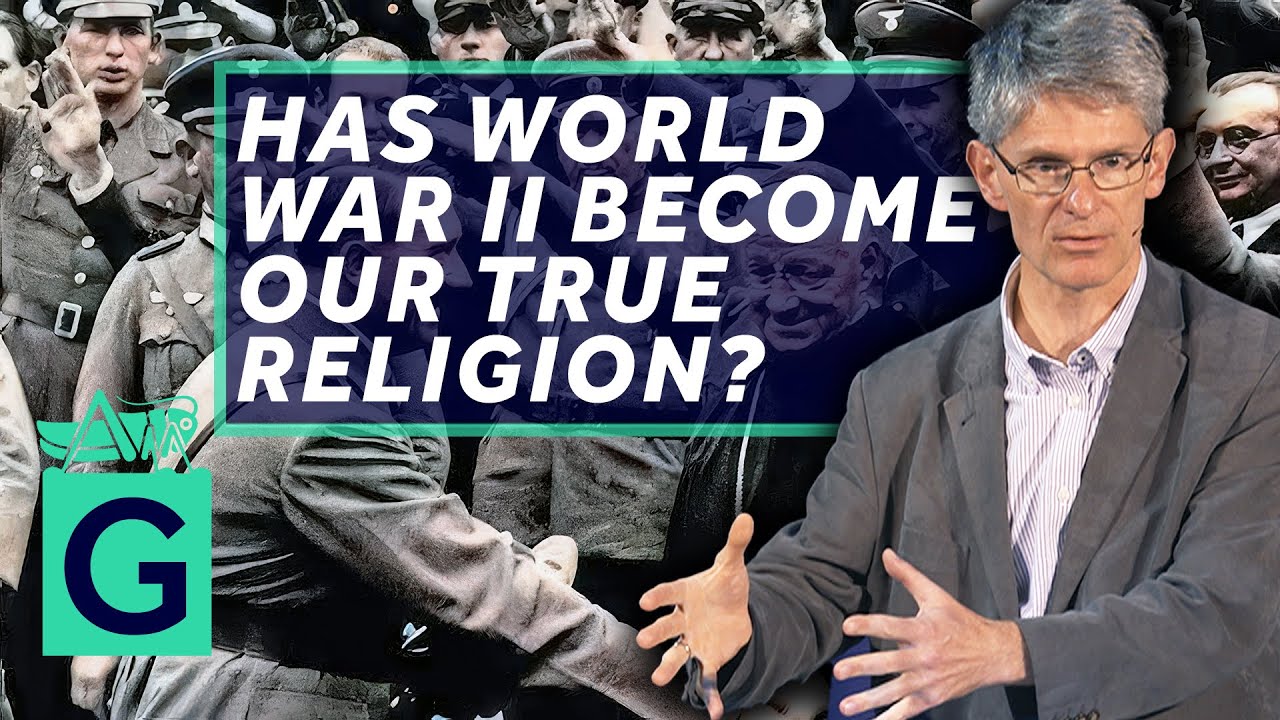
Hitler, Jesus & How to Win a Culture War
Keywords
Summary
162 words
Critical Evaluation
The lecture offers a compelling and erudite analysis of the moral transformation in Western societies, arguing that the shift from Jesus to Hitler as the central moral reference point has profound implications for our culture wars. Ryrie’s argument is well-supported by historical examples, such as the failure of Christian churches during World War II and the subsequent rise of secular morality. He effectively uses the story of the Four Chaplains to illustrate the emotional power of wartime narratives, and he draws on Bonhoeffer’s writings to show the intellectual crisis within Christianity. The lecture is intellectually rigorous, with a clear structure and a nuanced understanding of historical processes. However, it is primarily an interpretive essay rather than a systematic study, and some claims could benefit from more explicit citations. The speaker’s perspective is informed by his expertise in religious history, but he does not engage deeply with counterarguments or alternative interpretations. The adéquation between title and content is strong, as the lecture directly addresses the themes of Hitler, Jesus, and culture wars. Overall, the lecture is thought-provoking and offers valuable insights into the moral foundations of contemporary society, though it may not satisfy those seeking a more empirical or multidisciplinary approach.
200 words
Title / Content Match
The title accurately reflects the content, which explores the shift from Jesus to Hitler as the central moral reference in Western culture and its implications for contemporary culture wars.
Quality & Reliability
8/10
The lecture is delivered by a recognized historian (Professor of the History of Christianity at Durham University, Fellow of the British Academy) and is based on his book. The arguments are well-structured, historically grounded, and supported by specific examples. However, the lecture is an interpretive essay rather than a peer-reviewed study, and some claims are presented without detailed citations.
Chapters
- // Introduction – The Culture of War
- // From Jesus to Hitler: How Our Moral Compass Changed
- // Christianity’s Failure and the Rise of Secular Morality
- // Losing Faith: Bonhoeffer and the 1960s Crisis of Religion
- // World War II as Our New Sacred Story
- // The Myth of Evil: From Nazis to Hollywood Villains
- // Living in the Age of Hitler
- // The Collapse of the Postwar Moral Consensus
- // Escaping the Culture War
- // Finding Hope Beyond Hate
Cited Sources
- Gresham College Lecture Page — Official page for the lecture, providing additional details and resources.
- Q&A Session — The Q&A session following the lecture, offering further discussion.
- Gresham College Bluesky — Gresham College's social media profile for updates and related content.
Concurring Sources
- The Greatest Story Ever Told (film) — The film mentioned in the lecture as a symbol of the fading cultural power of the Jesus story.
Dissenting Sources
Contribution & Novelties
This lecture provides a fresh historical perspective on the moral foundations of Western culture, arguing that the shift from a positive exemplar (Jesus) to a negative one (Hitler) has shaped our understanding of evil and contributed to contemporary culture wars. It offers a nuanced analysis of the decline of Christianity’s moral authority and the rise of secular morality, drawing on underappreciated historical figures like Bonhoeffer. The lecture challenges the assumption that we live in a post-religious age, suggesting that the myth of World War II functions as a secular religion.
Pour aller plus loin :
- Dietrich Bonhoeffer — Central figure in the lecture, his theology and resistance to Nazism are key to understanding the crisis of Christianity.
- The Four Chaplains — The story used to illustrate the moral power of WWII narratives.
- Culture war — The contemporary phenomenon the lecture seeks to explain.
143 words
Radar Profile
The radar profile shows high scores in information quantity and quality, reflecting the lecture's rich historical content and scholarly depth. The technical level is moderate, making it accessible to a general audience while still offering intellectual substance. The overall reliability is high, given the speaker's expertise and the use of historical sources.
💬 The comments are predominantly positive, with many viewers expressing appreciation for the lecture's depth and thought-provoking nature. A few raise critical points about the speaker's centrism or the role of capitalism, but the overall tone is respectful and engaged.