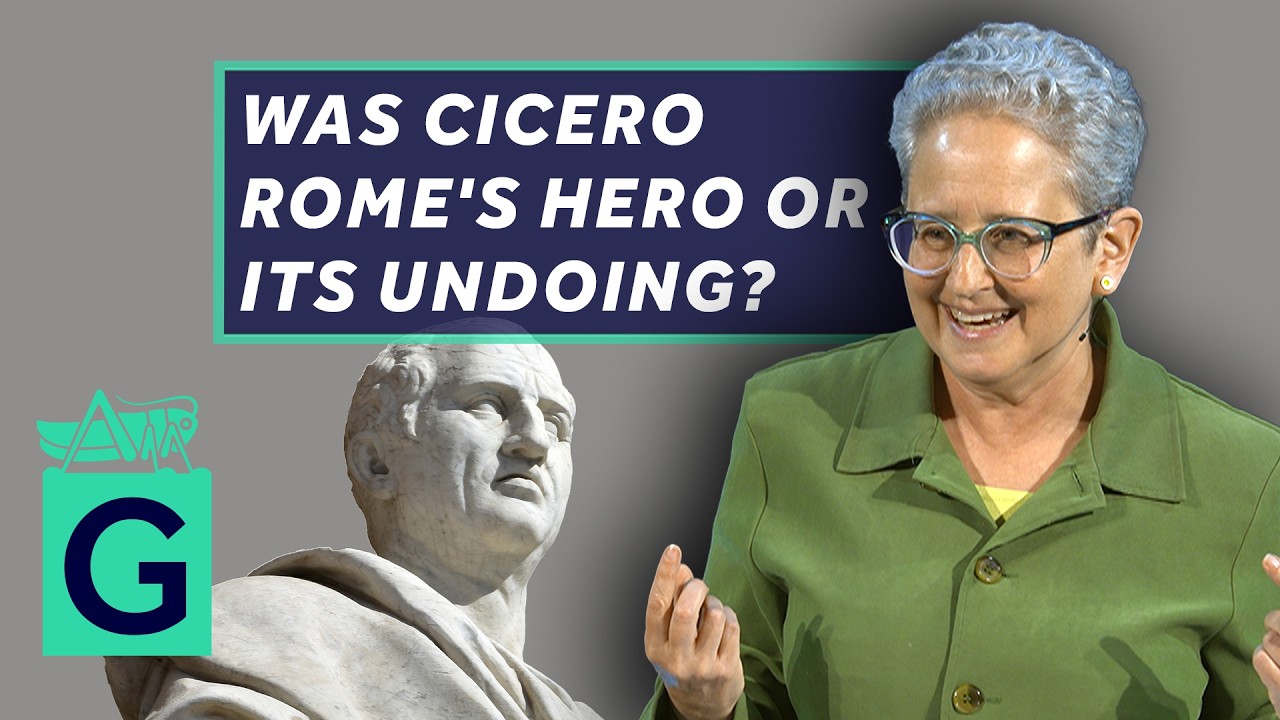
Cicero In and On Political Crises - Melissa Lane
Keywords
Summary
140 words
Critical Evaluation
The lecture is a masterful synthesis of historical narrative and philosophical analysis. Professor Lane demonstrates deep expertise, weaving together Cicero’s letters, speeches, and philosophical works to illuminate his responses to political crises. The structure around five crises is effective, providing a clear framework for understanding Cicero’s career and thought. Lane’s argument that Cicero was both a defender of the republic and complicit in its decline is nuanced and well-supported. She engages with scholarly debates, such as the interpretation of the Gracchi and the nature of Caesar’s tyranny, without oversimplifying. The use of primary sources, including Cicero’s letters and De Officiis, adds rigor. However, the lecture assumes some familiarity with Roman history, and the pace is brisk, covering a lot of ground in 43 minutes. The Q&A session is referenced but not included, which might have provided further depth. Overall, the lecture is intellectually stimulating and offers a fresh perspective on Cicero’s relevance to contemporary political crises. The title accurately reflects the content, and the lecture is accessible to a general audience while still being academically rigorous.
176 words
Title / Content Match
The title accurately reflects the content, which examines Cicero's life and writings in relation to political crises.
Quality & Reliability
9/10
Lecture by a distinguished professor of politics with expertise in ancient philosophy; content is well-structured, historically grounded, and draws on scholarly sources, though not peer-reviewed in this format.
Chapters
- // Introduction: Meet Professor Melissa Lane
- // Cicero's Dilemma: A Letter on Tyranny
- // Who Was Cicero? Rise of a "New Man"
- // Philosopher and Statesman of Rome
- // Five Crises That Defined Cicero's Life
- // Crisis One: The Gracchi and Land Reform
- // Crisis Two: Sulla's Dictatorship and Civil War
- // Crisis Three: The Catiline Conspiracy
- // Crisis Four: Caesar's Tyranny and Assassination
- // Crisis Five: Cicero's War Against Mark Antony
- // Conclusion: Hero of the Republic, or Its Undoing?
Cited Sources
- Gresham College - Cicero lecture page — Official page for the lecture, likely containing additional resources and transcript.
- Q&A session — Follow-up Q&A session with Melissa Lane, providing further discussion.
- Gresham College website — General website of Gresham College, hosting lectures and resources.
- Gresham College Bluesky — Social media profile for Gresham College, possibly sharing related content.
Concurring Sources
- Gresham College - Cicero lecture page — Official page for the lecture, likely containing additional resources and transcript.
Contribution & Novelties
The lecture provides a comprehensive overview of Cicero’s engagement with political crises, synthesizing his philosophical and political activities. It offers a nuanced interpretation of Cicero’s role in the late Republic, highlighting his attempts to navigate between factions and his ultimate failure to preserve the Republic. The lecture also connects ancient crises to modern concerns about political instability and tyranny.
Pour aller plus loin :
- Cicero on Wikipedia — Overview of Cicero’s life and works.
- Roman Republic on Wikipedia — Background on the political structure and crises of the Republic.
- De Officiis on Wikipedia — Cicero’s influential work on moral duties, referenced in the lecture.
104 words
Radar Profile
The radar profile shows high scores across all dimensions, indicating a well-rounded and reliable lecture. The strongest aspects are the quantity and quality of information, with slightly lower technicality, reflecting its accessibility to a general audience.