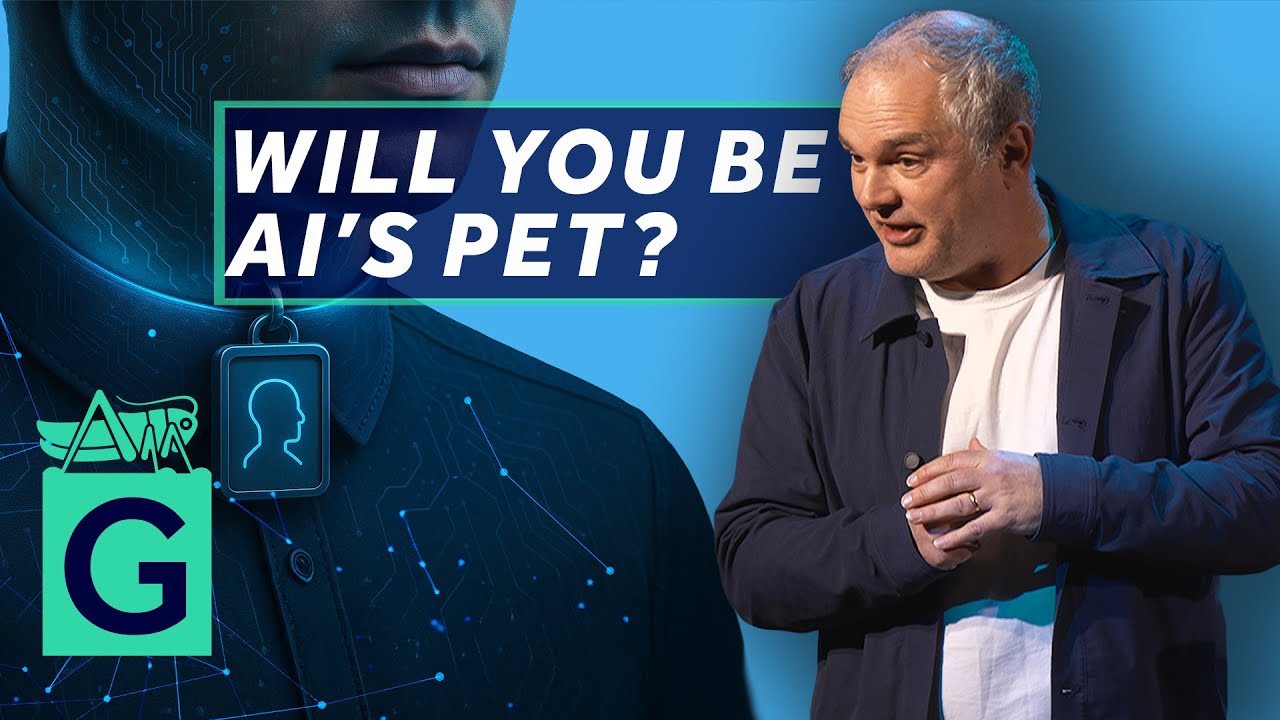
Will You Be AI's Pet? - Matt Jones
Keywords
Summary
215 words
Critical Evaluation
The lecture offers a thought-provoking and accessible exploration of the ethical and societal implications of AI, using the pet metaphor to frame potential futures. Jones’s argumentation is coherent and well-structured, moving from concrete examples (dogs, Tamagotchi) to abstract concepts (agency, domestication). He effectively highlights the trade-offs between comfort and freedom, and raises important questions about the design of AI systems. However, the lecture is primarily speculative and philosophical, lacking empirical evidence or specific citations to support its claims. While Jones references concepts like ‘stochastic parrot’ and ‘animal-computer interaction’, he does not provide sources or data, which limits the scientific rigor. The discussion of ‘Dog AI’ and ‘Cat AI’ is engaging but remains at a high level, without delving into technical details or case studies. The lecture’s strength lies in its ability to provoke reflection rather than in presenting new research. The title accurately reflects the content, and the lecture is well-suited for a general audience interested in AI ethics. The lack of concrete sources and the reliance on analogies may be seen as a weakness for those seeking a more evidence-based analysis. Overall, the lecture is valuable for its conceptual framework and ethical considerations, but it should be complemented with more rigorous sources for a deeper understanding.
207 words
Title / Content Match
The title accurately reflects the central question of the lecture, which explores the potential for humans to become domesticated by AI, using the pet analogy throughout.
Quality & Reliability
8/10
The lecture is delivered by a professor at Gresham College, a reputable institution. It draws on analogies from animal domestication and current AI developments, but it is primarily a philosophical and speculative talk rather than a presentation of new empirical research. The arguments are coherent and well-structured, but the claims are not backed by specific citations or data. The lecture is part of a series, indicating a scholarly context.
Chapters
- // Welcome + series recap: how AI might change us
- // The paradox: AI becoming human vs humans becoming AI
- // From Tamagotchi to “emotional AI” digital pets (2025)
- // Big question: will we become AI’s pets?
- // Dogs & domestication: trading freedom for comfort
- // Pet spectrum as AI futures: cat, reptile, bird, fish
- // “Dog AI”: personalized care, health monitoring, convenience
- // The downside: quantifying life into data & dashboards
- // Gamified nudges: Duolingo-style engagement and control
- // “Cat AI” = meaningful exit; “reptile AI” = designed choices
- // “Bird AI” = creativity behind bars; “fish AI” = fragile perfection
- // Who wants to be a wolf? Reclaiming wild agency
- // AI taming across life: babies, work, and behavior monitoring
- // Aging & smart homes: protection vs empowerment
- // A better model: in-home sensors for reflection, not surveillance
- // Generative AI reports: benefits, mistakes, and misread lives
- // Where do LLMs fit? Rethinking what “intelligence” means
- // Ladder vs landscape: slime mold, octopus, crows, dogs
- // “Stochastic parrot”: why LLMs mimic without understanding
- // “Crow AI” in practice: narrow tools that do one thing well
- // Animal-computer interaction: designing tech to empower beings
- // Rewilding AI: principles for humane, diverse, agency-first design
- // Final provocation: pet or wilder?
Cited Sources
- Gresham College — Official website of the institution hosting the lecture.
- Support Gresham College — Page for supporting the college's educational activities.
- Will You Be AI's Pet? - Lecture Page — Dedicated page for this lecture, likely containing additional resources.
- Q&A Session — Link to the Q&A session following the lecture.
Concurring Sources
- Gresham College — The institution hosting the lecture, known for public education.
Contribution & Novelties
The lecture offers a novel framework for thinking about human-AI relationships by drawing an analogy with the spectrum of pets, from dogs to fish. It challenges the binary view of AI as either subjugating or liberating, and instead presents a range of possible futures based on the degree of agency and care. The concept of ‘rewilding AI’ is a fresh contribution, advocating for designs that preserve human autonomy and diversity. The lecture also integrates ideas from animal-computer interaction, which is an emerging field.
Pour aller plus loin :
- Animal-Computer Interaction (ACI) — A field that studies the design of technology for animals, directly relevant to the lecture’s discussion of empowering beings.
- Stochastic parrot — A term coined by Emily Bender et al. to critique LLMs, referenced in the lecture.
- Domestication of the dog — Provides background on the historical process of domestication, which the lecture uses as a metaphor.
149 words
Radar Profile
The radar profile shows high scores in quality of information and reliability, reflecting the lecturer's expertise and the institutional backing. The quantity of information is moderate, and the technical level is relatively low, indicating a focus on conceptual rather than technical content. This profile suggests a well-argued but non-technical lecture.