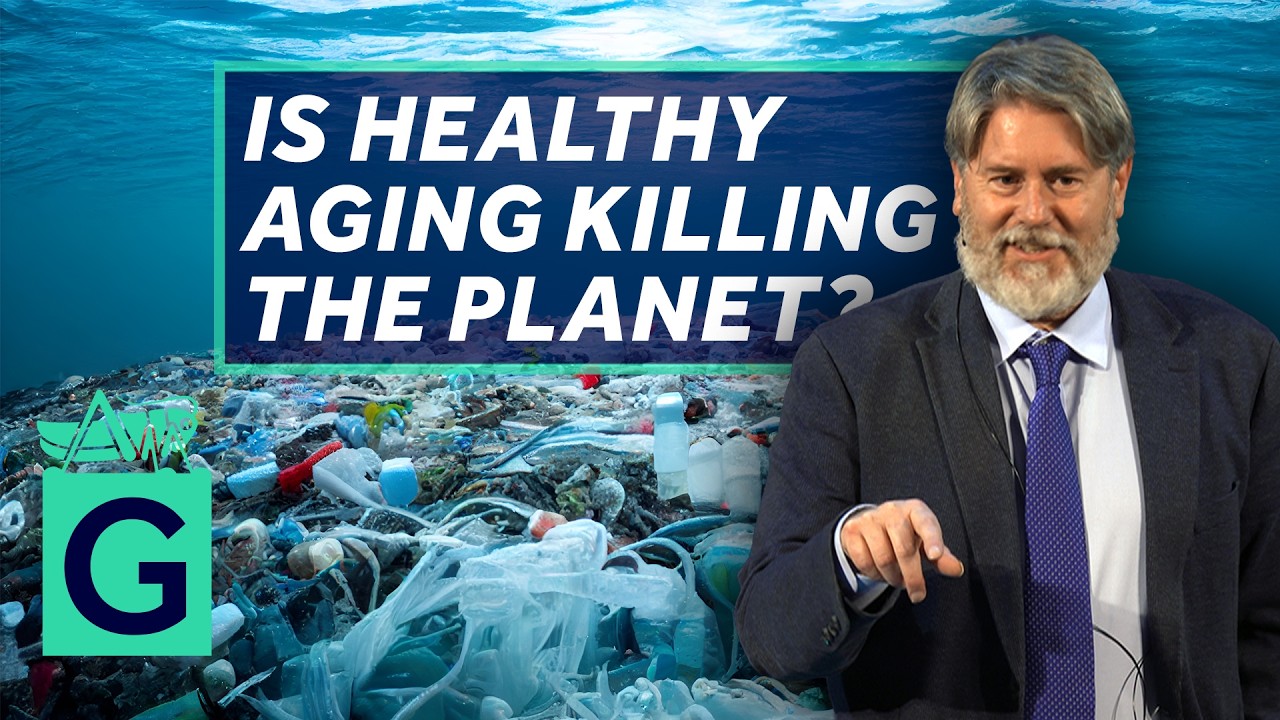
The Pill and the Planet
Keywords
Summary
179 words
Critical Evaluation
The lecture provides a comprehensive overview of the intersection between aging, healthcare, and environmental sustainability. Mudway effectively uses data from the Office for National Statistics and global burden of disease studies to support his arguments. The discussion of the epidemiological transition is well-explained and provides a useful framework for understanding changing disease patterns. The concept of the exposome is introduced clearly, linking environmental exposures to health outcomes. The lecture’s strength lies in its interdisciplinary approach, connecting public health, pharmacology, and environmental science. However, some claims, such as the specific environmental impact of pharmaceuticals, could benefit from more detailed citations. The argumentation is generally solid, but the lecture occasionally relies on rhetorical questions and anecdotal examples. The sources cited are credible, including ONS data and academic research. The title accurately reflects the content, and the lecture successfully raises important ethical questions about the sustainability of modern medicine. Overall, the lecture is informative and thought-provoking, though it could be enhanced by more concrete data on the environmental footprint of pharmaceuticals.
168 words
Title / Content Match
The title accurately reflects the lecture's focus on the environmental impact of pharmaceuticals and the challenge of healthy aging.
Quality & Reliability
8/10
Lecture by a visiting professor of environmental health at Imperial College, with references to UK ONS data, DALYs, and the epidemiological transition. The content is well-structured and evidence-based, though some claims lack direct citations.
Chapters
- // Introduction: Healthy Aging vs. Planetary Health
- // The Global Aging Population Crisis
- // Population Pyramids: A Demographic Time Bomb
- // The Healthy Lifespan Decline: UK Data Revealed
- // The Epidemiological Transition Explained
- // Global Burden of Disease: DALYs and What's Killing Us
- // Multimorbidity and Polypharmacy: The Drug Dependency Epidemic
- // 100 Years of Pharmaceutical Breakthroughs
- // The Exposome: How Your Environment Shapes Your Health
- // When Your Medicine Becomes Pollution
- // Patient Archetypes: The Hidden Environmental Cost of Drugs
- // Pharmaceuticals, CO2, and the Ecological Rucksack
- // How Drugs Enter the Environment Through Excretion
- // Pharmaceuticals in Our Rivers: What's in the Water?
- // Global Pharmaceutical Contamination: A Worldwide Problem
- // Antibiotic Resistance: The Battle We Are Losing
- // Green Chemistry and Regulation: Reasons for Hope
- // Poverty, Inequality, and the Real Cause of Declining Health
- // Conclusion: Achieving Healthy Aging Without Destroying the Planet
Cited Sources
- Gresham College Lecture Page — Official page for the lecture, providing additional resources and information.
- Gresham College Website — Institutional website of Gresham College, where the lecture is hosted.
Concurring Sources
- Office for National Statistics — Source for UK life expectancy and healthy life expectancy data mentioned in the lecture.
Contribution & Novelties
The lecture offers a novel perspective by linking the environmental impact of pharmaceuticals to the challenges of an aging population. It highlights the often-overlooked ecological costs of medication use, such as drug contamination in waterways and the carbon footprint of healthcare. The concept of the ’ecological rucksack’ is introduced to illustrate the hidden environmental burden of pharmaceuticals.
Pour aller plus loin :
- Epidemiological transition — Provides background on the concept introduced by Abdel Omran.
- Disability-adjusted life year — Explains the metric used to measure disease burden.
- Exposome — Discusses the totality of environmental exposures and their impact on health.
99 words
Radar Profile
The radar profile shows high scores in information quantity, quality, and reliability, with a slightly lower technical level, indicating a lecture that is accessible yet evidence-based.