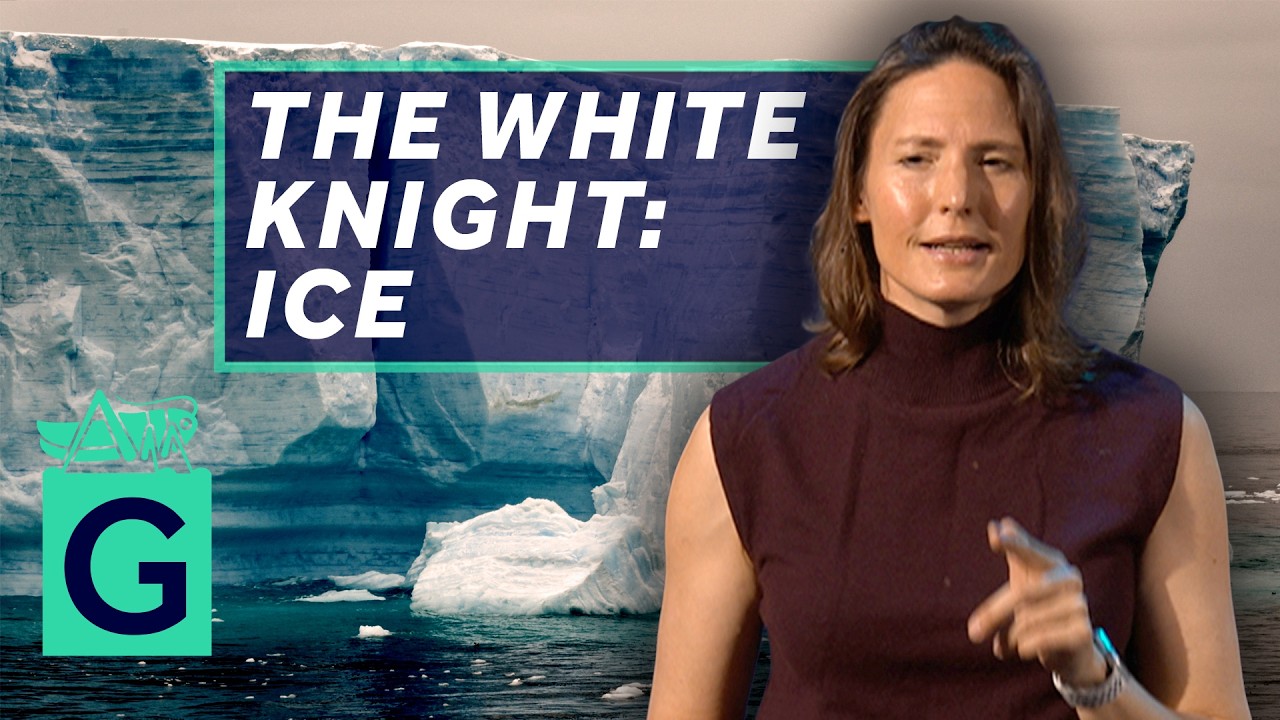
The White Knight: Ice - Helen Czerski
Keywords
Summary
150 words
Critical Evaluation
The lecture provides a comprehensive and engaging overview of polar ice, blending historical narratives with scientific explanations. Helen Czerski, a professor of mechanical engineering and oceanographer, brings credibility to the topic. The historical account of Nansen’s Fram expedition is well-researched and illustrates the challenges and innovations of polar exploration. The scientific explanations are accurate and accessible, covering key concepts such as albedo, latent heat, and the difference between sea ice and glaciers. The use of personal photographs from Greenland and the MOSAiC expedition adds authenticity. The lecture is well-structured, progressing from history to physics to modern research and future implications. However, as a public lecture, it lacks formal citations and in-depth technical detail, which limits its use for advanced scientific audiences. The discussion of climate change impacts is scientifically sound, but could benefit from more specific data and references. The geopolitical section is brief but relevant. Overall, the lecture is a valuable educational resource for a general audience, providing a solid foundation in polar science and its significance.
168 words
Title / Content Match
The title 'The White Knight: Ice' is metaphorical and intriguing, but the lecture focuses on the science and history of polar ice, which is adequately reflected in the content.
Quality & Reliability
8/10
Lecture by a professor of mechanical engineering and oceanographer, based on established physics and historical expeditions. The content is well-structured and scientifically accurate, though it is a popular science lecture without formal citations.
Chapters
- // Welcome to the Lecture
- // Fridtjof Nansen and the Mystery of the Arctic
- // Crossing Greenland: Nansen's First Expedition
- // The USS Jeannette and the Trans-Arctic Current Theory
- // Designing the Fram: A Ship Built Never to Be Crushed
- // Why the Arctic Is a Human Place, Not Just Wilderness
- // What's Coming: Physics, MOSAiC, and the Future of Ice
- // The Physics of Ice: Why Isn't It White?
- // Albedo: How Ice Reflects the Sun's Energy
- // Why Ice Floats (and Why That's Bizarre)
- // The Pink Hedgehog: How Sea Ice Makes Freshwater
- // Latent Heat: Ice as Earth's Thermal Buffer
- // Sea Ice vs. Glaciers vs. Icebergs: Know the Difference
- // Arctic vs. Antarctic: Which Holds More Ice?
- // Captain Scott and Antarctica's Moving Ice
- // Modern Exploration: The MOSAiC Expedition
- // What Scientists Discovered Drifting With the Ice
- // How Climate Change Is Transforming the Ice
- // Arctic Amplification and the New Geopolitical Frontier
- // Closing Thoughts: Ice, Choice, and the Future
Cited Sources
- Gresham College — Official website of Gresham College, the institution hosting the lecture.
- Watch the Q&A here — Link to the Q&A session following the lecture.
- Gresham College on Bluesky — Social media profile of Gresham College for updates and discussions.
Concurring Sources
- MOSAiC Expedition — The MOSAiC expedition is a modern scientific drift experiment in the Arctic, consistent with the lecture's description.
- NASA Climate Change: Ice — NASA's data on ice sheets and sea ice, supporting the lecture's discussion of ice changes.
Contribution & Novelties
The lecture provides a unique synthesis of historical polar exploration and modern ice physics, emphasizing the importance of ice in Earth’s climate system. It highlights the legacy of Nansen’s Fram expedition and connects it to contemporary research like the MOSAiC expedition. The explanation of why ice is white due to air bubbles and why it floats is particularly insightful.
Pour aller plus loin :
- MOSAiC Expedition — Official website of the MOSAiC expedition, providing detailed information about the research conducted.
- Albedo — Wikipedia article explaining the concept of albedo and its role in climate.
- Fridtjof Nansen — Wikipedia article on Nansen’s life and expeditions, including the Fram voyage.
108 words
Radar Profile
The radar profile shows high scores in information quantity, quality, and reliability, with a moderate technical level. This indicates a well-balanced lecture that is both informative and accessible, suitable for a general audience interested in polar science.
💬 No comments were provided for analysis.