Give Peace a Chance: Legal Implications of the Israel-Palestine Conflict
Keywords
Summary
136 words
Critical Evaluation
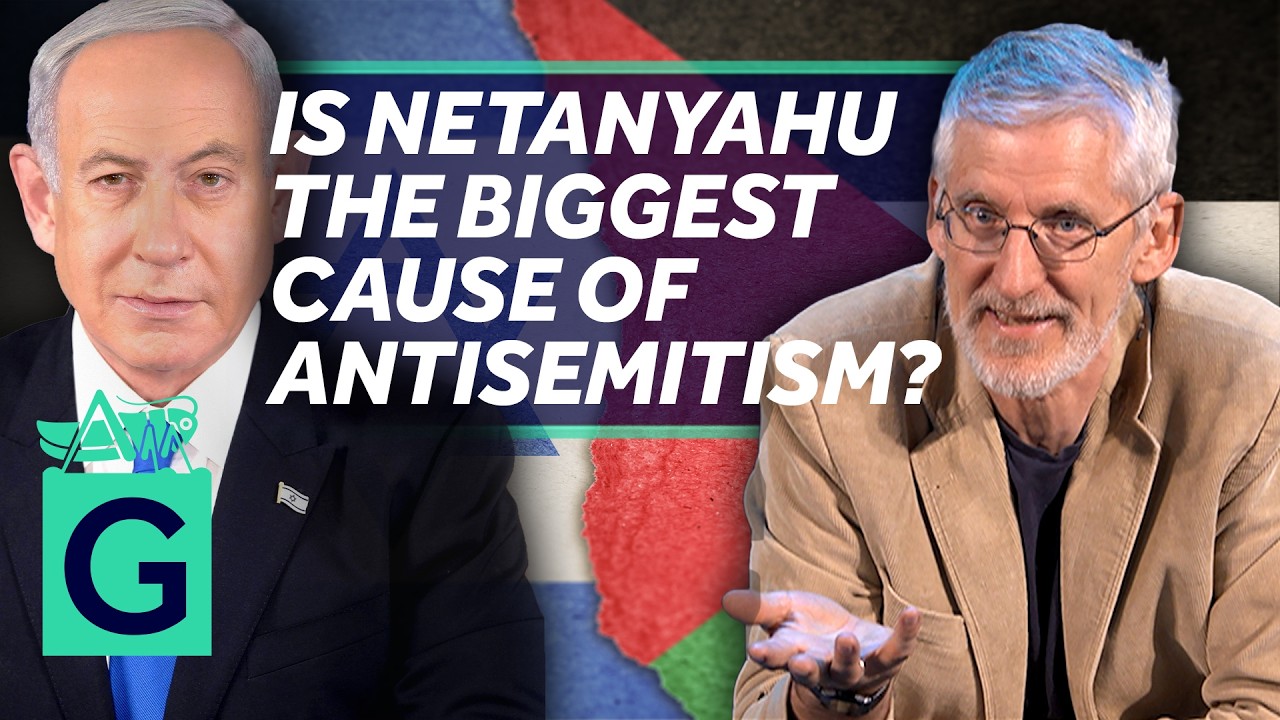
The lecture offers a deeply personal and passionate perspective on the Israel-Palestine conflict, drawing on the speaker’s Jewish heritage and extensive experience as a human rights lawyer. Stafford Smith effectively highlights the dangers of conflating criticism of Israeli government policies with antisemitism, and he provides historical context for both antisemitism and Islamophobia. His argument that Netanyahu’s actions, such as the death penalty law, are counterproductive and fuel the very antisemitism he claims to fight is compelling and well-articulated. However, the lecture is primarily opinion and anecdotal, lacking rigorous legal analysis or specific citations of international law cases. While Stafford Smith is a credible expert, the content is not peer-reviewed and may not fully represent the complexity of the conflict. The historical narrative is selective, and the proposed solutions, such as a protectorate, are presented without detailed feasibility analysis. The lecture’s strength lies in its moral clarity and humanitarian perspective, but it may not satisfy those seeking a comprehensive legal or political analysis. The title accurately reflects the content, and the personal anecdotes add authenticity but also introduce potential bias. Overall, the lecture is thought-provoking and valuable for its ethical stance, but it should be complemented with more objective sources for a balanced understanding.
203 words
Title / Content Match
The title accurately reflects the content, focusing on legal implications and peace efforts in the Israel-Palestine conflict.
Quality & Reliability
7/10
The lecture is based on the speaker's personal experience as a human rights lawyer and his Jewish heritage, providing a unique perspective. However, it is largely opinion and anecdotal, with limited rigorous legal analysis or citation of specific legal cases. The speaker is credible but the content is not peer-reviewed.
Chapters
- | Introduction: Antisemitism, Islamophobia & Missing the Point
- | Personal Background: Jewish Heritage & Family Revelations
- | A Gay Jewish Grandfather & Inherited Pacifism
- | How Clive Saw Israel as a Child
- | The Shift: From Israeli Heroism to Current Crisis
- | A History of Jewish Persecution: England to the Holocaust
- | Holocaust Denial & Antisemitism Just Under the Surface
- | Islamophobia: The Other Prejudice We Don't Talk About
- | When Peace Was Possible: The PLO, Nobel Prizes & Oslo
- | Israel's Political Shift: From Left to Hard Right
- | Who Is Really to Blame for Chaos in the Middle East?
- | How Netanyahu Is Fuelling the Antisemitism He Claims to Fight
- | Al-Qaeda Had 170 Members — Then We Made It a Caliphate
- | Jordan, the Secret Police & Antisemitism as a Control Mechanism
- | US Money, Saudi Arabia & How the West Shares the Blame
- | Netanyahu's Tactics: Death Penalty, Iran & Why It's Counterproductive
- | Israel's New Death Penalty Law & Why It Will Backfire
- | Starmer's Proscription of Palestine Action: Monumentally Stupid
- | What We Can Actually Do: Principles for Peace
- | If Given Two Choices, There's Always a Third
- | The Irish Precedent: How the EU Created an Unexpected Solution
- | Conclusion: A Protectorate for Palestine-Israel
Cited Sources
- Gresham College — Official website of the institution hosting the lecture.
- Support Gresham College — Donation page for the college.
- Israel-Palestine Law Lecture Page — Page for the specific lecture, likely containing additional resources.
- Q&A Session — Follow-up Q&A session for this lecture.
Concurring Sources
- Gresham College — Institutional source supporting the lecture's credibility.
Contribution & Novelties
The lecture provides a unique personal perspective on the Israel-Palestine conflict, emphasizing the importance of pacifism and the dangers of conflating criticism with antisemitism. It offers a historical overview and proposes a novel ’third option’ for peace, drawing on the Irish precedent.
Pour aller plus loin :
- Two-state solution — Overview of the two-state solution concept.
- Oslo Accords — Historical context of the peace process.
- International Criminal Court — Relevant to legal implications discussed.
74 words
Radar Profile
The radar profile shows moderate scores across all dimensions, with slightly higher scores in quantity of information and fiabilité globale, reflecting the speaker's expertise and the lecture's breadth, but lower in niveau technique due to the non-technical nature.