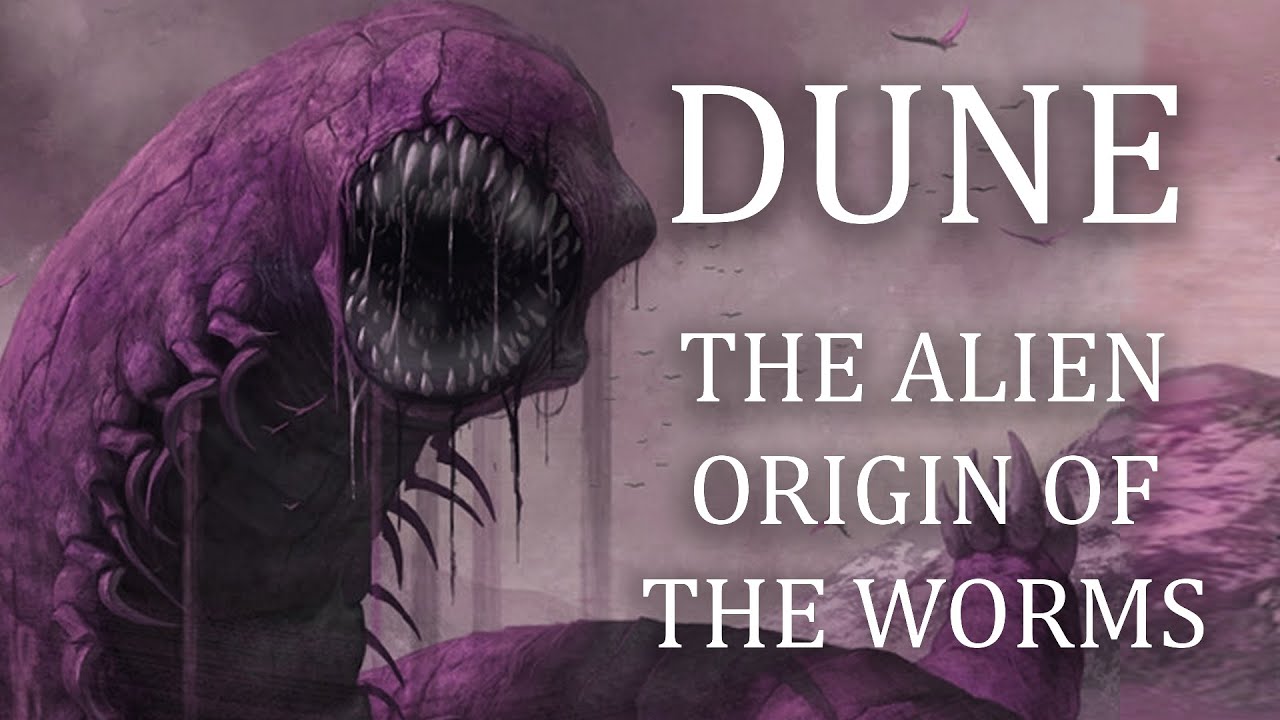
How Did the Guild Discover Spice? The Possible Alien Origin of Sandworms
Keywords
Summary
164 words
Critical Evaluation
Value of the Information & Strength of the Argument
The video provides a thorough and engaging analysis of the lore, synthesizing information from the original novels and the Dune Encyclopedia. It presents multiple hypotheses and evaluates their plausibility, demonstrating a solid understanding of the source material. The argumentation is logical and well-structured, though it acknowledges the speculative nature of the topic. The video adds value by highlighting the ecological and philosophical themes in Herbert’s work, such as the cycle of life and the impact of introducing species.
Scientific Rigor, Source Quality, Title Accuracy
The video relies primarily on the Dune Encyclopedia and Frank Herbert’s novels, which are appropriate sources for lore analysis. However, it does not cite external academic or critical sources, and the speculative nature of the content limits its scientific rigor. The title accurately reflects the content, and the video maintains a clear focus on the question of the sandworms’ origin. The analysis is consistent with the established canon, though it does not address potential contradictions with Brian Herbert’s expanded universe in depth.
175 words
Title / Content Match
The title accurately reflects the content, which explores the origin of the sandworms and the discovery of spice, with a focus on the Guild's role.
Quality & Reliability
7/10
The video is a well-structured speculative analysis grounded in the Dune Encyclopedia and Frank Herbert's original novels, but it relies heavily on interpretation and does not provide primary sources or external verification.
Key Moments
Markers derived by PSI from the transcript: the creator did not define chapters.
- Introduction and disclaimer about speculation
- Discussion of the sandworms' non-native origin on Arrakis
- Leto II's revelation about the sand trout being introduced
- The Dune Encyclopedia's hypotheses on the discovery of spice
- The Aurelian exiles' journey and the timeline problem
- The Bene Gesserit's possible involvement
- The alien origin theory and genetic engineering possibility
- The uniqueness of the worms' biology and their impact on the ecosystem
- The mystery remains and potential future exploration
- Conclusion and call to action
Cited Sources
- Dune Encyclopedia — Referenced as the primary source for the hypotheses about the discovery of spice and the origin of the sandworms.
- Children of Dune (novel) — Quoted for Leto II's revelation about the sand trout being introduced from another place.
- Dune (novel) — Referenced for the properties of spice and the role of the Bene Gesserit.
Concurring Sources
- Dune Encyclopedia — Provides the hypotheses discussed in the video.
- Children of Dune — Contains the quote about the sand trout being introduced.
Dissenting Sources
- Brian Herbert's expanded Dune books — The video notes that the Dune Encyclopedia provides different accounts than the expanded books, which may offer alternative explanations for the sandworms' origin.
External References
Contribution & Novelties
The video offers a comprehensive synthesis of the various theories about the sandworms’ origin, highlighting the ecological and philosophical themes in Herbert’s work. It also raises the intriguing possibility of genetic engineering, which aligns with the series’ focus on selective breeding.
Pour aller plus loin :
- Dune (novel) — The original novel that introduces the sandworms and spice.
- Dune Encyclopedia — A reference work that provides additional lore and hypotheses.
- Sandworm (Dune) — A fan wiki page detailing the biology and history of sandworms.
- Golden Path (Dune) — Concept related to Leto II’s vision and the role of the sandworms.
100 words
Radar Profile
The radar profile shows high scores in information quality and reliability, reflecting the video's solid grounding in the source material. The moderate scores in quantity and technical level indicate a focused but not exhaustive analysis, suitable for a general audience interested in Dune lore.
💬 Très positif. Sur les 30 commentaires analysés, la majorité exprime une appréciation enthousiaste de l'analyse, avec des théories personnelles et des discussions approfondies sur l'origine des vers des sables, bien que certains commentaires expriment une préférence pour laisser le mystère non résolu.