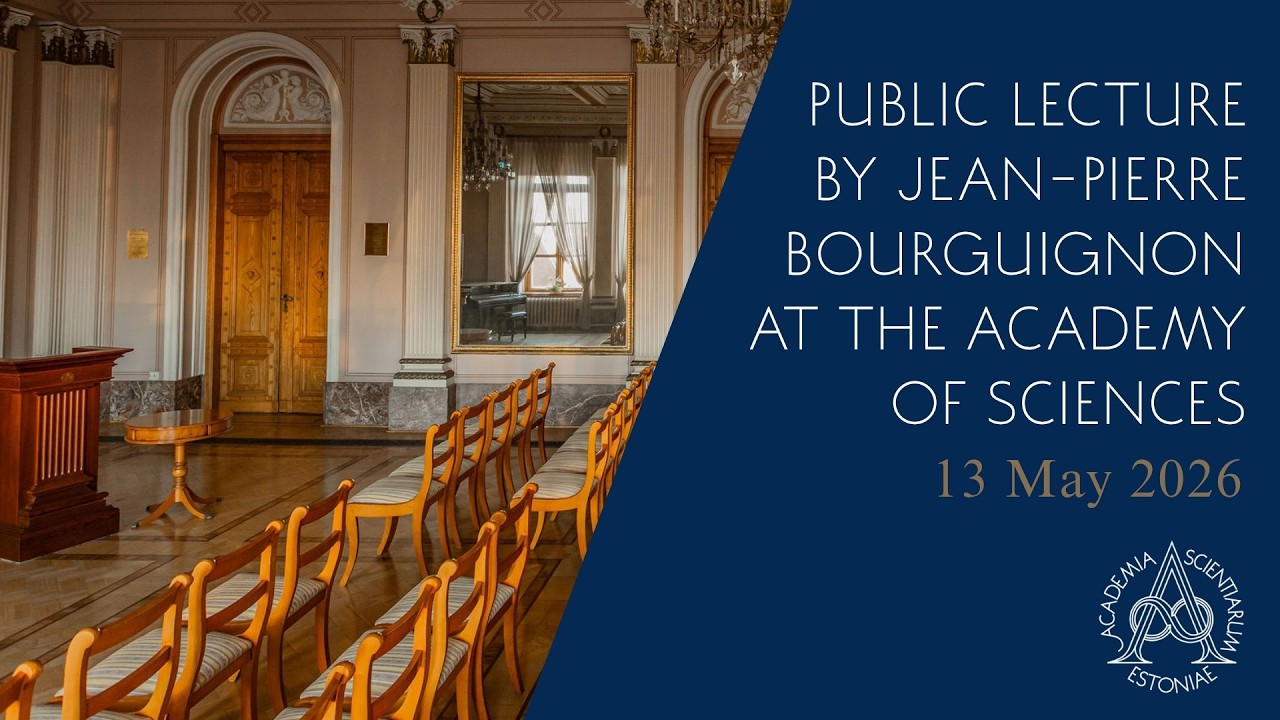
How Science Gets Transformed: Past and Present
Keywords
Summary
142 words
Critical Evaluation
Value of the Information & Strength of the Argument
The lecture provides valuable insights into the historical processes of scientific change, drawing on well-chosen examples. Bourguignon’s argumentation is solid, as he supports each point with concrete historical events and quotes. He effectively demonstrates that scientific breakthroughs often face resistance and take time to be assimilated. His discussion of AI is balanced, acknowledging its potential while highlighting unresolved issues. The value lies in his unique perspective as a mathematician and science administrator, offering a high-level view of science policy.
Scientific Rigor, Source Quality, Title Accuracy
Bourguignon demonstrates scientific rigor by referencing specific historical events, dates, and quotes from primary sources. He mentions the Prussian Academy’s statement, Felix Klein’s remarks, and quotes from Nobel laureates. The sources are credible, though not formally cited in the video. The title accurately reflects the content, which is a historical and contemporary analysis of scientific transformation. The lecture is well-structured and authoritative, given the speaker’s expertise.
160 words
Title / Content Match
The title accurately reflects the content, which explores historical transformations in science and discusses current challenges, particularly AI.
Quality & Reliability
8/10
Lecture by a prominent mathematician and former ERC president, grounded in historical examples and personal experience. The content is well-structured and credible, though it reflects personal views rather than systematic research.
Chapters
Cited Sources
- European Research Council — Mentioned as the institution Bourguignon led and as a key driver of excellence in European science.
- IPCC — Referenced as the international panel on climate change that provides documented evidence of climate change.
Concurring Sources
- European Research Council — The ERC's mission aligns with Bourguignon's emphasis on curiosity-driven research and excellence.
- IPCC — The IPCC's reports support the lecture's discussion on climate change evidence.
Contribution & Novelties
The lecture offers a personal and historical perspective on scientific transformation, emphasizing the role of curiosity and the resistance to change. It connects past examples to current AI challenges, providing a framework for understanding the potential impact of AI on science.
Pour aller plus loin :
- History of science — Provides a broad overview of scientific developments.
- Calculus of variations — The mathematical field discussed in the lecture.
- CRISPR gene editing — The technology highlighted as a recent breakthrough.
- mRNA vaccine — The vaccine technology that was rapidly developed during the COVID-19 pandemic.
93 words
Radar Profile
The radar profile shows high scores in information quantity, quality, and reliability, with a moderate technical level. This indicates a well-informed and credible lecture that is accessible to a broad audience, though it requires some background knowledge to fully appreciate the historical and scientific references.