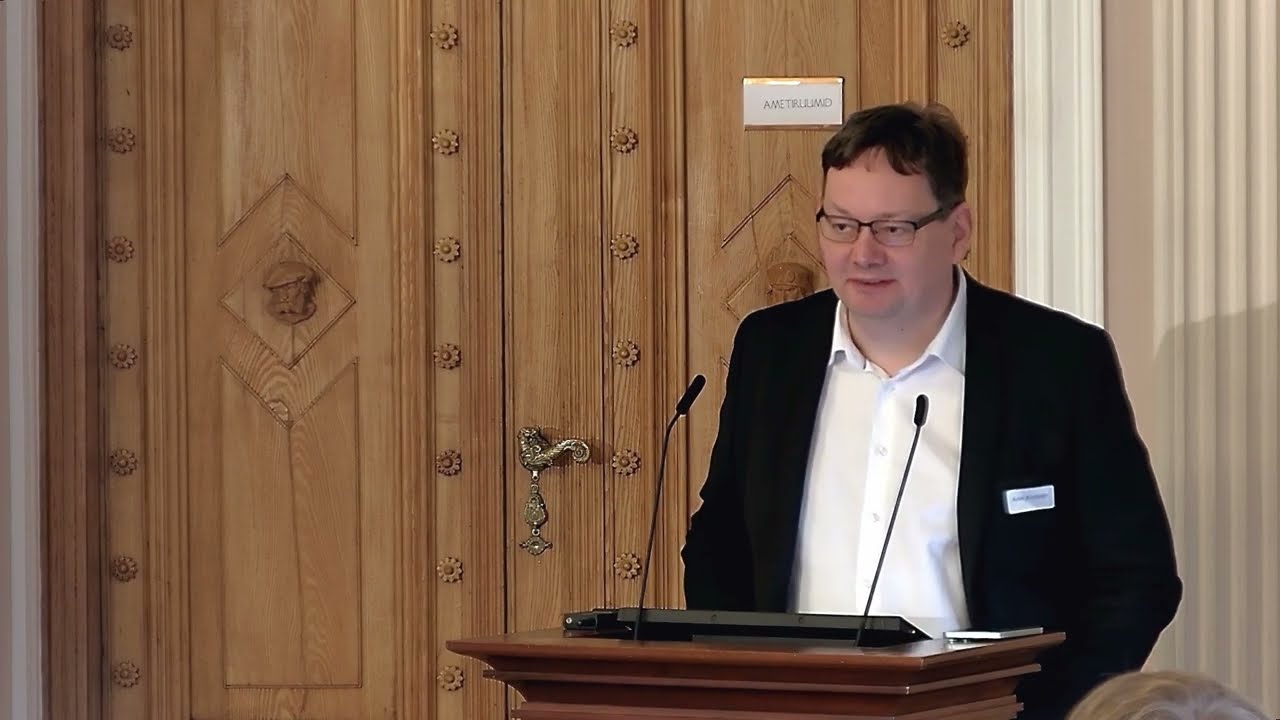
Kuidas valimised ühiskonnaga kaasas käivad? Arne Koitmäe, Riigi Valimisteenistus
Keywords
Summary
184 words
Critical Evaluation
Value of the Information & Strength of the Argument
The presentation provides valuable insights into the practical aspects of e-voting in Estonia, based on the speaker’s direct experience. The argumentation is coherent, emphasizing the need for legal frameworks to evolve with technology and the importance of public trust. The speaker effectively argues for the necessity of e-voting for diaspora participation and future-proofing the electoral system. However, the argumentation is more descriptive than analytical, lacking deep technical or scientific scrutiny.
Scientific Rigor, Source Quality, Title Accuracy
The speaker references the ODIHR report and mentions the Venice Commission’s good practices, but does not provide specific citations or URLs. The title accurately reflects the content, which focuses on the evolution of elections in society. The presentation is based on expert opinion and official experience, but lacks detailed source citations, which slightly reduces its scientific rigor.
142 words
Title / Content Match
The title accurately reflects the content, which discusses how elections adapt to societal changes, focusing on e-voting evolution and future considerations.
Quality & Reliability
7/10
The speaker is a representative of the Estonian State Electoral Office, providing expert insights into the evolution and future of e-voting in Estonia. The content is based on practical experience and references official reports, but lacks detailed technical or scientific depth.
Key Moments
Markers derived by PSI from the transcript: the creator did not define chapters.
- Introduction and overview of the presentation on how elections evolve with society.
- Discussion on the history of voting methods in Estonia, from 1992 to the introduction of internet voting in 2005.
- Explanation of the importance of e-voting for the diaspora and the high percentage of early voting.
- Consideration of mobile voting and its potential future impact, referencing the 2024 European elections.
- Mention of other countries using e-voting, such as Switzerland and Canada, and the reasons for international interest.
- Discussion on the balance between voting freedom and verifiability, and the need for consensus in legal changes.
- Reference to the ODIHR report and the importance of broad-based discussion for legal amendments.
- Explanation of the auditing process and the requirements for auditors, including the use of certified auditors.
- Future plans for the Academy's cybersecurity committee, including risk analysis and the formation of an advisory council.
- Encouragement for citizens to register as election observers and final remarks.
Cited Sources
- ODIHR Report on Estonia's electoral legislation — Referenced as a legal analysis of electoral laws, particularly regarding electronic voting.
- Venice Commission's Good Practices — Mentioned as a reference for broad-based discussions and consensus in electoral matters.
Concurring Sources
- Estonia's e-voting system — Provides background information on the development and usage of e-voting in Estonia.
Contribution & Novelties
The presentation offers a unique insider perspective on the evolution of e-voting in Estonia, highlighting practical considerations and future challenges. It provides valuable context for understanding the balance between accessibility and security in digital elections.
Pour aller plus loin :
- Estonia’s e-voting system — Overview of the system and its history.
- ODIHR — Official website of the Office for Democratic Institutions and Human Rights, which conducts election observations.
- Venice Commission — Official website of the European Commission for Democracy through Law, which provides guidelines on electoral matters.
87 words
Radar Profile
The profile shows moderate to high scores in information quantity and quality, with a lower technical level, indicating a presentation that is informative but not deeply technical. The reliability is solid, reflecting the speaker's authoritative position.