Session 3(c): Strengthening Rural and Northern Healthcare
Keywords
Summary
160 words
Critical Evaluation
Value of the Information & Strength of the Argument
The value of the information lies in its practical insights into the implementation of CNS roles in a rural setting, the specific challenges and strategies for quality improvement, and the research on mental health clinician self-efficacy. The argumentation is based on professional experience and preliminary research findings, but lacks rigorous scientific evidence. The presentations are descriptive rather than analytical, and the research presented is limited in scope and methodology.
Scientific Rigor, Source Quality, Title Accuracy
The scientific rigor is moderate. The presenters reference frameworks and tools (e.g., Canadian Nurses Association, Accreditation Canada) but do not provide detailed citations. The research on self-efficacy uses a validated scale, but the sample size and methodology are not fully described. The title accurately reflects the content, which is a collection of presentations on strengthening rural healthcare. No comments were provided for analysis.
147 words
Title / Content Match
The title accurately reflects the content, which focuses on strengthening rural and northern healthcare through CNS roles, mental health clinician self-efficacy, and ethics education.
Quality & Reliability
7/10
The video presents three presentations from healthcare professionals, sharing their experiences and research findings. The content is based on professional expertise and some original research, but lacks peer-reviewed citations or detailed methodology. The information is credible but not rigorously sourced.
Key Moments
Markers derived by PSI from the transcript: the creator did not define chapters.
- Introduction to the session and presenters.
- Explanation of the Clinical Nurse Specialist role and framework.
- Examples of CNS-led quality improvement initiatives.
- Discussion on IV therapy standardization and response to product recall.
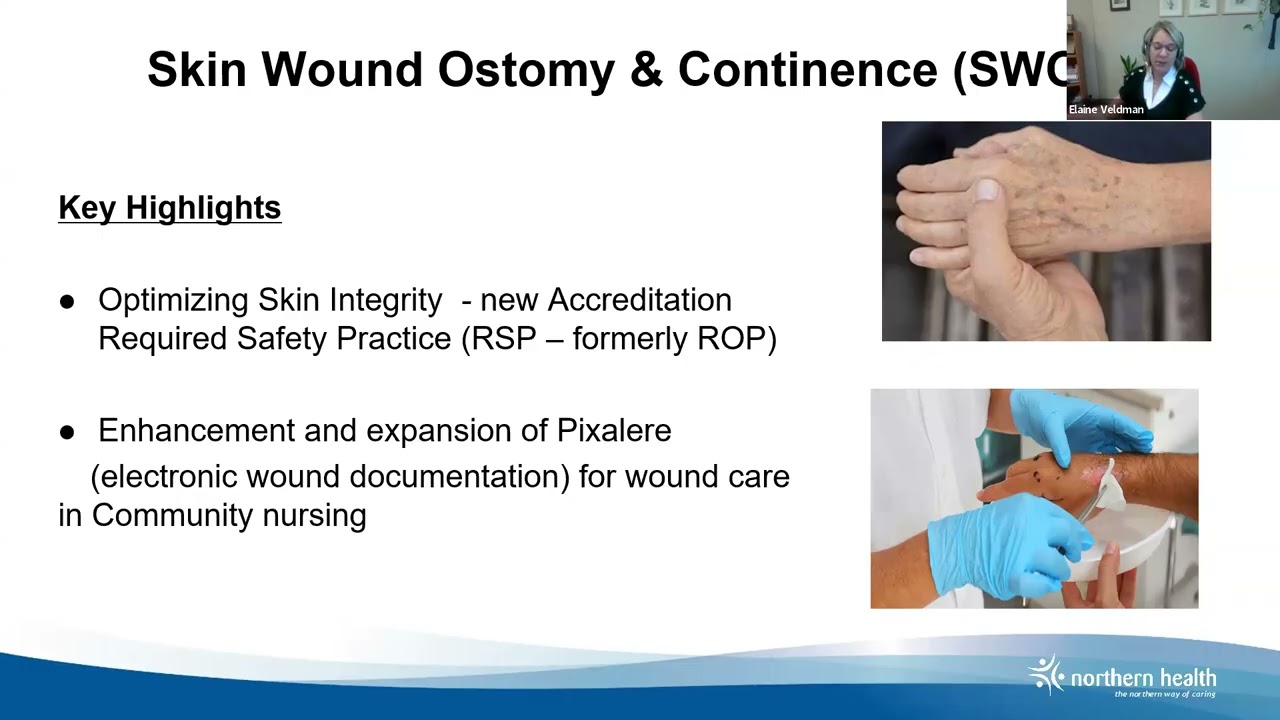
- Presentation on skin integrity and wound documentation expansion.
- Perinatal care initiatives and quality review framework development.
- Q&A session on CNS qualifications and expansion.
- Introduction to Benita Le Morvan's presentation on counseling self-efficacy.
- Literature review and methodology for the self-efficacy study.
- Results and discussion of the self-efficacy study.
- Introduction to Esther Alonso-Prieto's presentation on moral empowerment.
- Findings and implications of the moral empowerment intervention.
Cited Sources
- Canadian Nurses Association — Referenced as the organization defining the CNS role and recommending master's or doctoral preparation.
- Accreditation Canada — Referenced for the new Required Safety Practice on skin integrity.
- Counselor Activity Self-Efficacy Scale — Mentioned as the validated tool used in the self-efficacy study.
Concurring Sources
- Canadian Nurses Association — Supports the description of the CNS role and advanced practice.
- Accreditation Canada — Supports the mention of the new Required Safety Practice.
Contribution & Novelties
The video provides a unique perspective on the application of CNS roles in a rural and northern context, highlighting practical examples of quality improvement. It also presents original research on counseling self-efficacy among a specific population of unregulated mental health clinicians, which is an understudied area. The moral empowerment intervention is a novel approach to addressing ethical challenges in healthcare.
Pour aller plus loin :
- Clinical Nurse Specialist Role — Provides an overview of the CNS role and its evolution.
- Counseling Self-Efficacy — Academic article on counseling self-efficacy and its measurement.
- Moral Distress in Healthcare — Overview of moral distress and its impact on healthcare professionals.
106 words
Radar Profile
The radar profile shows a balanced performance across all dimensions, with slightly higher scores in information quantity and quality, and lower in technical level. This indicates a presentation that is informative and credible but not highly technical, suitable for a professional audience.