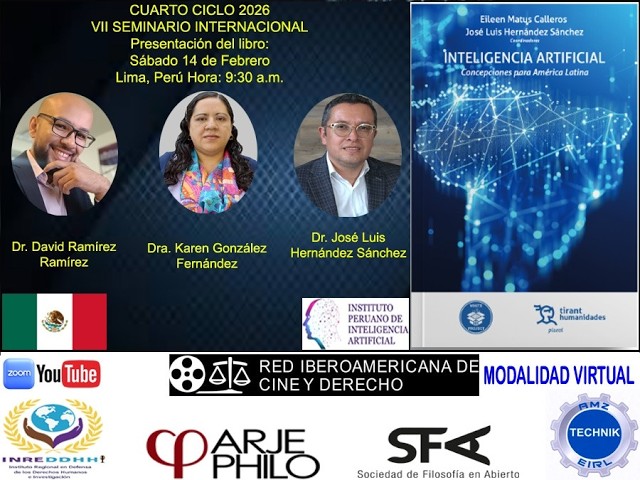
Presentación del libro: Inteligencia Artificial concepciones para América Latina
Keywords
Summary
131 words
Critical Evaluation
Value of the Information & Strength of the Argument
The video provides valuable insights into the motivations and content of the book, emphasizing the importance of a Latin American perspective on AI. The speakers argue for the need to integrate ethical and philosophical considerations into AI development and regulation. They stress the importance of critical evaluation of AI claims and the need for interdisciplinary collaboration. However, the argumentation is largely descriptive and promotional, lacking deep technical analysis or empirical evidence. The speakers rely on their expertise and the book’s content to support their points, but the discussion remains at a high level without delving into specific technical or policy details.
Scientific Rigor, Source Quality, Title Accuracy
The presentation is based on the authors’ expertise and the book’s content, which is a compilation of chapters by various experts. The speakers mention the involvement of the Universidad Panamericana and the editorial Tirant lo Blanch, but no specific external sources are cited. The title accurately reflects the content, as the video is indeed a presentation of the book. The discussion is coherent and well-structured, but the lack of detailed references and the promotional nature of the presentation limit its scientific rigor. The video does not include any public comments, so no analysis of viewer feedback is possible.
214 words
Title / Content Match
The title accurately reflects the content: a presentation of a book on AI concepts for Latin America.
Quality & Reliability
6/10
The video is a book presentation by the authors, providing expert opinions and overviews of the book's content. It lacks detailed technical depth and empirical evidence, but the speakers are academics with relevant expertise. The discussion is largely descriptive and promotional, with limited critical analysis.
Key Moments
Markers derived by PSI from the transcript: the creator did not define chapters.
- Introduction and welcome by the Instituto Peruano de Inteligencia Artificial y CD.
- Dr. José Luis Hernández Sánchez introduces the book and its origins.
- Discussion on the book's structure and the diverse profiles of contributors.
- Emphasis on the Latin American focus and the importance of regulation and ethics.
- Dr. Karen González Fernández presents her background and the seminar on AI ethics.
- Discussion on the book's chapters covering AI state of the art in Latin America.
- Reflections on the term 'artificial intelligence' and its ambiguity.
- Epistemological considerations: what kind of knowledge AI provides.
- Ethical problems in AI and the need for philosophical input.
- Closing remarks and information on how to purchase the book.
Cited Sources
- Inteligencia Artificial: concepciones para América Latina — The book being presented, published by Tirant lo Blanch.
Concurring Sources
- UNESCO Recommendation on the Ethics of Artificial Intelligence — The video mentions UNESCO's calls for ethical studies of AI, aligning with this recommendation.
Contribution & Novelties
The video presents a book that offers a Latin American perspective on AI, combining technical, ethical, and philosophical viewpoints. It emphasizes the need for interdisciplinary approaches and human oversight in AI development. The book appears to be a valuable resource for policymakers, industry professionals, and academics interested in AI in the region.
Pour aller plus loin :
- UNESCO Recommendation on the Ethics of Artificial Intelligence — Relevant for the ethical framework discussed.
- AI Ethics Guidelines Global Inventory — Provides a comprehensive list of AI ethics guidelines, useful for comparative analysis.
- The Ethics of Artificial Intelligence: Issues and Initiatives — A European Parliament study on AI ethics, relevant for policy considerations.
110 words
Radar Profile
The radar profile shows moderate scores across all dimensions, with a slightly higher score in information quality and reliability. This indicates a balanced but not highly technical presentation, suitable for a general audience interested in AI ethics and policy in Latin America.