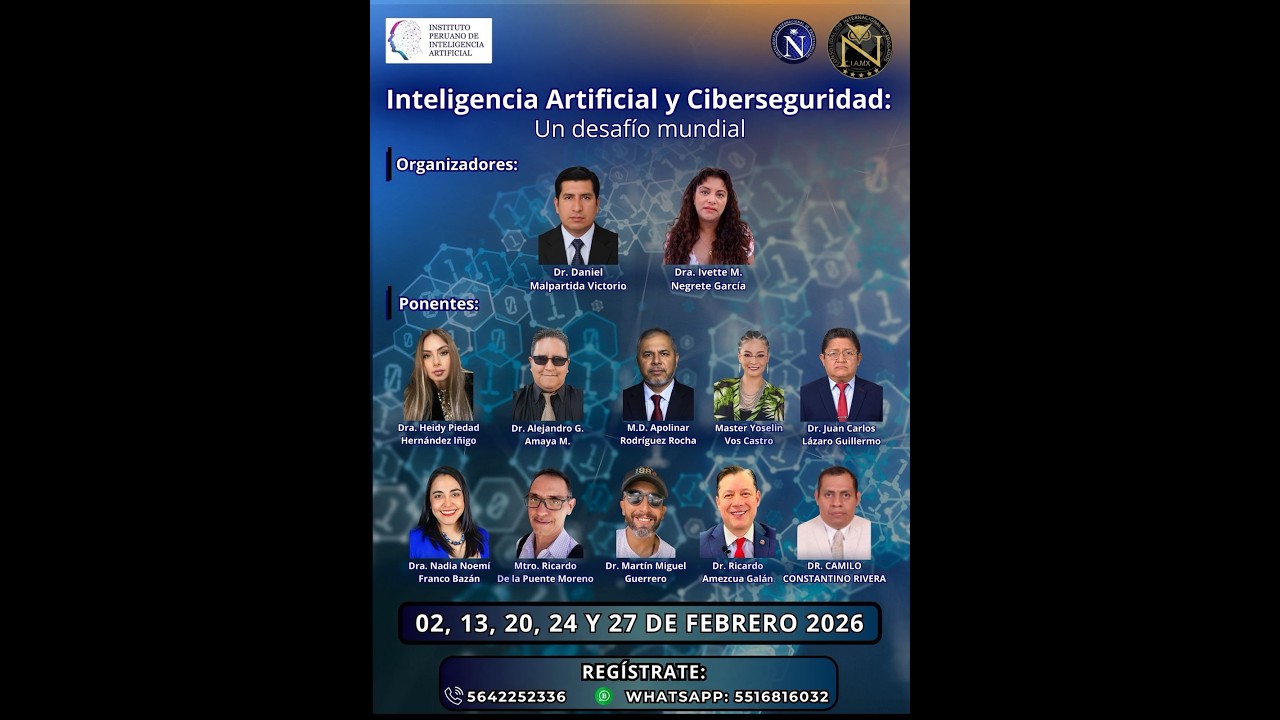
Jornadas en línea sobre IA. Ciberseguridad: Un desafío mundial II
Keywords
Summary
173 words
Critical Evaluation
Value of the Information & Strength of the Argument
The value of the information is moderate. The speakers provide some insightful perspectives on the intersection of law, cybersecurity, and AI, particularly the concept of digital sovereignty and the need for interdisciplinary approaches. However, the argumentation is largely based on personal anecdotes and analogies rather than empirical evidence or rigorous analysis. The first speaker’s house analogy is effective for illustrating vulnerabilities but lacks depth in technical or policy specifics. The second speaker’s segment is brief and lacks substantive detail. The discussion does not offer concrete solutions or actionable recommendations, limiting its practical value.
Scientific Rigor, Source Quality, Title Accuracy
The scientific rigor is low. The speakers do not cite specific studies, reports, or authoritative sources to support their claims. The only reference mentioned is a book by Dr. Julio Téllez Valdés on computer law, but no specific details or verifiable sources are provided. The title is somewhat misleading as it suggests a comprehensive global challenge, but the content is more of a general discussion with limited depth. The adéquation between title and content is partial; the video does address cybersecurity and AI but not in a systematic or exhaustive manner.
199 words
Title / Content Match
The title is broad and matches the general theme of cybersecurity and AI, but the content is more of a discussion than a comprehensive analysis.
Quality & Reliability
5/10
The video is a conference with expert opinions but lacks rigorous scientific methodology, verifiable data, and structured argumentation. It relies heavily on analogies and personal anecdotes, with limited concrete evidence or citations.
Key Moments
Markers derived by PSI from the transcript: the creator did not define chapters.
- Introduction of the first speaker, a legal expert, and start of the presentation.
- Analogy of the house to explain data vulnerability and the illusion of security.
- Discussion on the definition of national security and the challenge of defining digital territory.
- Emphasis on the need for states to be producers of technology to ensure digital sovereignty.
- Interdisciplinary approach: combining legal and technical expertise for national security.
- Second speaker begins on resilient cybersecurity architectures and protecting critical assets.
- Brief overview of high-priority risks and the importance of data protection.
- Conclusion and thanks, with a note on the need for continuous awareness.
Cited Sources
- Derecho Informático (5th edition) — Mentioned by the first speaker as a foundational book on computer law.
Contribution & Novelties
The video offers a legal perspective on AI and national security, emphasizing the importance of digital sovereignty and interdisciplinary collaboration. It uses a memorable analogy to illustrate data vulnerability. However, it lacks novel technical insights or concrete policy proposals.
Pour aller plus loin :
- Digital sovereignty — Relevant concept for understanding state control over digital infrastructure.
- Artificial intelligence and national security — Overview of AI’s implications for national security.
- Cybersecurity — Foundational concepts for understanding the technical aspects discussed.
79 words
Radar Profile
The radar profile shows low scores across all dimensions, indicating a video with limited information density, moderate quality, and low technical depth. The fiabilité is also low due to lack of citations and rigorous analysis.