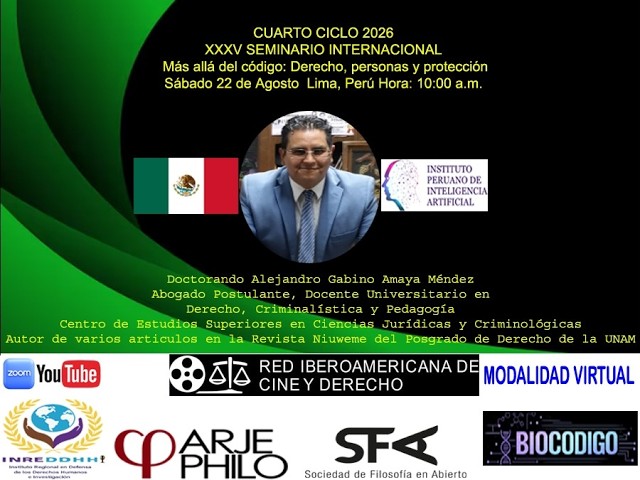
Más allá del código: Derecho, personas y protección
Keywords
Summary
176 words
Critical Evaluation
Value of the Information & Strength of the Argument
The talk provides anecdotal and philosophical value, using the Sully movie to illustrate the human factor in decision-making, which is a relevant point in cybersecurity. However, the argumentation is largely based on personal beliefs and unsupported claims, lacking empirical evidence. The speaker’s assertion that ‘freedom does not exist’ is presented as a fact without philosophical or scientific backing. The discussion of digital ontology and sensory isolation is interesting but not substantiated with references to research or studies.
Scientific Rigor, Source Quality, Title Accuracy
The talk does not cite any scientific sources or studies. The only references are to the movie ‘Sully’ and a biblical parable, which are used as anecdotes. The title suggests a focus on law and protection, but the content is more about human psychology and digital influence. The lack of rigorous sources and the superficial treatment of legal aspects make the scientific rigor low. The title is only partially aligned with the content.
165 words
Title / Content Match
The title is broad and somewhat misleading; the content focuses on human factors in cybersecurity and digital ontology, but the connection to 'Derecho' (law) is only superficial.
Quality & Reliability
4/10
The presentation is an opinion-based talk with personal anecdotes and philosophical reflections, lacking empirical evidence or citations to scientific literature. The speaker makes broad claims about digital ontology, sensory isolation, and AI without rigorous support.
Key Moments
Markers derived by PSI from the transcript: the creator did not define chapters.
- Introduction of the speaker and the seminar.
- Latin phrase about freedom and its interpretation.
- Discussion of the biblical parable and Roman law.
- Story of the movie 'Sully' and the human factor in decision-making.
- Critique of AI's lack of human emotions and the concept of immortality.
- Introduction of 'digital ontology' and its influence on minds.
- Discussion of sensory isolation and its effects on human relationships.
- Conclusion emphasizing self-awareness in cybersecurity.
Cited Sources
- No sources cited in the video — The speaker does not reference any external sources.
Concurring Sources
- NIST Cybersecurity Framework — Emphasizes the importance of human factors in cybersecurity, aligning with the speaker's argument.
Dissenting Sources
- AI capabilities in decision-making — Research shows AI can outperform humans in certain decision-making tasks, contradicting the speaker's claim that AI lacks the human factor.
Contribution & Novelties
The talk offers a perspective on cybersecurity that emphasizes the human factor, using the Sully movie as a compelling example. It introduces the concept of ‘digital ontology’ as a way to describe how algorithms influence human behavior, which is a relevant topic in AI ethics. However, the lack of empirical evidence and reliance on personal anecdotes limits its novelty.
Pour aller plus loin :
- Digital ontology — Provides a general definition of ontology, which can be related to the speaker’s use of the term.
- Sensory deprivation — Explores the concept of sensory isolation, which the speaker mentions.
- Human factors in cybersecurity — NIST’s framework includes human factors, relevant to the talk’s emphasis on the human element.
116 words
Radar Profile
The radar profile shows low scores across all dimensions, indicating a talk that is anecdotal, lacks technical depth, and has poor source quality. The highest score is in information quantity, but it is still low, reflecting the limited substantive content.
💬 No comments were provided for analysis.