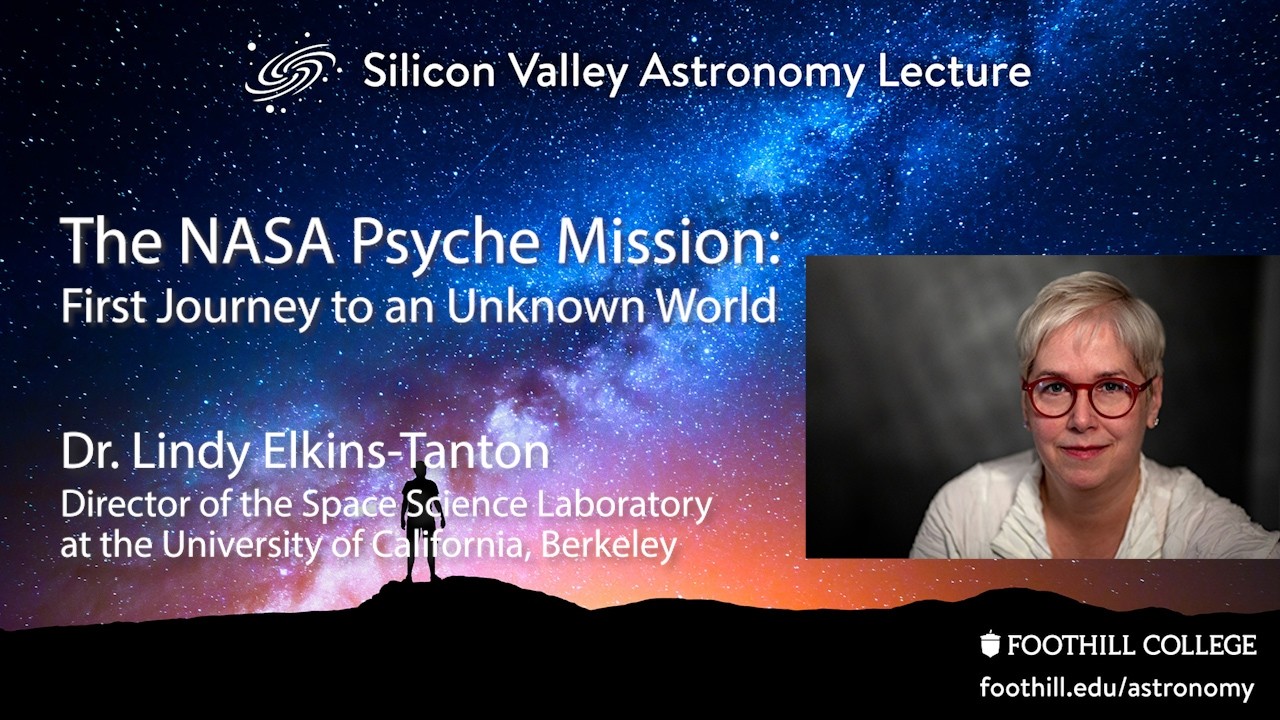
The NASA Psyche mission: First Journey to an Unknown World
Keywords
Summary
136 words
Critical Evaluation
Value of the Information & Strength of the Argument
The lecture provides valuable insights into the Psyche mission, offering a behind-the-scenes look at mission planning and scientific hypotheses. Elkins-Tanton effectively argues for the importance of exploring Psyche as a unique opportunity to study a metal core, potentially revealing early solar system processes. She presents multiple formation hypotheses, acknowledging uncertainties and the need for direct observation. The argumentation is solid, grounded in planetary science principles, and she clearly distinguishes between known facts and speculation. The inclusion of artist renditions and comparisons with meteorites enhances understanding. However, the lecture is aimed at a general audience, so some technical details are simplified, and the depth of scientific evidence is limited.
Scientific Rigor, Source Quality, Title Accuracy
The lecture demonstrates scientific rigor, with Elkins-Tanton citing specific meteorite types, mission data, and the work of colleagues. She acknowledges the limitations of current knowledge and the uncertainties in hypotheses. The title accurately reflects the content, focusing on the first journey to an unknown metallic world. The sources are primarily her own expertise and mission data, with no external citations provided. The lecture is well-structured and credible, though it lacks formal references. The audience’s questions and reactions are not included in the transcript, so no analysis of public comments is possible.
214 words
Title / Content Match
The title accurately reflects the content: a lecture about the Psyche mission, its goals, and the journey to an unknown metallic asteroid.
Quality & Reliability
8/10
The lecture is given by the mission lead, Dr. Lindy Elkins-Tanton, a highly credible planetary scientist. The content is based on current mission data and scientific hypotheses, with clear explanations of uncertainties. However, it is a public lecture, so some details are simplified and not all claims are backed by specific citations.
Key Moments
Markers derived by PSI from the transcript: the creator did not define chapters.
- Introduction of Dr. Lindy Elkins-Tanton and her background.
- Explanation of why Psyche is a unique target: a metal asteroid never visited.
- Discussion of the asteroid's size and shape, comparing it to Massachusetts.
- Overview of the main asteroid belt and Psyche's location.
- Debunking the myth of Psyche's monetary value.
- Formation hypotheses: planetesimal core or impact debris.
- Comparison with CB2 meteorites and their significance.
- Psyche's unusual spin orientation and its implications for mission planning.
- Mission planning process and the challenges of proposing a NASA mission.
- Public engagement: real-time release of images and the student art program.
Cited Sources
- NASA Psyche Mission — Official NASA mission page, likely referenced for mission details.
- Psyche Mission at Arizona State University — Mission website, likely referenced for mission information.
Concurring Sources
- NASA Psyche Mission — Official mission information aligns with the lecture's content.
- Psyche Mission at ASU — Mission website provides similar details on the mission's goals and status.
Contribution & Novelties
The lecture provides an insider’s perspective on the Psyche mission, offering unique insights into the scientific hypotheses and mission planning. It emphasizes the novelty of exploring a metallic world and the importance of direct observation to resolve uncertainties. The speaker’s expertise and engaging presentation style make complex concepts accessible.
Pour aller plus loin :
- Psyche Mission Overview — Official NASA overview of the mission.
- 16 Psyche on Wikipedia — Detailed article on the asteroid.
- Planetesimal formation — Background on early solar system bodies.
83 words
Radar Profile
The radar profile shows high scores in information quantity, quality, and reliability, with a moderate technical level. This indicates a well-balanced lecture that is both informative and credible, suitable for a general audience while maintaining scientific depth.