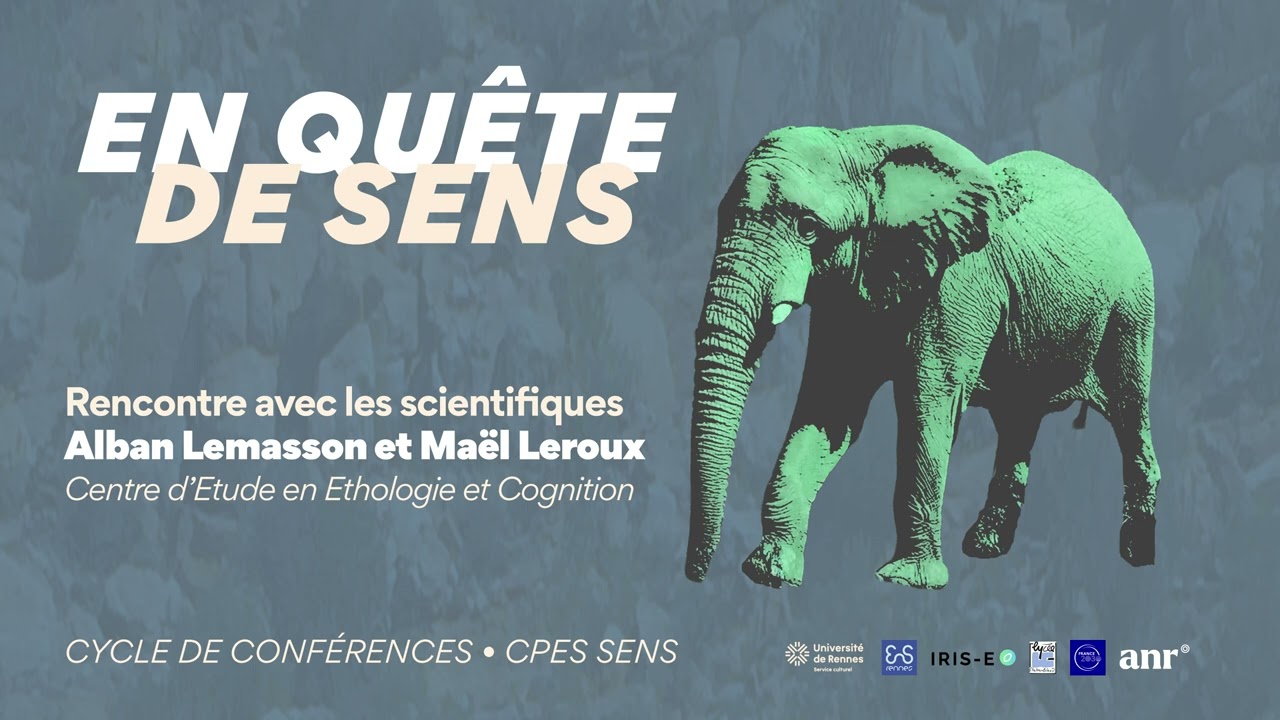
En Quête de Sens : Alban Lemasson et Maël Leroux
Keywords
Summary
194 words
Critical Evaluation
Value of the Information & Strength of the Argument
The value of the information is high, as it provides insights into current ethological research on animal communication, with concrete examples and methodological explanations. The speakers present a balanced view, acknowledging both similarities and differences between human and animal communication. Their argumentation is solid, grounded in empirical studies and theoretical frameworks like the social complexity hypothesis. They effectively illustrate how comparative studies across species can illuminate the evolutionary origins of language.
Scientific Rigor, Source Quality, Title Accuracy
The scientific rigor is evident in the speakers’ references to specific studies, species, and established researchers. They mention key figures like Jane Goodall and discuss published work, including their own book ‘Quand les animaux prennent la parole’. The sources are credible, though not exhaustively cited in the discussion. The title accurately reflects the content, focusing on the quest for meaning in animal communication. The discussion is well-structured and maintains a high level of scientific integrity.
161 words
Title / Content Match
The title accurately reflects the content: a quest for meaning in animal communication, featuring two experts in ethology.
Quality & Reliability
8/10
The discussion features two established ethologists with strong academic credentials, referencing specific studies and species. The content is grounded in scientific research, though presented in a conversational format without detailed citations.
Key Moments
Markers derived by PSI from the transcript: the creator did not define chapters.
- Introduction of the speakers and the topic: animal communication and language.
- Discussion on the history of ethology and influential scientists like Lorenz, Tinbergen, and von Frisch.
- Fieldwork methods: using decoys and playback experiments to study alarm calls.
- The duo's complementary expertise: Lemasson on syntax and pragmatics, Leroux on linguistics.
- Conversational rules in animals: turn-taking in Campbell's monkeys and chorusing in howler monkeys.
- Comparison of communication across great apes and the social complexity hypothesis.
- Discussion on language-trained animals like Alex the parrot and Koko the gorilla.
- Implications for understanding language evolution and conservation.
Cited Sources
- Quand les animaux prennent la parole — Book co-authored by the speakers, mentioned as a recommended resource.
Concurring Sources
- Social complexity hypothesis — Supports the idea that social complexity drives communicative complexity, as discussed.
Contribution & Novelties
The discussion provides a nuanced perspective on animal communication, emphasizing the diversity of communication systems across species and the importance of studying them in natural contexts. It bridges ethology and linguistics, offering a multidisciplinary approach to understanding language evolution.
Pour aller plus loin :
- Social complexity hypothesis — Relevant to the discussion on how social complexity drives communicative complexity.
- Jane Goodall — Her pioneering work on chimpanzee behavior is foundational to the field.
- Playback experiment — A key method discussed for studying animal communication.
84 words
Radar Profile
The radar profile shows high scores across all dimensions, indicating a well-rounded and reliable content. The strengths are particularly notable in information quality and reliability, reflecting the expertise of the speakers and the scientific grounding of the discussion.
💬 No comments were provided for analysis.