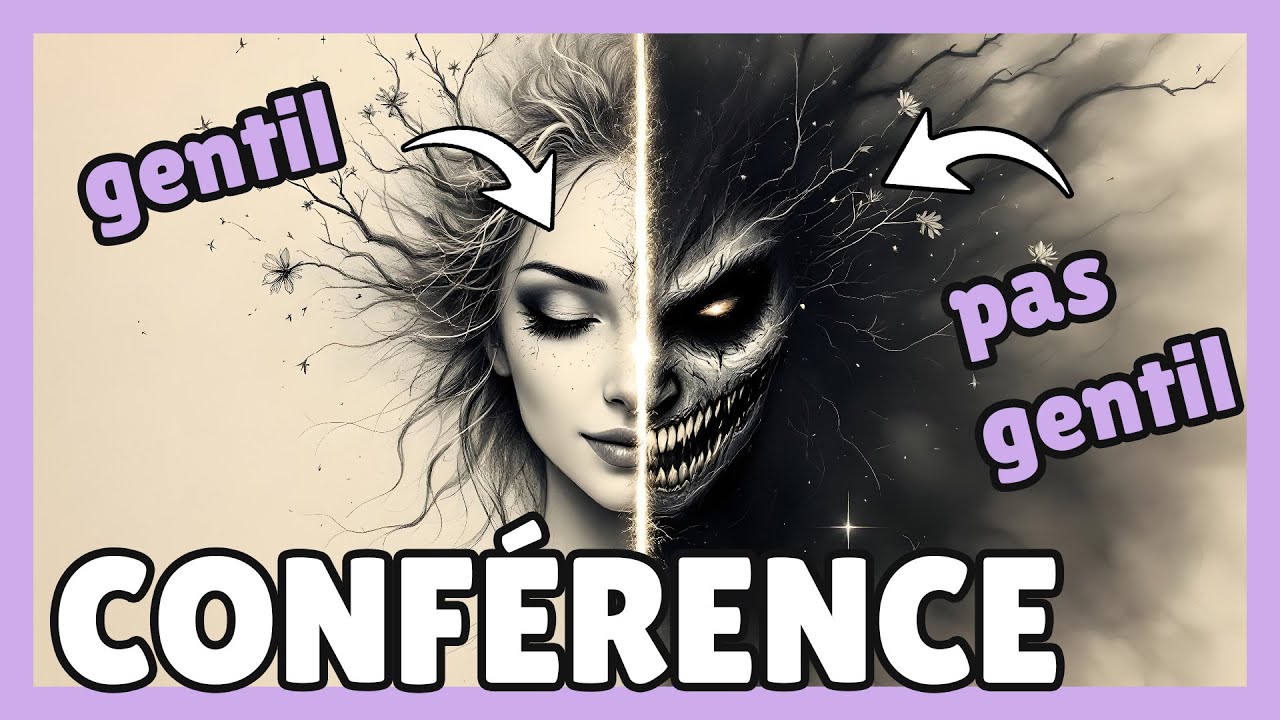
Pourquoi notre cerveau a inventé le bien et le mal, la conférence
Keywords
Summary
137 words
Critical Evaluation
Value of the Information & Strength of the Argument
The talk provides a valuable overview of evolutionary explanations for morality, synthesizing research from anthropology, psychology, and biology. The argumentation is coherent and well-structured, building from the paradox of costly moral behavior to evidence for an innate moral sense. The speaker effectively uses examples and studies to support his points, though he acknowledges the complexity and does not claim to have all the answers. The discussion of cross-cultural experiments and developmental studies adds empirical weight to his argument.
Scientific Rigor, Source Quality, Title Accuracy
The speaker cites several studies and philosophers, including Darwin, Kant, Montaigne, and Rousseau, and references specific experiments on moral intuitions and cross-cultural variations. The sources are relevant and credible, though the talk is a popularization and does not delve into methodological details. The title is somewhat misleading as it implies a definitive claim about the brain ‘inventing’ morality, whereas the content is more nuanced, discussing the evolutionary basis of moral intuitions. However, the talk does address the question of where morality comes from, which aligns with the title’s intent.
182 words
Title / Content Match
The title is somewhat provocative and may overstate the claim of 'invention', but the content does address the evolutionary origins of moral intuitions, which aligns with the title's essence.
Quality & Reliability
8/10
The speaker is a biologist and science communicator, and the talk is based on established research in evolutionary psychology and anthropology, with references provided. However, it is a popular science presentation, not a peer-reviewed study, and some philosophical nuances are simplified.
Chapters
Cited Sources
- Références et version texte de la vidéo — Page with references and text version of the video
- Soutien à la chaîne — Donation page for the channel
- Newsletter — Newsletter subscription page
- Podcast Homo Fabulus — Podcast version of the videos
- Facebook — Facebook page
- Bluesky — Bluesky profile
- Mastodon — Mastodon profile
- Twitter — Twitter profile
- Instagram — Instagram profile
- YouTube — YouTube channel
Concurring Sources
- The Evolution of Morality — Wikipedia article on the evolution of morality, supporting the idea of an evolved moral sense.
- Moral Foundations Theory — Theory that moral intuitions are innate and universal, aligning with the talk's claims.
Dissenting Sources
- Cultural relativism in morality — Some argue that moral diversity across cultures challenges the idea of universal moral intuitions.
Contribution & Novelties
The talk offers a clear and engaging synthesis of evolutionary psychology research on morality, making complex scientific concepts accessible to a general audience. It highlights the idea that moral intuitions are an evolved sense, similar to other sensory modalities, and provides evidence from cross-cultural studies and developmental psychology. The speaker’s ability to connect philosophical debates with modern empirical research is a valuable contribution.
Pour aller plus loin :
- Evolutionary psychology — Provides background on the field.
- Moral foundations theory — A framework for understanding cross-cultural moral intuitions.
- Frans de Waal’s work on animal morality — Discusses moral behavior in animals.
100 words
Radar Profile
The radar profile shows high scores in information quantity, quality, and reliability, with a moderate technical level. This indicates a well-researched and informative talk that is accessible to a general audience, though it may not delve deeply into technical details.
💬 Positif. Sur les 30 commentaires analysés, la majorité exprime de l'appréciation pour la conférence, avec des remerciements et des discussions constructives sur les points soulevés.