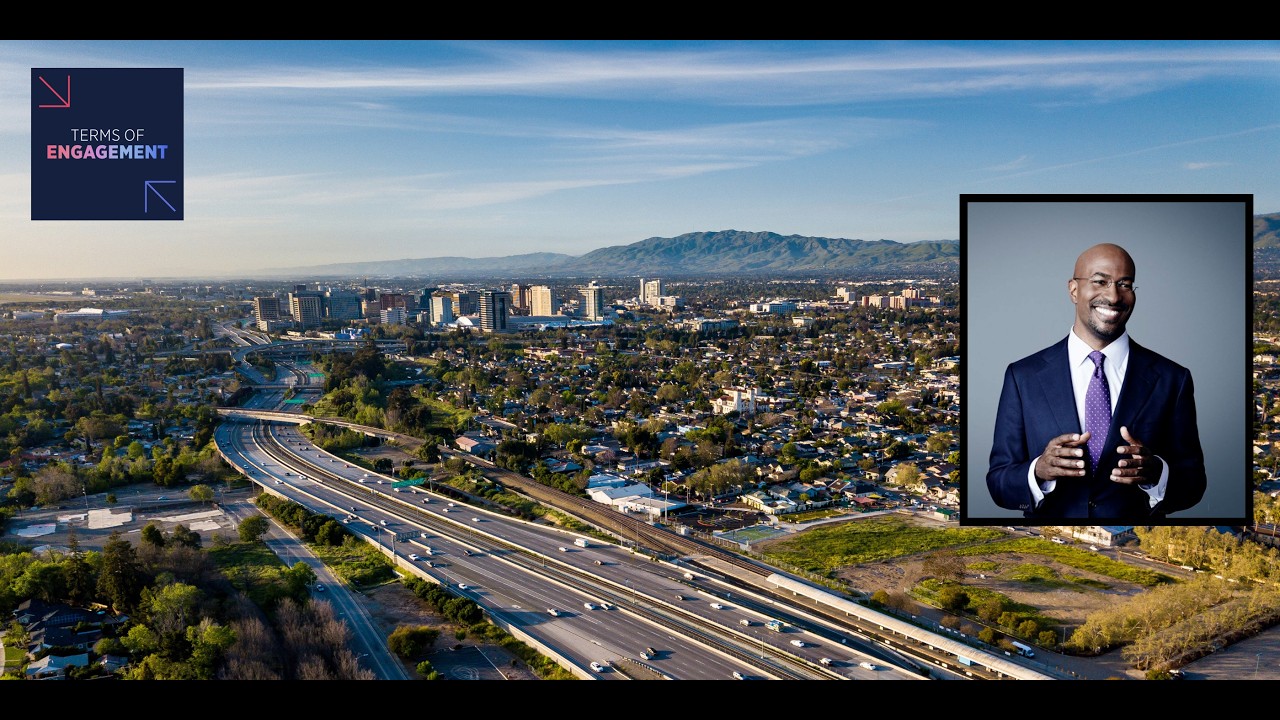
How did the Democrats Lose Silicon Valley? Should They Try to Get it Back?
Keywords
Summary
145 words
Critical Evaluation
Value of the Information & Strength of the Argument
The discussion provides valuable insights into the political dynamics between the Democratic Party and Silicon Valley, offering a nuanced perspective from an insider like Van Jones. The argumentation is largely anecdotal and opinion-based, but it is coherent and well-articulated. Jones effectively explains the sequence of events that led to the current rift, emphasizing the role of the Biden administration’s regulatory stance and the cultural shifts within tech companies. However, the analysis lacks empirical data and relies heavily on personal observations, which may limit its generalizability.
Scientific Rigor, Source Quality, Title Accuracy
The discussion is rigorous in its exploration of the topic, with both participants demonstrating deep knowledge of the subject. However, the sources cited are primarily personal experiences and well-known public events, with no formal citations or references to academic studies. The title accurately reflects the content, which is a balanced examination of the issue. The discussion does not include any formal sources, but it does reference specific individuals and events, such as the 2011 Obama dinner and the Biden administration’s policies, which are verifiable.
184 words
Title / Content Match
The title accurately reflects the content, which explores the political shift of Silicon Valley elites away from the Democratic Party and the potential for reconciliation.
Quality & Reliability
7/10
The discussion features a prominent political commentator and a Harvard professor, providing informed perspectives, but it is largely opinion-based and lacks empirical data or citations.
Key Moments
Markers derived by PSI from the transcript: the creator did not define chapters.
- Introduction by Archon Fung, setting the stage for the discussion.
- Van Jones is introduced and begins the conversation.
- Discussion of the 2011 Obama dinner with Silicon Valley leaders.
- Van Jones characterizes the early alliance as genuine, not just a marriage of convenience.
- Discussion of diversity efforts in Silicon Valley, including Jesse Jackson's activism.
- Transition to the current political landscape, highlighting the shift among tech leaders.
- Archon Fung presents three suspects for the breakup: regulatory left, woke workforces, and libertarianism.
- Van Jones adds emotional and human dimensions, discussing the impact of January 6th.
- Van Jones criticizes the Biden administration's approach and the influence of Bernie Sanders' supporters.
- Discussion of the 'sandwich' effect of regulation and woke culture, and the rise of tech monopolies.
Contribution & Novelties
The discussion offers a unique insider perspective on the political realignment of Silicon Valley, blending personal anecdotes with political analysis. It highlights the role of specific events and personalities in shaping the current divide.
Pour aller plus loin :
- Tech-Optimist Manifesto — Marc Andreessen’s manifesto, central to the discussion of tech accelerationism.
- Lina Khan’s FTC — Information on Lina Khan, the FTC chair, whose regulatory approach is a key factor.
- Peter Thiel’s Cato article — Thiel’s essay on freedom and democracy, referenced in the discussion.
- YesWeCode — Van Jones’ initiative to promote diversity in tech, mentioned in the conversation.
99 words
Radar Profile
The radar profile shows moderate scores across all dimensions, with a slight emphasis on information quantity and quality, reflecting the balanced yet opinion-driven nature of the discussion. The technical level is moderate, suitable for a general audience interested in politics and technology.