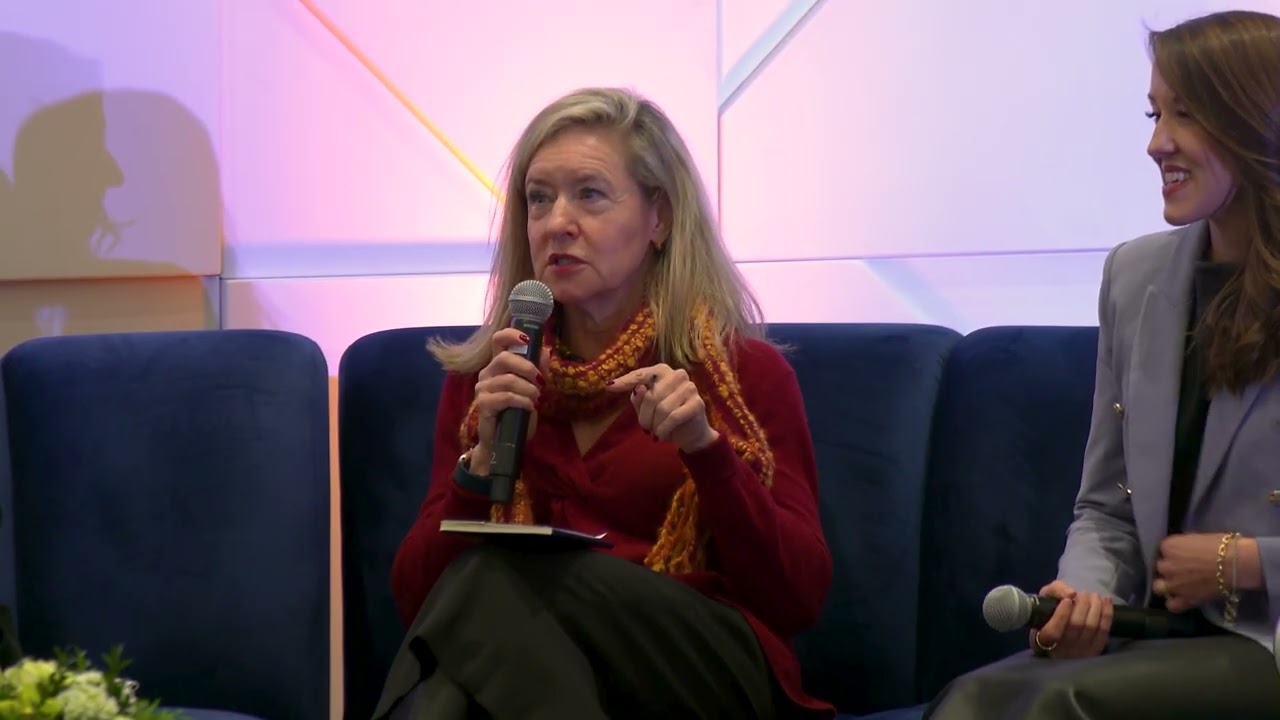
Applications of a New Paradigm: Technology Development
Keywords
Summary
162 words
Critical Evaluation
Value of the Information & Strength of the Argument
The value of the information lies in the diverse perspectives of the panelists, each bringing expertise from economics, technology policy, and bioethics. The argumentation is solid, with each panelist providing reasoned positions supported by historical examples and current events. Acemoglu’s concept of ‘pro-worker AI’ and Hitzig’s analysis of the calculation debate offer novel frameworks. The discussion is well-moderated, allowing for a coherent flow of ideas. However, some arguments are presented without empirical evidence, and the debate format limits the depth of analysis on each point.
Scientific Rigor, Source Quality, Title Accuracy
The scientific rigor is moderate; the panelists are credible experts, but the discussion is largely opinion-based without formal citations. The title accurately reflects the content, focusing on applications of a new paradigm in technology development. The sources cited are primarily the panelists’ own works and general references to historical events, with no direct links provided in the description. The adequacy between title and content is good, as the discussion directly addresses the theme.
173 words
Title / Content Match
The title accurately reflects the content, which discusses applications of a new paradigm in technology development, focusing on societal and institutional roles.
Quality & Reliability
7/10
Panel of recognized experts in economics, technology policy, and bioethics, providing a balanced discussion. However, the video is a debate format with no formal citations or peer-reviewed references, and the claims are largely opinion-based.
Key Moments
Markers derived by PSI from the transcript: the creator did not define chapters.
- Introduction of panelists and the provocative image of the Venetian Doge election diagram.
- Daron Acemoglu discusses the importance of technology control and the challenges of regulating organic systems.
- Zoe Hitzig reflects on the socialist calculation debate and the crumbling assumptions of centralized control.
- Shane Tews shares insights from internet governance and argues for regulating outcomes rather than inputs.
- Emma Waters highlights the rise of grassroots movements and generational skepticism towards AI.
- Acemoglu discusses historical lessons on technology direction and the importance of experimentation.
- Hitzig proposes property-like structures for the digital world to counter centralization.
- Tews highlights positive developments in medical technology and the need for psychological readiness.
- Waters discusses the intersection of bioethics and digital policy, emphasizing spiritual wellbeing.
Cited Sources
- The socialist calculation debate — Referenced by Zoe Hitzig in the context of information processing and knowledge codification.
- Pro-worker AI — Concept proposed by Daron Acemoglu as an alternative direction for AI development.
- Internet Corporation for Assigned Names and Numbers (ICANN) — Mentioned by Shane Tews as an example of multi-stakeholder governance.
Concurring Sources
- The socialist calculation debate — Supports Hitzig's discussion on the historical debate.
- ICANN — Supports Tews' reference to internet governance.
Contribution & Novelties
The video provides a unique synthesis of perspectives from economics, technology policy, and bioethics, offering a holistic view on technology governance. It introduces novel concepts like ‘pro-worker AI’ and ‘property-like structures for the digital world’, which are not commonly discussed in mainstream debates. The discussion also highlights the role of grassroots movements and generational shifts in shaping technology policy.
Pour aller plus loin :
- Socialist calculation debate — Provides background on the debate referenced by Hitzig.
- Pro-worker AI — Note: This concept is not yet widely documented; the link may not be accurate. Consider searching for Acemoglu’s papers.
- ICANN — Background on the multi-stakeholder model mentioned by Tews.
108 words
Radar Profile
The radar profile shows high scores in quantity of information and fiability, reflecting the expert panel and balanced discussion. The technical level is moderate, as the content is accessible but touches on complex concepts. The overall quality is strong, with a slight dip in technical depth due to the debate format.
💬 No comments were provided for analysis.