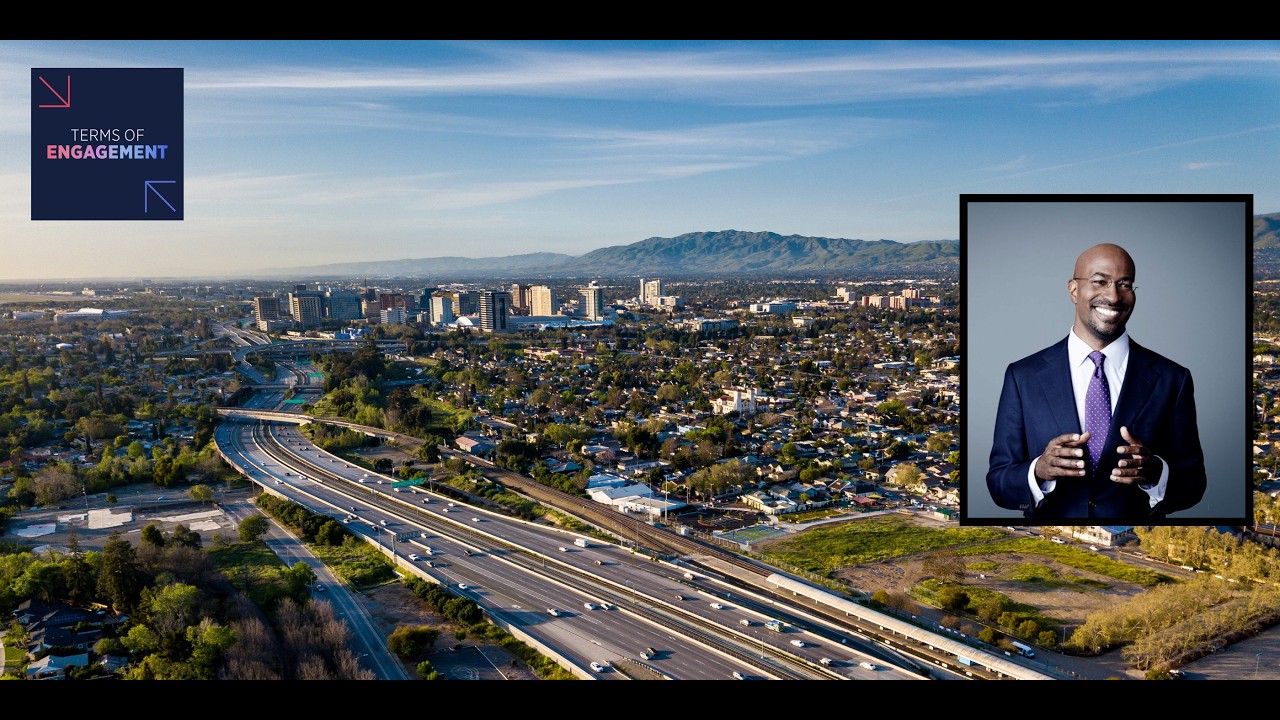
How did the Democrats Lose Silicon Valley? Should They Try to Get it Back?
Keywords
Summary
176 words
Critical Evaluation
Value of the Information & Strength of the Argument
The discussion provides valuable insights into the political dynamics between the Democratic Party and Silicon Valley, offering a nuanced perspective from an insider like Van Jones. The argumentation is persuasive, combining personal anecdotes with broader political analysis. Jones effectively illustrates the shift from a genuine alliance to a fractured relationship, attributing it to specific policy decisions and cultural shifts. The strength of the argument lies in its balanced consideration of multiple factors, including regulatory overreach, cultural backlash, and the inherent libertarianism of tech elites. However, the analysis is largely anecdotal and lacks empirical data to support some claims, such as the influence of specific individuals or the exact impact of policies. The discussion is engaging and thought-provoking, but it remains an opinion-driven debate rather than a rigorous scientific analysis.
Scientific Rigor, Source Quality, Title Accuracy
The discussion maintains a high level of rigor in its exploration of political dynamics, with participants demonstrating deep knowledge of the subject. However, the sources cited are primarily anecdotal, such as personal experiences and widely known events, rather than academic or statistical evidence. The title accurately reflects the content, focusing on the loss of Silicon Valley by Democrats and the potential for reconciliation. The discussion does not explicitly cite external sources, but it references key figures and events that are well-documented. The overall rigor is adequate for a political debate, but it lacks the systematic sourcing expected in academic or journalistic contexts. The title is appropriate and does not overpromise, as the conversation indeed addresses both the causes and potential strategies for Democrats to regain support.
270 words
Title / Content Match
The title accurately reflects the discussion's focus on the Democratic Party's relationship with Silicon Valley and potential strategies for reconciliation.
Quality & Reliability
7/10
Discussion expert with Van Jones, offering informed analysis but relying on personal interpretation and anecdotal evidence rather than systematic data.
Key Moments
Markers derived by PSI from the transcript: the creator did not define chapters.
- Introduction of the topic and participants, with Archon Fung setting the stage.
- Discussion of the 2011 Obama dinner and the historical alliance between Democrats and Silicon Valley.
- Van Jones describes the early efforts for diversity in tech, including Yes We Code and Jesse Jackson's activism.
- Analysis of the shift from innocent tech culture to a more hostile 'anti-woke' stance.
- Introduction of the 'suspects' that broke the marriage: regulation, woke workforce, and libertarianism.
- Van Jones explains the role of the Biden administration's regulatory approach and the influence of Bernie Sanders.
- Discussion of the impact of January 6th and the deplatforming of Trump, and the subsequent shift in tech allegiances.
- Exploration of the 'sandwich' effect of top-down regulation and bottom-up woke culture, and the rise of figures like Thiel and Andreessen.
- Consideration of the monopolistic nature of tech companies and their desire for government submissiveness.
- Discussion of the Biden administration's approach to crypto and the concept of 'regulation by enforcement'.
Cited Sources
- Tech Optimist Manifesto by Marc Andreessen — Referenced as a key document outlining the accelerationist ideology of tech elites.
- Peter Thiel's Cato Institute article on freedom and democracy — Cited as an early statement of Thiel's libertarian views that are incompatible with democracy.
Concurring Sources
- The New York Times article on the First Step Act — Referenced as evidence of Van Jones's involvement in criminal justice reform, supporting his credibility.
Contribution & Novelties
The discussion offers a unique insider perspective on the political realignment of Silicon Valley, blending personal anecdotes with strategic analysis. It provides a nuanced explanation of how a combination of regulatory overreach and cultural backlash alienated tech leaders, and it explores the potential for reconciliation. The conversation contributes to the ongoing debate about the role of tech in democracy and the future of political alliances.
Pour aller plus loin :
- Techno-Optimism — The manifesto by Marc Andreessen that encapsulates the accelerationist ideology.
- Peter Thiel’s ‘The Education of a Libertarian’ — Early articulation of Thiel’s skepticism towards democracy.
- Lina Khan and the Neo-Brandeisian movement — Overview of the antitrust approach that influenced Biden’s regulatory stance.
114 words
Radar Profile
The radar profile shows high scores in information quantity and technical level, reflecting the depth of discussion, but moderate scores in quality and reliability due to the anecdotal nature of the analysis. The overall shape suggests a well-informed but opinion-driven debate rather than a data-heavy scientific presentation.
💬 Sur les 0 commentaires analysés, aucune tendance n'est disponible.