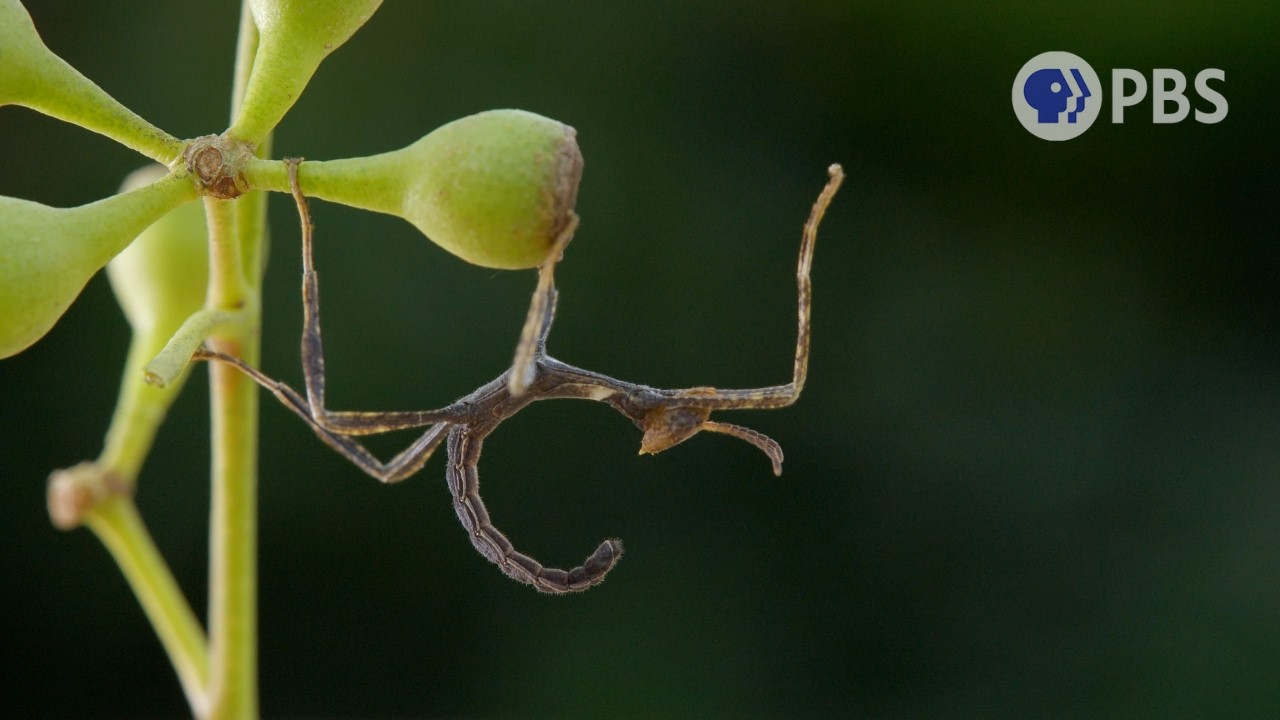
Can You Spot These Insane Camouflaged Animals?
Keywords
Summary
133 words
Critical Evaluation
Value of the Information & Strength of the Argument
The video provides valuable insights into the diversity of camouflage strategies, from behavioral (decorator crabs) to morphological (stick insect) and physiological (pygmy seahorse) adaptations. The argumentation is solid, supported by recent scientific findings, such as the first successful captive breeding of pygmy seahorses and the study of glasswing butterfly wing nanostructures. The explanations are clear and accessible, with a good balance between general information and specific examples.
Scientific Rigor, Source Quality, Title Accuracy
The scientific rigor is high, with references to research institutions like the California Academy of Sciences and UC Berkeley. The sources cited in the description include a transcript and related episodes, but no direct links to peer-reviewed papers. The title accurately reflects the content, which focuses on camouflage and mimicry. The video is well-produced and maintains a high standard of factual accuracy.
144 words
Title / Content Match
The title accurately reflects the content, which showcases four animals with remarkable camouflage abilities.
Quality & Reliability
8/10
The video presents well-documented biological phenomena, with references to recent research (e.g., the first successful captive breeding of pygmy seahorses) and expert commentary from researchers at UC Berkeley. The information is accurate and up-to-date, though some details are simplified for a general audience.
Key Moments
Markers derived by PSI from the transcript: the creator did not define chapters.
- Introduction to the four camouflaged animals.
- Decorator crab attaches algae to its shell using hooked bristles.
- Extreme decorator crab covers itself with anemones for protection.
- Australian stick insect egg mimics a seed, carried by ants into their nest.
- Nymph mimics a red-headed spider ant to avoid predators.
- Pygmy seahorse changes color to match its gorgonian coral habitat.
- First captive breeding of pygmy seahorses reveals color change in offspring.
- Glasswing butterfly wings have nanostructures that reduce reflection.
- Conclusion and call to support KQED.
Cited Sources
- Donate to KQED — Support for the production of Deep Look.
- Transcript on KQED Science — Full transcript of the episode.
- There’s No Place Like Home: 4 of Nature’s Savviest Homeowners — Related Deep Look episode.
- This Stick Insect Has a Peppermint-Scented Secret Weapon — Related Deep Look episode.
- 4 of the Deadliest Tiny Hunters We've Ever Filmed — Related Deep Look episode.
Concurring Sources
- Camouflage in animals — General concept of camouflage.
- Mimicry — General concept of mimicry.
Contribution & Novelties
The video offers a compelling visual exploration of camouflage, highlighting recent scientific discoveries such as the first captive breeding of pygmy seahorses and the nanostructural basis of glasswing butterfly transparency. It provides an accessible overview of evolutionary adaptations, with high-quality footage that enhances understanding.
Pour aller plus loin :
- Camouflage in animals — General overview of camouflage mechanisms.
- Mimicry — Explanation of different types of mimicry.
- Glasswing butterfly — Specific information on the glasswing butterfly.
- Pygmy seahorse — Details on pygmy seahorse biology.
- Decorator crab — Information on decorator crab behavior.
91 words
Radar Profile
The radar profile shows high scores in information quantity, quality, and reliability, with a moderate technical level. This indicates a well-balanced documentary that is both informative and scientifically sound, suitable for a general audience interested in biology.
💬 Sur les 0 commentaires analysés, aucune tendance n'est disponible.