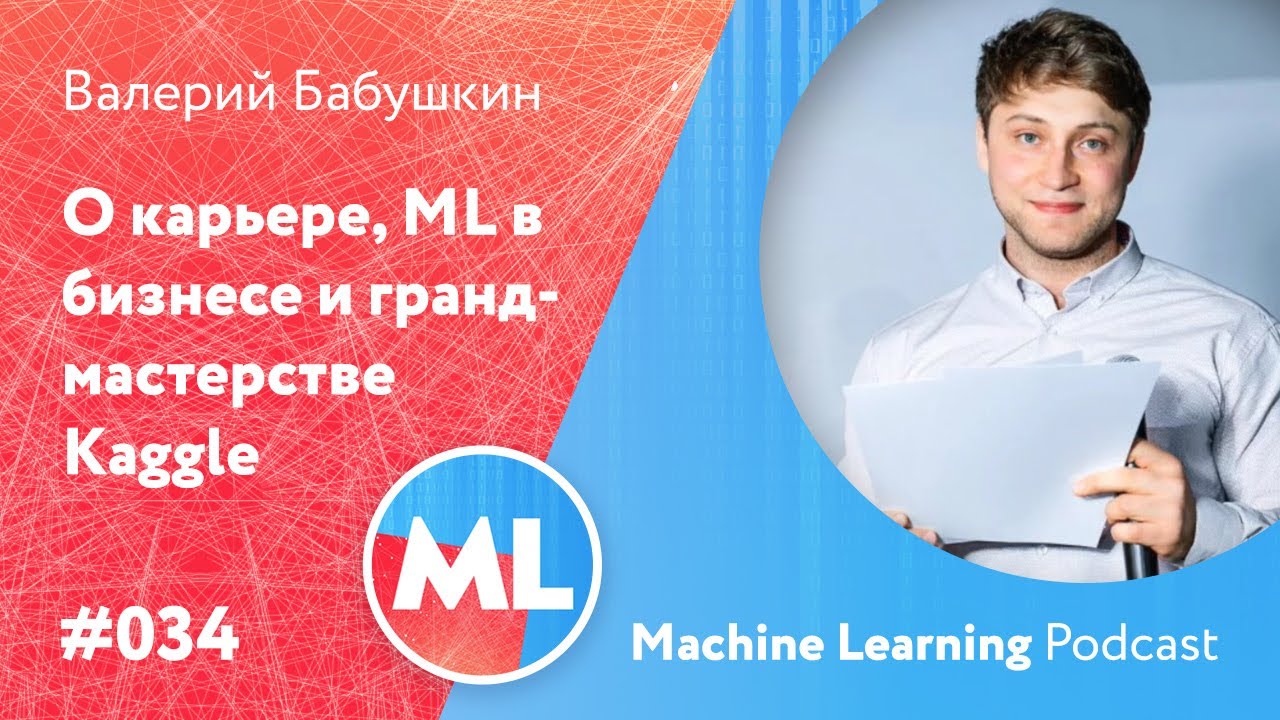
#034 ML Валерий Бабушкин. О карьере, ML в бизнесе и гранд-мастерстве Kaggle
#034 ML Valery Babushkin. About career, ML in business and Kaggle grandmastery
Keywords
Summary
186 words
Critical Evaluation
Value of the Information & Strength of the Argument
The value of this interview lies in the pragmatic, experience-based insights provided by Valery Babushkin. He offers a realistic view of the ML industry, distinguishing between low-hanging fruit and deeper, more lasting initiatives. His argumentation is compelling when he emphasizes that the primary challenge for companies is not technical but cultural – building a robust experimentation framework. Babushkin’s claims about the importance of A/B testing are well-supported with examples from his own career, adding credibility. However, some opinions are subjective, such as his take on the job market and the role of Kaggle, which are presented as personal beliefs rather than data-driven conclusions. Overall, the argumentation is coherent and thoughtful, blending personal narrative with professional analysis.
Scientific Rigor, Source Quality, Title Accuracy
The podcast demonstrates scientific rigor through the explicit recommendation of reputable resources, including textbooks and academic references like ‘The Minimum Description Length Principle’ by Grünwald and ‘Hands-On Machine Learning’ by Géron, providing listeners with verifiable sources. The host’s introduction also mentions Intel’s engineering contributions, but the core discussion avoids unsubstantiated claims. The title accurately represents the content, which focuses on Babushkin’s career, ML in business, and his Kaggle achievements. No significant discrepancies between title and content were identified. The absence of comments provided prevents any public sentiment analysis, but the video’s high like ratio indicates a positive reception.
229 words
Title / Content Match
The title accurately reflects the main topics covered: Valery Babushkin's career, machine learning applications in business, and his experience as a Kaggle grandmaster.
Quality & Reliability
8/10
The interview features a highly experienced ML practitioner with a strong technical background and industry credibility. The discussion is well-structured and provides practical insights, though it relies heavily on personal opinion and anecdotal evidence.
Key Moments
Markers derived by PSI from the transcript: the creator did not define chapters.
- Interview begins: Valery Babushkin introduces his background and early interest in programming and engineering.
- Discussion about his career path through banks, Yandex, and X5, and his discovery of machine learning.
- Insights on implementing ML in business and the crucial role of A/B testing and experimentation culture.
- Advice on building ML teams, when to hire consultants, and evaluating potential employees.
- Discussion of Kaggle competitions, books he recommends, and final thoughts on the future of ML careers.
Cited Sources
- Kaggle — Referenced as a platform for data science competitions and skill development.
- Hands-On Machine Learning with Scikit-Learn, Keras, and TensorFlow — Recommended as a practical guide for ML practitioners.
- The Minimum Description Length Principle — Mentioned as an advanced theoretical resource related to model selection.
- Нетрадиционные методы многомерного статистического анализа — A book on alternative methods of multivariate statistical analysis, linked to foundational statistics.
- Machine Learning Podcast on Anchor — Hosting platform for the podcast, mentioned in description.
External References
Contribution & Novelties
The podcast offers a unique perspective by combining career advice, practical ML implementation strategies, and personal anecdotes from a recognized Kaggle grandmaster. The discussion on the importance of experimentation culture in companies is a valuable insight that goes beyond technical aspects. The recommended resources provide a solid foundation for further learning.
Pour aller plus loin :
- Kaggle — Official site for ML competitions and community, directly related to the guest’s expertise.
- Hands-On Machine Learning — A comprehensive practical guide recommended in the episode.
- The Minimum Description Length Principle — A theoretical framework that underlies model selection, relevant to the discussion of modeling rigor.
103 words
Radar Profile
The profile shows a high score in quality and quantity of information, with a slightly lower technical depth, indicating a focus on practical advice over algorithmic details. The reliability is high, supported by the guest's experience and credible references. Overall, the video performs well across all dimensions, with a strong emphasis on applied knowledge.