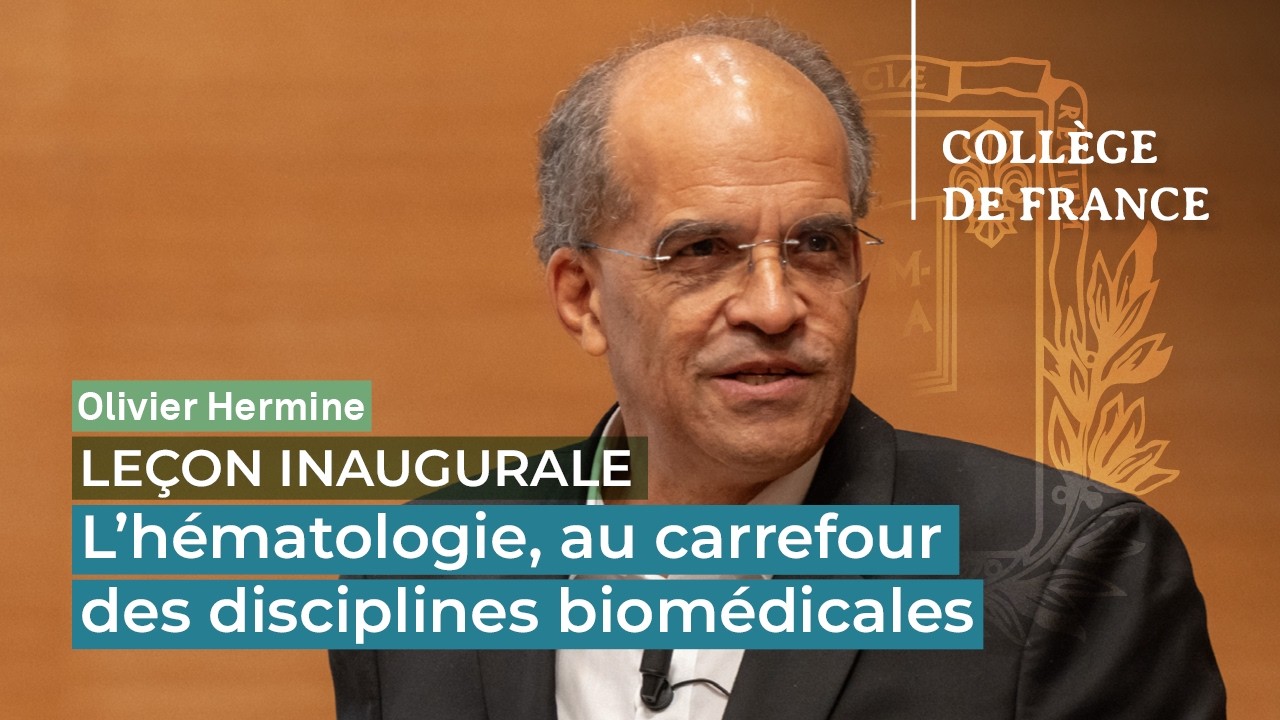
L’hématologie, au carrefour des disciplines biomédicales... - Olivier Hermine (2026)
Hematology, at the crossroads of biomedical disciplines... - Olivier Hermine (2026)
Title history
- L’hématologie, au carrefour des disciplines biomédicales... - Olivier Hermine (2026) — observed on 20261110-1223 UTC (YouTube)
Keywords
Summary
157 words
Critical Evaluation
Value of the Information & Strength of the Argument
The lecture provides a comprehensive overview of hematology’s evolution and its central role in medical research. The argumentation is solid, drawing on historical evidence and key scientific discoveries. Hermine effectively demonstrates how fundamental research on blood has led to major clinical breakthroughs. He provides concrete examples, such as the impact of HLA typing on transplantation and the development of targeted therapies for lymphomas. The personal anecdotes and cultural references make the content engaging but do not weaken the scientific argument. The call for collaborations between academia and industry, and the ethical considerations, are well articulated. However, the lecture does not present new experimental data; it is a synthesis of existing knowledge. The argumentation is persuasive, but it lacks a critical examination of controversies in the field.
Scientific Rigor, Source Quality, Title Accuracy
The lecture is given at a prestigious institution, and the speaker is an authority in the field. The historical account of hematology appears accurate, referencing well-known figures and events. However, no explicit citations to specific papers are provided during the talk. The description includes links to resources from the Collège de France, which serve as complementary references. The title accurately matches the content, as the lecture explores the interdisciplinary nature of hematology and the interplay between research and clinical practice. The adequacy is high. The video’s production is professional, with no evidence of commercial bias or sponsored content.
239 words
Title / Content Match
The title accurately reflects the content, as the lecture crosses fundamental and clinical research in hematology.
Quality & Reliability
8/10
The lecture is part of an academic institution (Collège de France) and the speaker is a renowned professor. Historical and scientific facts are generally accurate, but the talk does not provide explicit references to primary literature. Personal anecdotes add color but not scientific rigor. Overall, the content is reliable and well-presented.
Key Moments
Markers derived by PSI from the transcript: the creator did not define chapters.
- Introduction by the administrator, presenting the chair and the speaker.
- Hermine begins his inaugural lecture, thanking the audience and outlining the scope of his presentation.
- Historical overview of blood circulation, from Galen's theory to Harvey's discovery and the role of Malpighi.
- Discussion on Claude Bernard and the establishment of experimental medicine, including the history of bloodletting and its decline.
- Modern hematology: discovery of blood groups, HLA system, and the development of treatments for hematological malignancies.
- Future perspectives: genetic therapies, artificial intelligence, and ethical considerations in hematology.
Cited Sources
- Leçon inaugurale page on Collège de France — Description of the lecture, its topic, and the chair holder.
- Interview with Olivier Hermine — Perspectives on the importance of fundamental research within clinical groups.
- Chair of Experimental Medicine at Collège de France — Overview of the statuary chair held by Olivier Hermine.
- Collège de France main website — General resource for videos and publications of the institution.
Concurring Sources
- Leçon inaugurale page on Collège de France — Provides context and official description of the lecture.
- Interview with Olivier Hermine — Aligns with the lecture's emphasis on fundamental research.
External References
Contribution & Novelties
This lecture offers a valuable synthesis of hematology’s history and its role in experimental medicine, emphasizing the constant back-and-forth between fundamental and clinical research. It brings a personal perspective from a leading expert, highlighting the importance of collaboration and ethical frameworks. The original contribution lies in framing hematology as a model of translational medicine, showing how discoveries from blood research have far-reaching implications beyond blood diseases.
Pour aller plus loin :
- Hematology — Comprehensive overview of the discipline, its scope, and major advances.
- Claude Bernard — Key figure in experimental medicine, his methodology and influence.
- HLA system — Crucial for transplantation and immunology, discussed in the lecture.
107 words
Radar Profile
The radar shows a balanced profile, with high scores in information quality and reliability, moderate technical level, and good overall quantity. The lecture excels in presenting comprehensive content in an accessible manner, with a strong scientific basis. The slight dip in technical depth reflects its general audience orientation, but the expertise of the speaker ensures accuracy.