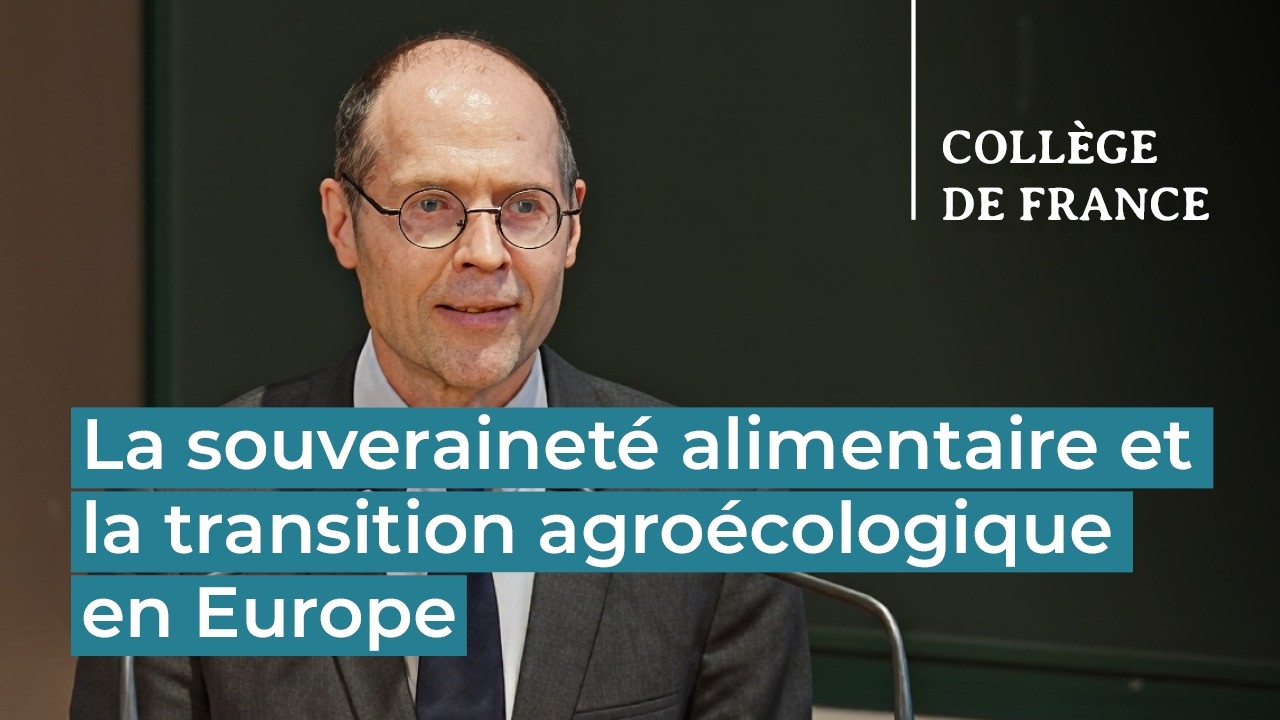
La souveraineté alimentaire et la transition agroécologique en Europe - 2026-27 (4)
Food sovereignty and the agroecological transition in Europe - 2026-27 (4)
Title history
- La souveraineté alimentaire et la transition agroécologique en Europe - 2026-27 (4) — observed on 20261119-1454 UTC (YouTube)
Keywords
Summary
194 words
Critical Evaluation
Value of the Information & Strength of the Argument
The lecture provides a highly valuable, well-structured analysis of EU food policy dynamics, integrating recent political events and institutional reactions. De Schutter’s argumentation is solid, based on specific policy documents (Farm to Fork, Nature Restoration Law, Omnibus), empirical data on price inflation, and concrete examples of legislative rollback. He also cites a petition signed by 573 scientists and a joint environmental NGO statement, strengthening his claims. The personal insights from his involvement in the 2016-2019 campaign for a Common Food Policy add credibility. He effectively demonstrates the gap between the Green Deal aspirations and actual policy outcomes, and convincingly argues that the transition to agroecology is being undermined by short-term political pressures.
Scientific Rigor, Source Quality, Title Accuracy
The scientific rigor is high: De Schutter is a recognized expert and references official EU documents, reports (e.g., Strategic Dialogue report, Corporate Europe Observatory lobbying report), and scientific petitions. Sources are credible, though the lecture format does not provide direct citations or footnotes; however, the description includes links to the conference page and the Collège de France. The title is accurate and accurately reflects the content. The lecture is well-structured, with clear chronological progression and logical connections between events. Comments from viewers are not available, so no trends can be analyzed.
218 words
Title / Content Match
The title accurately reflects the content: the talk addresses food sovereignty and the agroecological transition within the EU, specifically the fourth lecture in the series.
Quality & Reliability
9/10
Lecture by a professor of international law at Université catholique de Louvain, drawing on specific EU policy documents, reports, and scientific petitions (e.g., 573 scientists' warning). The analysis is well documented and reflects a high level of expertise.
Key Moments
Markers derived by PSI from the transcript: the creator did not define chapters.
- Introduction and context of the lecture series
- Recap of the 2016-2019 campaign for a Common Food Policy and adoption of Farm to Fork strategy
- Impact of the Ukraine invasion and energy price inflation on food prices
- Farmers' protests in early 2024 and their demands
- Commission's concessions: exemption from fallow land obligations, withdrawal of pesticide regulation
- June 2024 European elections and new political majorities
- Nature Restoration Law adoption
- December 2025 omnibus proposal on pesticide reauthorization, scientists' petition
- Abandonment of the sustainable food systems framework law
- Strategic Dialogue on the future of EU agriculture and its report
- Comparison of Strategic Dialogue recommendations with the 2019 Common Food Policy report
Cited Sources
- Collège de France - Conference page — Official page of the lecture series with audios and videos
- Collège de France - Cycle Europe — Overview of the Europe lecture cycle
- YouTube Playlist - Cycle Europe — Video playlist for the Europe cycle
External References
Contribution & Novelties
This lecture provides a unique, expert synthesis of the recent political setbacks to the EU’s agroecological agenda, combining analysis of the 2024 farmers’ protests, the election outcomes, and the 2025 omnibus proposals. De Schutter’s linkage of price inflation to energy costs and the subsequent political exploitation is an original contribution. The comparison between the Strategic Dialogue recommendations and the 2019 ‘Common Food Policy’ report highlights continuity and regression.
Pour aller plus loin :
- Farm to Fork Strategy — Official EU strategy that the lecture discusses.
- Common Agricultural Policy — The policy framework at the center of the debates.
- EU Nature Restoration Law — Recent regulation mentioned as a positive step.
- Strategic Dialogue on the Future of EU Agriculture — Concepts discussed in the lecture; official EU page may exist but URL not verified here.
134 words
Radar Profile
The radar profile shows very high scores for information quantity, quality, and reliability (9/9/9), indicating a dense, trustworthy lecture. The technical level is slightly lower (7/10) because the content remains accessible to a general audience despite its depth. Overall, a strong profile suggesting a highly informative and credible resource.