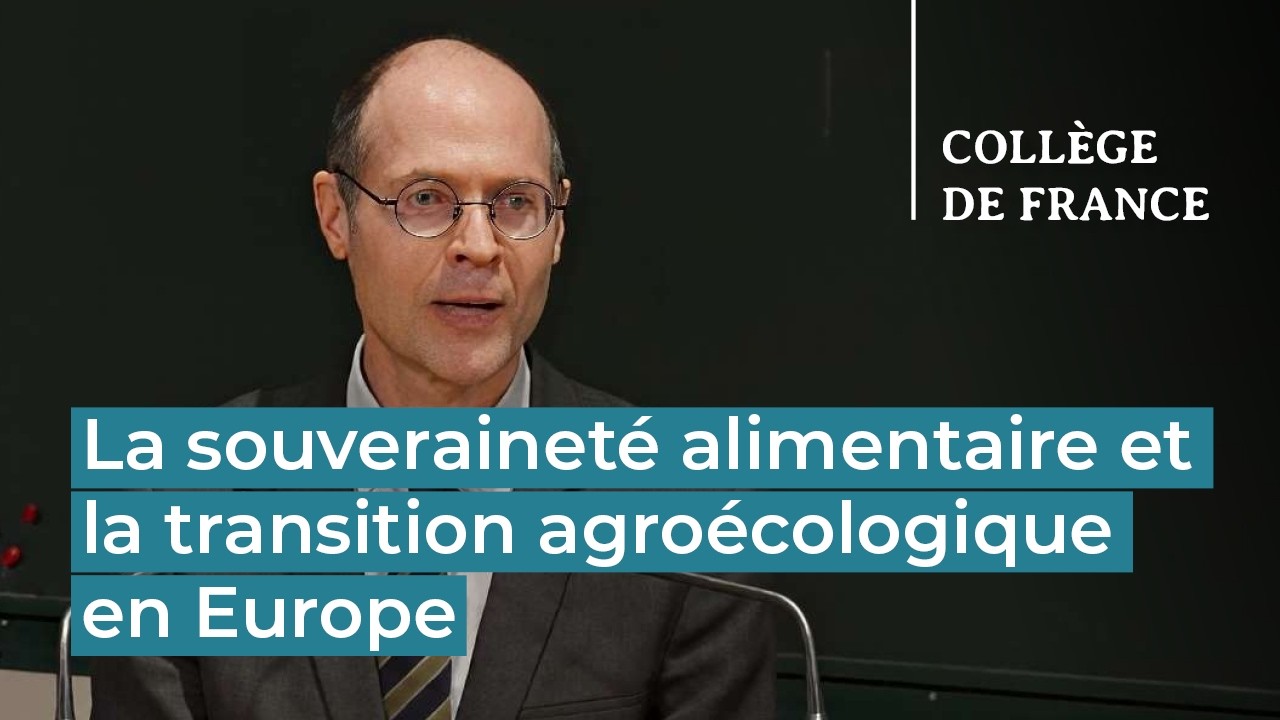
La souveraineté alimentaire et la transition agroécologique en Europe - 2026-27 (1)
Food sovereignty and the agroecological transition in Europe - 2026-27 (1)
Title history
- La souveraineté alimentaire et la transition agroécologique en Europe - 2026-27 (1) — observed on 20261110-1223 UTC (YouTube)
Keywords
Summary
154 words
Critical Evaluation
Value of the Information & Strength of the Argument
The lecture provides a comprehensive and well-argued analysis of food sovereignty, linking historical developments to current policy debates. De Schutter’s argumentation is compelling: he demonstrates how the WTO framework and the Green Revolution have created inequities, while offering agroecology as an alternative. He uses empirical data, such as crop yield trends and price fluctuations, to support his claims. The value lies in his clear exposition of complex legal and economic interconnections, making a strong case for rethinking agricultural policy. The argumentation is solid, though it presents a particular ideological perspective, which is acknowledged as such.
Scientific Rigor, Source Quality, Title Accuracy
The lecture is based on rigorous academic sources, including the speaker’s own UN reports and scholarly work. De Schutter refers to historical figures like René Dumont and Paul Ehrlich, and uses official statistics. The Collège de France’s institutional backing and the speaker’s recognized expertise enhance the credibility. The description provides links to the conference page and related resources, which are reliable. The title accurately reflects the content, and there is a clear coherence between the lecture’s claims and its sources. The argumentation is well-supported, with only minor potential biases inherent in the lecturer’s perspective.
204 words
Title / Content Match
The title accurately describes the lecture's focus on food sovereignty and the agroecological transition within the European context, matching its content effectively.
Quality & Reliability
9/10
The lecture is delivered by a renowned expert in international law and food sovereignty, based on extensive academic research and direct involvement in UN mandates. The content is well-structured, historically grounded, and legally precise, making it highly reliable.
Key Moments
Markers derived by PSI from the transcript: the creator did not define chapters.
- Introduction by the administrator and presentation of the Europe cycle series.
- Lecturer's opening: definition of agroecology and overview of the four-part series.
- Origins of food sovereignty in Latin America and the 1993 Via Campesina declaration.
- Contrast with the WTO Agreement on Agriculture and its dumping effects on developing countries.
- Green Revolution technologies and their impact on production and dependency.
- Population growth and Malthusian warnings, and how yields outpaced demographic growth.
Cited Sources
- Collège de France - La souveraineté alimentaire et la transition agroécologique en Europe — Official page of the conference series.
- Cycle Europe - Collège de France — Page of the Europe cycle hosting the lecture.
- Chaire Droit international des institutions — Chair of Samantha Besson, who organized the cycle.
External References
Contribution & Novelties
This lecture brings a unique legal and human rights perspective to the debate on food sovereignty, highlighting the tensions between international trade rules and the right to food. It provides a historical and critical analysis of the Common Agricultural Policy and proposes agroecology as a paradigm shift. The speaker’s direct involvement in UN mechanisms enriches the analysis with practical insights.
Pour aller plus loin :
- Food sovereignty - Wikipedia — Provides background on the concept’s evolution and its meaning.
- La Via Campesina - Wikipedia — The peasant movement that advanced the term globally.
- Agroecology - Wikipedia — Defining the ecological approach in agriculture.
- European Green Deal - Wikipedia — Policy framework discussed in the series.
115 words
Radar Profile
The profile shows high quality and reliability with moderate technical level, indicating a balanced lecture that is both informative and accessible.