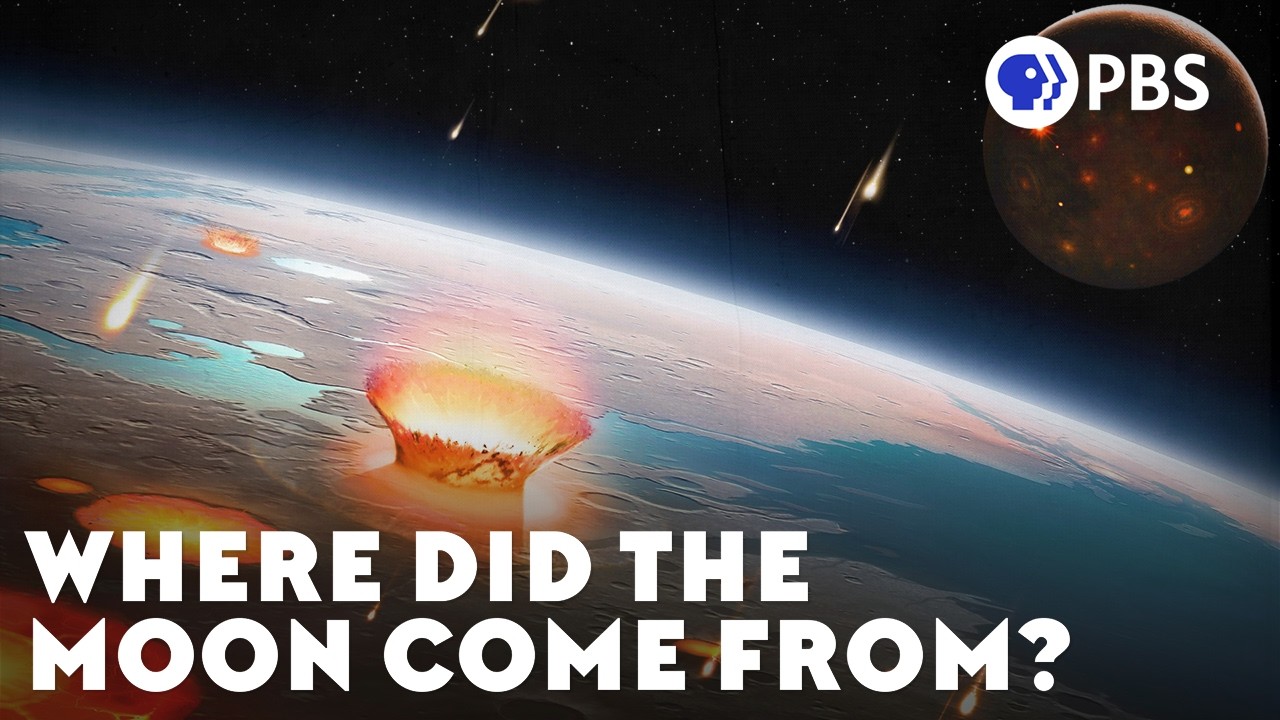
When Earth "Ate" A Planet
Keywords
Summary
141 words
Critical Evaluation
Value of the Information & Strength of the Argument
The video provides a well-structured argument, presenting each hypothesis and its strengths/weaknesses. It clearly explains the isotopic crisis as a key problem and shows how newer models attempt to resolve it. The 35-hour formation timescale is presented with vivid visualizations, and the LLVP theory is logically tied to the impact scenario. The narrative builds evidence from multiple lines of inquiry (geochemistry, geophysics, and computational modeling), demonstrating robust scientific reasoning. The viewer is left with an accurate sense of what is known versus what remains speculative.
Scientific Rigor, Source Quality, Title Accuracy
The video cites a comprehensive reference list (available via a Google Doc link) and relies on peer-reviewed studies, including the 2022 high-resolution simulation and the 2023 LLVP paper. It acknowledges uncertainties, such as the possibility that LLVPs have other origins. The production quality is high, and the title accurately reflects the central theme without oversimplification. No conflicting sources are presented; the content aligns with current scientific consensus while highlighting ongoing debates.
171 words
Title / Content Match
The title effectively captures the core idea of the Giant Impact Hypothesis, where Earth consumed the protoplanet Theia, matching the video's content precisely.
Quality & Reliability
9/10
The video presents well-established and recent scientific findings, with references provided and a balanced discussion of uncertainties. It is produced by PBS Eons, known for rigorous science communication.
Key Moments
Markers derived by PSI from the transcript: the creator did not define chapters.
- Introduction of Apollo samples and their unexpected similarity to Earth rocks.
- Discussion of the Moon's unusual size and orbit relative to Earth.
- Explanation of isotope fingerprints and the similarities between lunar and terrestrial samples.
- Introduction of the canonical impact model from 2001.
- Explanation of the Isotopic Crisis and failed attempts to resolve it.
- The 2022 high-resolution simulation and the discovery of the 35-hour timescale.
- The 2023 proposal that LLVPs are remnants of Theia's mantle.
- Conclusion summarizing current knowledge and uncertainties.
Cited Sources
- Eons References (Moon episode) — The full list of scientific references cited in this episode.
External References
Contribution & Novelties
This episode brings the latest research on lunar formation to a general audience, notably the 2022 super-resolution simulations that condensed the Moon-forming event to 35 hours, and the 2023 hypothesis linking LLVPs to Theia head-on. It clearly explains why the canonical model failed and how new data reshape our understanding. The production also highlights the ongoing nature of scientific inquiry.
Pour aller plus loin :
- Giant-impact hypothesis — Provides background on the leading theory of the Moon’s origin.
- Theia — Details about the hypothesized protoplanet and its role in the collision.
- Large low-shear-velocity provinces — Explanation of these mysterious mantle structures and the evidence linking them to Theia.
108 words
Radar Profile
The radar profile is strong across all axes, particularly on information quantity and reliability, with a slightly lower technical level reflecting its accessible presentation.
💬 Very positive. Viewers were fascinated by the 35-hour timescale, praised the new host Gabriel, and expressed delight at the LLVP hypothesis, with many humorous comments.