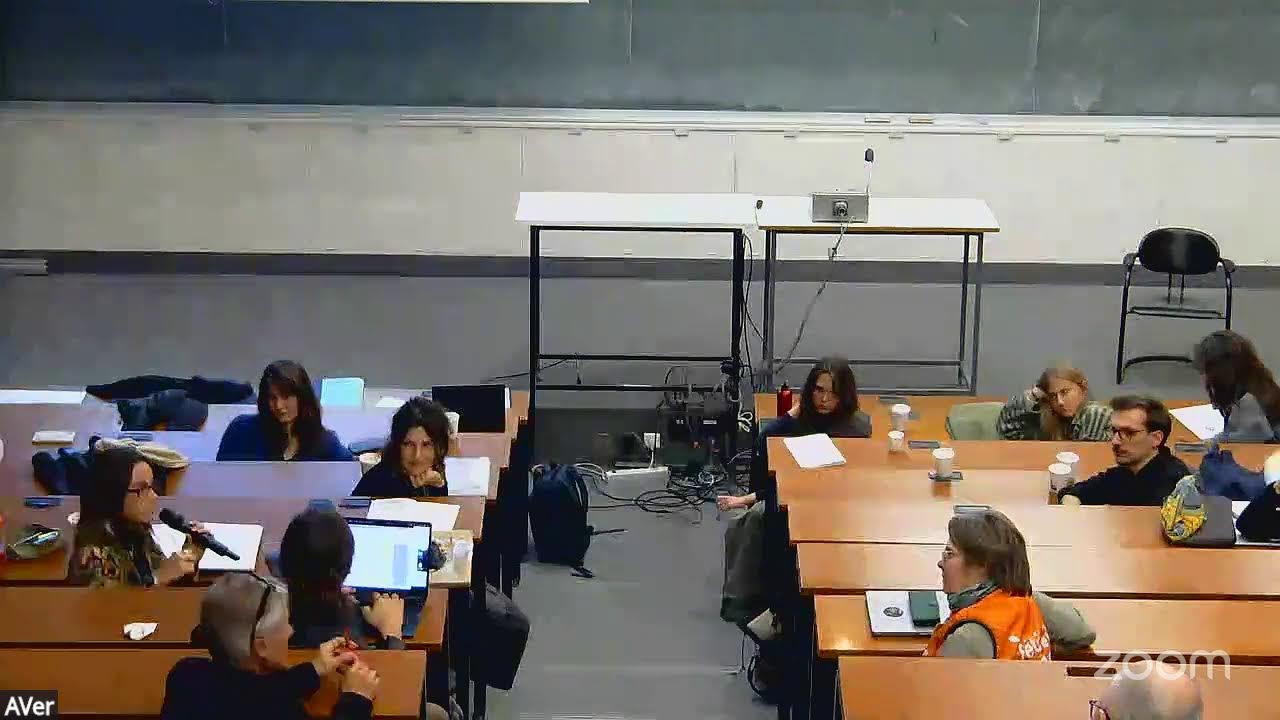
Atelier "Biodiversité à Meudon"
Title history
- Atelier "Biodiversité à Meudon" — observed on 20261108-0801 UTC (YouTube)
Keywords
Summary
136 words
Critical Evaluation
Value of the Information & Strength of the Argument
The value of the information lies in its concrete, interdisciplinary approach to site management, connecting biodiversity conservation with astronomical research and public engagement. The argumentation is structured: first, a diagnosis of the site’s ecological and landscape value; second, a problem statement around night pollution; third, a set of actionable axes (research, education, partnerships). The reasoning is coherent and builds on widely recognized concepts such as the dark ecological network and light pollution impacts. However, the proposals remain at a conceptual level, lacking detailed technical or financial feasibility analysis. The reliance on a single student project, albeit thorough, limits the generalizability and depth of the argumentation.
Scientific Rigor, Source Quality, Title Accuracy
The rigor of the presentation is moderate. The students reference specific programs (e.g., Vigie Nature, Jour de la Nuit, LIFE) and institutions (DRAC, SAF), but without formal citations or empirical data. The ecological diagnosis is based on existing inventories, yet no concrete data is presented on screen. The title ‘Atelier Biodiversité à Meudon’ is accurate and directly matches the content, which is entirely dedicated to biodiversity and sustainable planning for this site. The absence of a description and chapters reduces context, but the video provides a live documentation of a real workshop with professional discussion.
215 words
Title / Content Match
The title accurately reflects the content: this is an atelier (workshop) focused on biodiversity at the Meudon site.
Quality & Reliability
6/10
The presentation is based on a student workshop featuring ecological diagnostics and management proposals. The sources are not formally cited in the video, but the reasoning aligns with established ecological concepts.
Key Moments
Markers derived by PSI from the transcript: the creator did not define chapters.
- Host welcomes participants and introduces the context of the workshop.
- Clarisse explains the sustainable development strategy and the collaboration with the Natural History Museum.
- Group 'Constellation' begins its presentation, covering the ecological and landscape diagnosis of the site.
- The group discusses the negative impacts of light pollution on fauna and flora, and introduces the concept of 'trame noire'.
- Presentation of the three strategic axes: scientific development, awareness raising, and economic partnerships.
- Concrete proposals include an educational trail, night events, and citizen science tools like bat detectors.
- Funding strategies are outlined, referencing regional programs and the possibility of attracting startups.
- Questions from the audience focus on potential conflicts between activities and scientific research.
Cited Sources
- Vigie Nature — Mentioned as a citizen science program for bat monitoring and other biodiversity observations.
- Jour de la Nuit — Mentioned as a public event to raise awareness about light pollution and its effects on biodiversity.
- Société Astronomique de France — Proposed as a partner for organizing private astronomical event evenings.
- Programme LIFE — Considered as a potential long-term European funding source for projects preserving the night.
Contribution & Novelties
The main contribution is the transposition of the ‘dark ecological network’ concept to a scientific observatory site, framed as a way to combine astronomical research needs with ecological conservation and public outreach. The workshop proposes a concrete integration of night-related activities, which is rarely addressed in such a detailed manner. The originality lies in the three-pillar approach (science, education, economy) applied to a heritage landscape.
Pour aller plus loin :
- Dark ecological network (Trame noire) — Background on the concept of ecological corridors for nocturnal species.
- Light pollution — General overview of sources, effects, and mitigation.
- Citizen science — Related to the participatory monitoring tools proposed in the workshop.
- International Dark-Sky Association — Global advocacy for reducing light pollution and promoting dark sky preservation.
124 words
Radar Profile
The radar profile shows a balanced but moderate level across all dimensions. Information quantity is relatively high due to the long workshop format, but the quality and technical depth are limited by the student-led nature of the content, resulting in a modest overall reliability score.