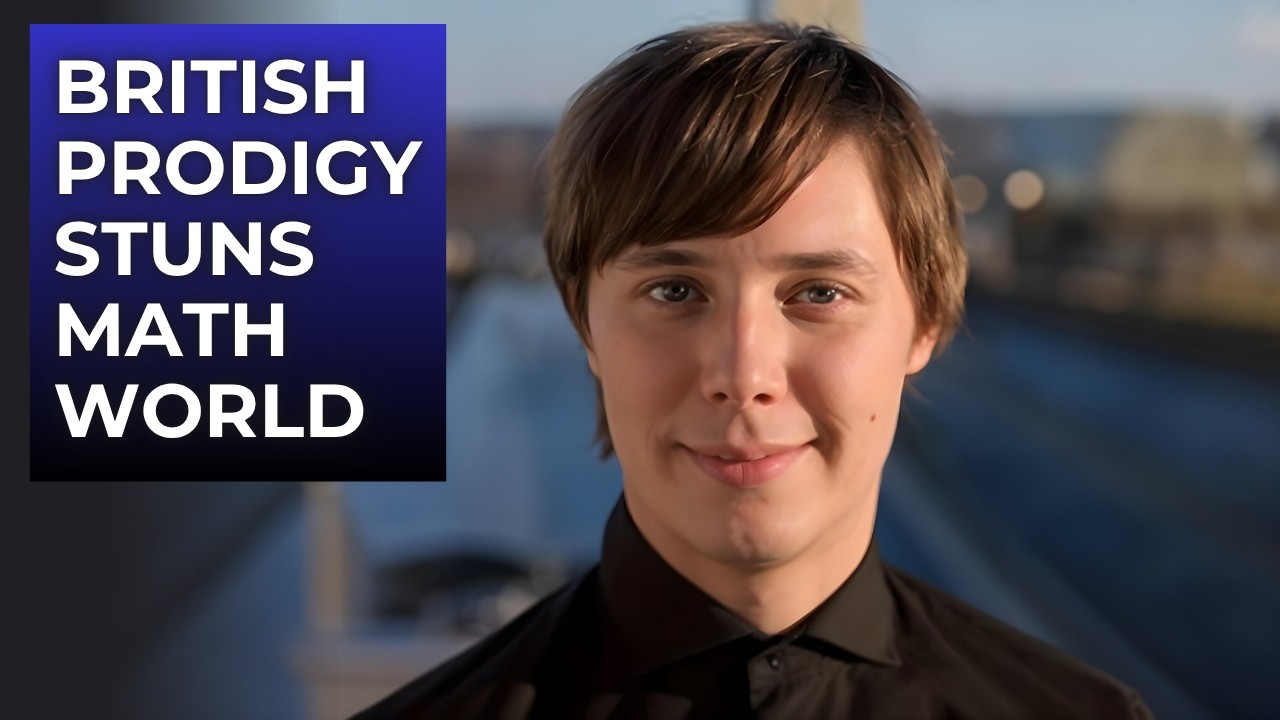
21 Yr Old Disproves 4 Decades Old Belief in Computing
Title history
- 21 Yr Old Disproves 4 Decades Old Belief in Computing — observed on 20261101-0118 UTC (YouTube)
Keywords
Summary
206 words
Critical Evaluation
Value of the Information & Strength of the Argument
The value of the information lies in presenting a significant theoretical breakthrough that challenges a 40-year-old cornerstone of computer science, with direct practical implications for memory efficiency in modern computing. The argumentation is solid: the video systematically explains the problem, the historical context, the mechanism of Elastic Hashing, and the mathematical proof approach, quoting credible experts and referencing the published paper. It successfully conveys the conceptual leap from greedy to non-greedy strategies and why it matters, while grounding the explanation in analogies like the full parking lot and bus clumping. The narrative is well-structured and avoids unsupported claims, making the information both engaging and reliable.
Scientific Rigor, Source Quality, Title Accuracy
The scientific rigor is high: the video cites the actual arXiv paper (2501.02305) and mentions endorsements from professors at prestigious institutions, as well as coverage in Quanta Magazine. It also credits the Simons Institute and UC Berkeley EECS, which adds credibility. The title ‘21 Yr Old Disproves 4 Decades Old Belief in Computing’ accurately encapsulates the core content without exaggeration. The video maintains a balanced tone, acknowledging the collaborative work and the role of mentorship. No major sources are found to contradict the claims, though one comment notes a minor inaccuracy in a password example, which is a fringe issue. Overall, the adéquation titre/contenu is excellent, and the sources are appropriately referenced.
232 words
Title / Content Match
The title is accurate and engaging, directly reflecting the video's core claim and focus.
Quality & Reliability
8/10
The video presents a well-documented breakthrough in theoretical computer science, citing the original research paper and credible institutions. It includes expert commentary and clear explanations, though some simplifications are made for a general audience.
Chapters
Cited Sources
- Optimal Bounds for Open Addressing Without Reordering (arXiv paper) — The main research paper by Krapivin, Farach-Colton, and Kuszmaul that presents the Elastic Hashing result and optimality proof.
- Turing App (iOS) — Promotional link for the channel's streaming app, mentioned at the start and end of the video description.
- Turing App (Android) — Promotional link for the Android version of the Turing app.
- Turing App Website — Official website for the Turing app, referenced as a way to access the documentary content.
Concurring Sources
- Optimal Bounds for Open Addressing Without Reordering (arXiv) — Primary source confirming the technical claims of the video.
Contribution & Novelties
The video uniquely brings to light a breakthrough that was barely known outside theoretical CS circles, explaining its significance in accessible terms. Its novelty lies in bridging the gap between a technical paper and a general audience, while highlighting the story of a young researcher who unknowingly solved a famous open problem. The documentary also emphasizes the potential impact on edge AI and memory-constrained systems, which is often overlooked in media coverage.
Pour aller plus loin :
- Hash table (Wikipedia) — Foundational concept, essential for understanding the context.
- Open addressing (Wikipedia) — The specific technique that Elastic Hashing improves upon.
- Andrew Yao (Wikipedia) — The researcher whose conjecture was disproved; his 1985 work is central.
- Greedy algorithm (Wikipedia) — The paradigm that Elastic Hashing challenges.
- Quanta Magazine article on 2025 breakthroughs — Mentioned in the video as covering Krapivin’s work, though the exact URL is uncertain.
146 words
Radar Profile
The radar profile shows high scores in information quantity and global reliability, with slightly lower scores in technical depth and information quality, reflecting a well-produced but partially simplified documentary that excels in conveying the breakthrough's importance without fully delving into mathematical rigor.
💬 Fervour: The 30 comments analysed are overwhelmingly positive, praising the young researcher, the clarity of the explanation, and the inspirational nature of the breakthrough, with some humorous analogies and light critiques about technical depth.