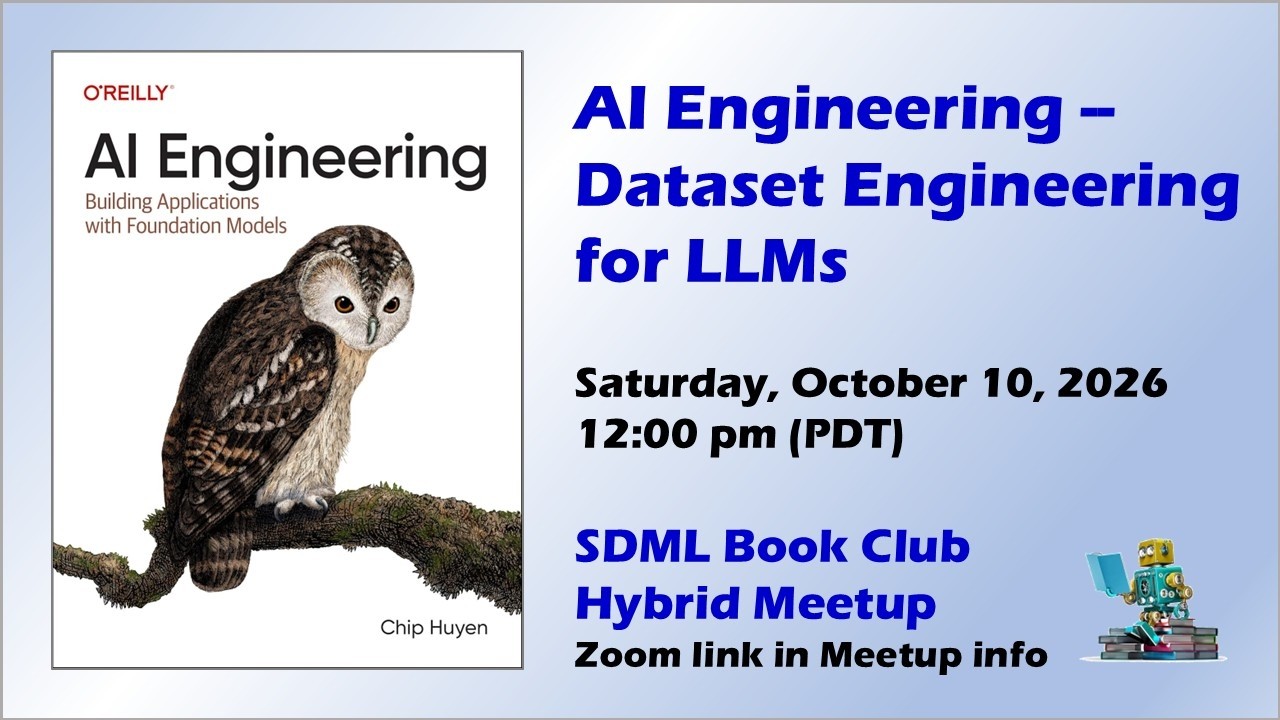
Dataset Engineering for LLMs - AI Engineering
Keywords
Summary
147 words
Critical Evaluation
Value of the Information & Strength of the Argument
The video provides substantial value by linking theoretical concepts to tangible examples, such as the Data-Centric AI competition outcomes and specific filtering pipelines. The argumentation is solid: the presenter justifies the importance of data by citing concrete accuracy improvements from data-only changes and referencing influential papers. He also offers nuanced perspectives, such as the distinction between random noise and systematic errors, and the importance of data ordering in curriculum learning. The discussion is balanced, acknowledging open questions about optimal data composition and the limits of current models in solving unprecedented problems.
Scientific Rigor, Source Quality, Title Accuracy
The speaker demonstrates rigor by referencing specific tools like NVIDIA’s NeMo Curator and known datasets, and by explaining the rationale behind each curation step. The O’Reilly book link provides a solid foundational source. The title is accurate—the video centers on dataset engineering for LLMs as presented in the book. No inconsistencies were found. The technical level is appropriate for an audience with some ML background, though not overly formal. The inclusion of audience Q&A adds credibility by addressing doubts and clarifications.
187 words
Title / Content Match
The title accurately reflects the content, focusing on dataset engineering for LLMs as covered in the book chapter.
Quality & Reliability
8/10
The speaker demonstrates deep practical experience, referencing real-world competitions and papers, and provides balanced views on open questions. While not a formal study, the technical accuracy and clarity are high.
Key Moments
Markers derived by PSI from the transcript: the creator did not define chapters.
- Introduction to dataset engineering and overview of chapter topics.
- Discussion of Data-Centric AI competition and its impact on model performance.
- Explanation of curation process including filtering, deduplication, and balancing.
- Deep dive into data quality, readability scores, and systematic vs random errors.
- Discussion on data quantity, sample efficiency, and the role of model size.
Cited Sources
- AI Engineering: Building Applications with Foundation Models — The book being discussed in this book club session, specifically Chapter 8 on dataset engineering.
- San Diego Machine Learning bookclub GitHub — Repository containing notes, slides, and prior meetup videos.
- San Diego Machine Learning Slack invite — Community platform for discussion and questions about ML topics.
Concurring Sources
- AI Engineering: Building Applications with Foundation Models — The book itself is the primary authoritative source of the concepts presented.
Contribution & Novelties
The video brings practical insights from the presenter’s experience in data-centric AI, illustrating with concrete examples that data engineering can yield drastic improvements independent of model architecture. It bridges theory and practice by explaining real-world pipelines like deduplication and readability filtering, and discusses emerging topics like synthetic data and distillation. The discussion on sample efficiency and curriculum learning is particularly valuable for practitioners.
Pour aller plus loin :
- Data curation — Foundational process of organizing and cleaning data, directly relevant to the video’s core theme.
- Synthetic data — The video mentions synthetic data as a future direction; this page provides an overview.
- Curriculum learning — The video discusses ordering training data; this concept is central to that idea.
118 words
Radar Profile
The radar profile shows balanced strengths across information quantity, quality, and reliability, with a slightly lower technical depth score. This aligns with an informative, credible talk that is accessible but not extremely advanced.