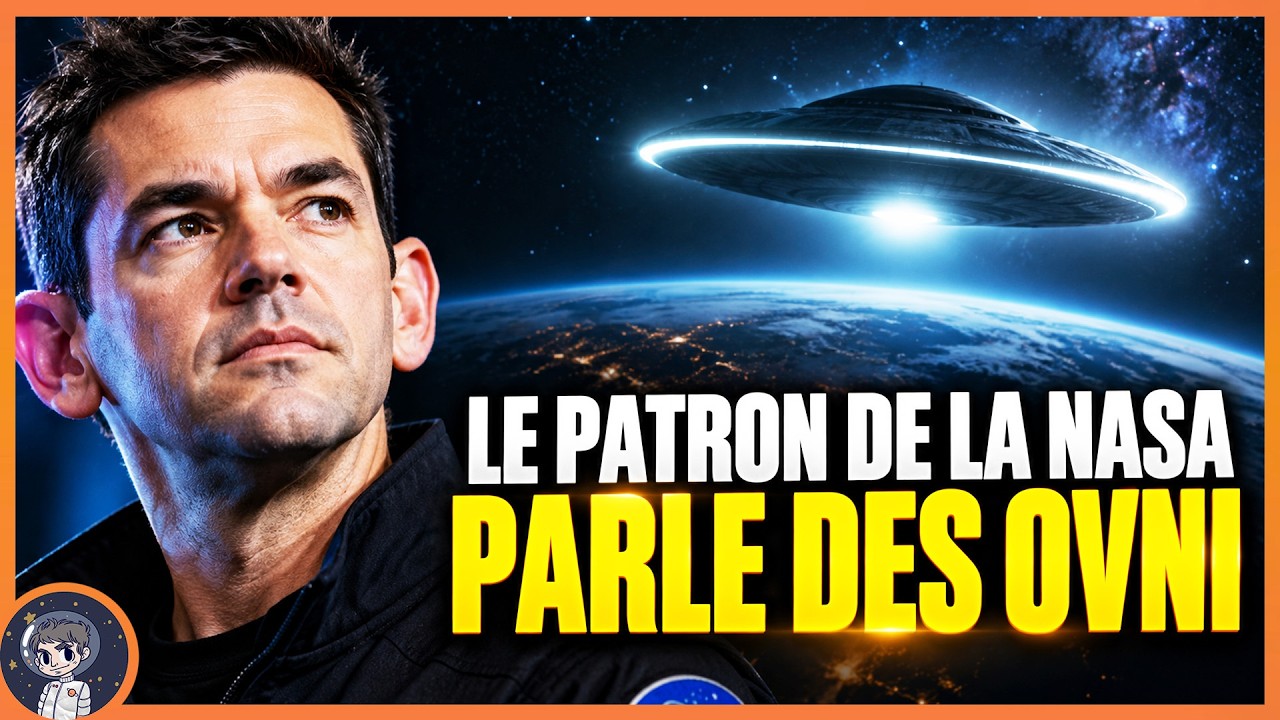
OVNIS : la NASA brise enfin le SILENCE ! - Le Journal de l'Espace #363 - Actus spatiales
UFOs: NASA finally breaks the SILENCE! - Space News Journal #363 - Space news
Title history
- OVNIS : la NASA brise enfin le SILENCE ! - Le Journal de l'Espace #363 - Actus spatiales — observed on 20261016-1803 UTC (PSI archive)
Keywords
Summary
154 words
Critical Evaluation
Value of the Information & Strength of the Argument
The video provides a comprehensive update on multiple space fronts, adding context to each story. The UFO segment is particularly well-handled, presenting Isaacman’s nuanced stance without endorsing extraterrestrial claims. The European station and nuclear propulsion segments emphasize technical and economic feasibility, avoiding over-optimism. The military satellite story explains the strategic implications clearly. Arguments are generally supported by official statements or scientific papers, though some extrapolations are flagged as speculative. The conclusion that space operations increasingly involve gray-zone tactics is persuasive due to concrete examples.
Scientific Rigor, Source Quality, Title Accuracy
The show cites official agencies (NASA, ESA, German space command) and recent scientific findings, but does not provide direct links to primary sources in the description. The use of terms like ‘pre-phase A’ and spectral fingerprinting demonstrates internal rigor. The title is more dramatic than the content, but the video itself carefully distinguishes confirmed facts from hypotheses. The lack of explicit source URLs in the description is a minor weakness, though the on-screen credits and mention of NASA/ESA materials partially compensate. No contradictory information was found, and the tone remains objective.
190 words
Title / Content Match
The title is sensationalist but the content does address the NASA administrator's statements on UFOs, while clarifying that no definitive answer has been given. The rest of the video covers other space news, so the title slightly overpromises.
Quality & Reliability
8/10
The video reports on recent official announcements and scientific findings, drawing on NASA, ESA, and other credible sources. It is cautious in its claims and explicitly distinguishes facts from speculation, though some segments rely on unverified military intelligence. Overall, the information is accurate and well-contextualized.
Chapters
- La NASA et les OVNIS : Jared Isaacman brise le silence
- L'Europe veut sa propre station spatiale
- Une planète née après la mort de son étoile ?
- Guerre spatiale : des satellites russes traquent un engin occidental
- La NASA passe au nucléaire : Lune et propulsion
- Projet SunCatcher : les datacenters spatiaux pour l'IA
Cited Sources
- Creative Commons Attribution License — Music licensing for the video
- CreatorChords — Music source for Superepic by Alexander Nakarada
- Sound Lapse - City Walk — Music track used in the episode
- Utho Riley Music — Music artist
- Forum de la conquête spatiale — Community forum referenced as a general source
- Inspire Galactic by Carvine — Licensed music track
- Le Journal de l'Espace blog — Official blog of the channel
- Quentin Leicht LinkedIn — Presenter's professional profile
- Scott Buckley Music — Music composer
- Bensound Evolution — Music track
- City Walk by Sound Lapse — Music video link
Contribution & Novelties
The episode aggregates recent space news into a coherent narrative, clarifying technical concepts like nuclear propulsion and UAP. Its unique value lies in the critical perspective on military space maneuvers and the balanced approach to speculative claims.
Pour aller plus loin :
- Unidentified anomalous phenomena — Background on UAP definitions and investigations.
- Nuclear thermal rocket — Detailed explanation of nuclear thermal propulsion.
- Kilopower — NASA’s fission reactor project for space power.
71 words
Radar Profile
The radar profile is balanced, with high scores in information quantity and quality, but lower technical depth. This reflects a broad yet accessible treatment of space news, suitable for general audiences without sacrificing accuracy.