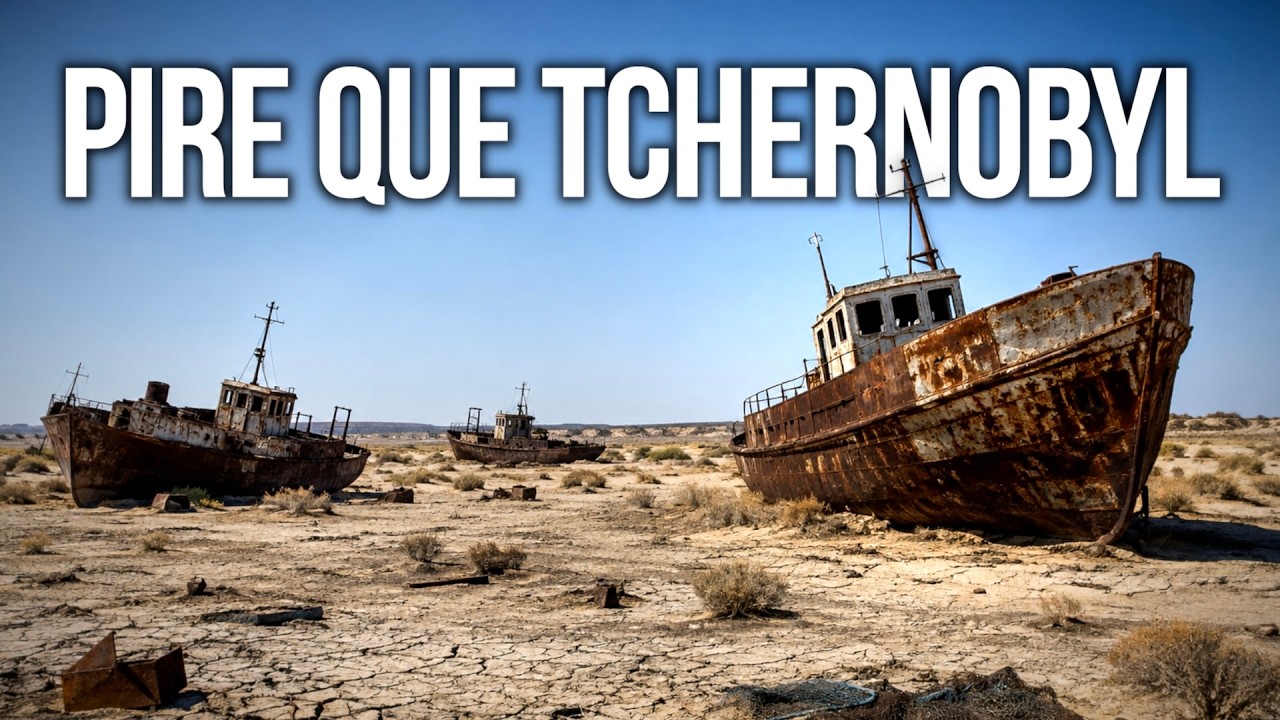
La pire catastrophe écologique de l'URSS
The Worst Ecological Disaster in the USSR
Title history
- La pire catastrophe écologique de l'URSS — observed on 20261101-2010 UTC (YouTube)
Keywords
Summary
203 words
Critical Evaluation
Value of the Information & Strength of the Argument
The video provides valuable information by synthesizing historical records, satellite data, and testimonies to explain the deliberate nature of the Aral Sea’s destruction. Its argumentation is solid: it distinguishes between unintended accidents (Chernobyl) and a planned industrial project, supported by quotes from Soviet officials and internal documents. The narrative is compelling and well-structured, leading the viewer through the causes, mechanisms, and consequences. However, it sometimes relies on emotive language and rhetorical questions, but the core argument is backed by credible sources and logical reasoning.
Scientific Rigor, Source Quality, Title Accuracy
The video demonstrates rigorous research by referencing specific satellite programs (Corona, Landsat), historical events, and expert testimonies. The description provides a wealth of links to reputable sources such as Wikipedia, Geo, Sciences et Avenir, National Geographic, and the NYT, which support the claims. The title is appropriate and encapsulates the video’s thesis, although it slightly sensationalizes by calling it the ‘worst ecological disaster,’ a claim that is defensible but debatable. Overall, the sources are reliable and the content is well-supported, with no obvious contradictions or unsupported claims.
186 words
Title / Content Match
The title accurately reflects the content: the video argues that the Aral Sea's desiccation is the worst ecological disaster of the USSR, surpassing even Chernobyl in long-term environmental impact.
Quality & Reliability
9/10
The video presents a well-documented and detailed account of the Aral Sea disaster, drawing on historical records, satellite imagery, and numerous cited sources. The narrative is coherent and aligns with established scientific and historical knowledge, while clearly distinguishing between facts and interpretations.
Chapters
Cited Sources
- Mer d'Aral — Wikipédia — General overview of the Aral Sea, its history, and desiccation.
- Aral Sea — Wikipedia — English-language summary of the Aral Sea's geographical and ecological decline.
- Barrage de Kokaral — Wikipédia — Details on the Kokaral Dam, a restoration project for the northern Aral Sea.
- Île de Vozrojdénia — Wikipédia — Information about the island, formerly a biological weapons testing site, now a peninsula.
- Corona (satellite) — Wikipédia — Background on the Corona spy satellite program that first revealed the Aral Sea's shrinkage.
- Lac Owens — Wikipédia — Comparison with another desiccated lake due to water diversion.
- CORONA, un programme spatial secret — Article about the CORONA satellite program and its reconnaissance role.
- L'avenir de la mer d'Aral réside dans la coopération transfrontalière — WMO article discussing international cooperation for the Aral Sea's future.
- Un Tchernobyl silencieux : comment l'assèchement de la mer d'Aral a durablement marqué la Terre — Geo article using the 'silent Chernobyl' metaphor and describing long-term impacts.
- L'assèchement de la mer d'Aral, une vieille histoire — Historical perspective from L'Histoire journal on the Aral Sea's drying.
Concurring Sources
- Disparition de la mer d'Aral : quels enseignements tirer de ce désastre écologique ? — National Geographic article confirming the severity and causes of the disaster.
- L'assèchement de la mer d'Aral a affecté la Terre en profondeur — Sciences et Avenir article on the geophysical impacts of the Aral Sea's drying.
- Au Kazakhstan, un assèchement de la Mer caspienne aux conséquences désastreuses — Le Monde article addressing a related issue, but corroborating the general trend of regional water loss.
External References
Contribution & Novelties
The video’s original contribution lies in framing the Aral Sea disaster not as an unintended ecological catastrophe, but as a deliberate and ideologically motivated industrial plan by the Soviet regime. It synthesizes satellite imagery history with political narratives, offering a compelling ‘silent Chernobyl’ perspective. The video effectively uses the contrast with Chernobyl to highlight the intentional nature of the destruction, which is a nuanced angle often overlooked. Additionally, it provides a comprehensive timeline from the 19th century to the present, integrating less-known details like the Corona satellite program’s role in revealing the disaster.
Pour aller plus loin :
- Aral Sea — Comprehensive overview of the cause, consequences, and restoration efforts.
- Kokaral Dam — Discusses the dam built to restore the northern part of the sea; a rare success story.
- Corona (satellite) — The first spy satellite program that provided early evidence of the sea’s retreat.
- Vozrozhdeniya Island — The island’s role in biological weapons testing, now connected to the mainland due to drop in water level.
166 words
Radar Profile
The radar profile shows high scores across all dimensions, reflecting the video's comprehensive coverage, solid sourcing, and technical depth. The lowest score is in 'niveau_technique' (8), indicating that while accessible, it includes some technical terms and satellite program details. The overall profile is strong, with no significant weaknesses, making the video a reliable and informative resource.