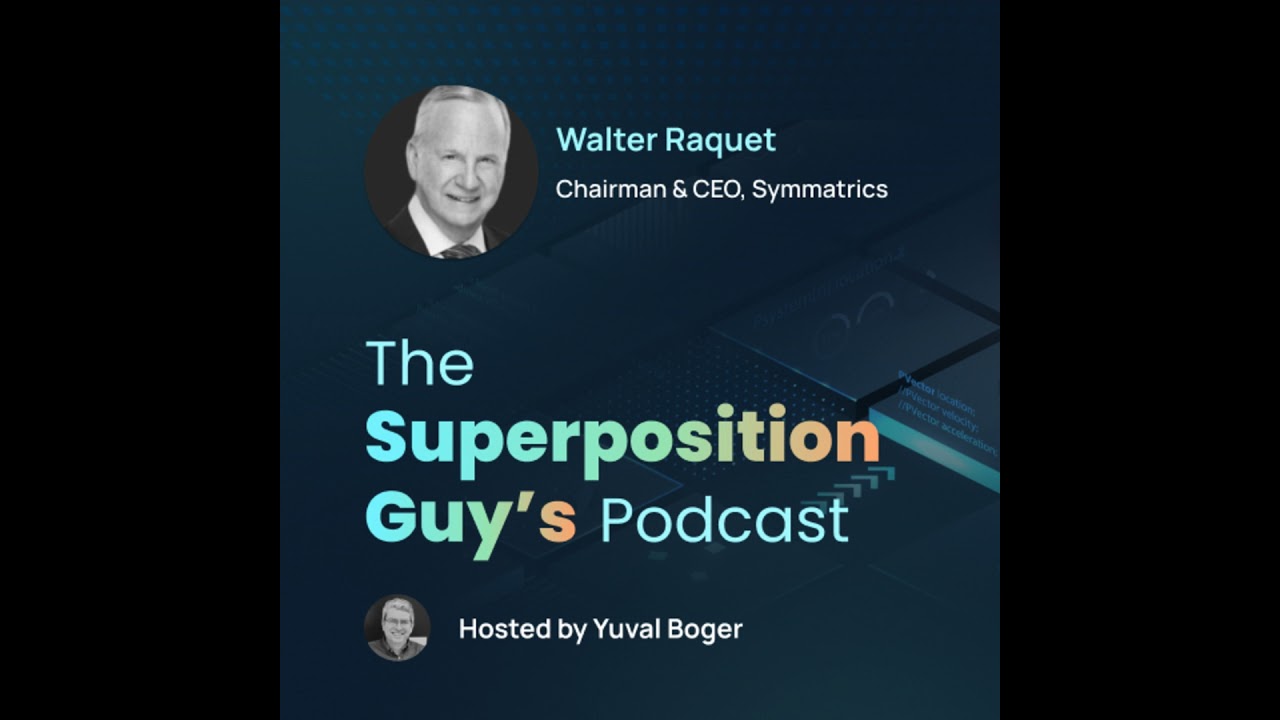
Walter Raquet, Chairman and CEO of Symmatrics
Keywords
Summary
196 words
Critical Evaluation
Value of the Information & Strength of the Argument
The video offers a glimpse into a company’s proprietary approach to cybersecurity, but its value is limited by the predominantly promotional tone. Raquet makes sweeping claims, such as ’the only technology that could actually make that happen’ regarding quantum resistance, without providing technical specifics, performance metrics, or independent validation. The argumentation relies on anecdotal evidence and assertions from unnamed ’experts’ rather than scientific studies or formal proofs. The claim that asymmetric encryption is ‘broken’ is presented without substantiation, and the discussion of quantum computing’s threats lacks depth. While the concept of one-time pad is theoretically secure, its practical implementation and distribution through a proprietary network raise questions about scalability, security guarantees, and regulatory compliance that are not addressed. Overall, the reasoning is rhetorical and lacks the rigorous argumentation expected in a scientific or technical discussion.
Scientific Rigor, Source Quality, Title Accuracy
The video cites multiple entities, including NIST, Microsoft, Google, and Intel, but none are substantiated with documents or links. No peer-reviewed sources, whitepapers, or independent audits are mentioned. The discussion of NIST certification is vague, and the claim of working with NIST is not verifiable. The title is neutral and correctly identifies the interviewee, but it does not prepare the viewer for the content about encryption technology. The content’s rigor is low; it is essentially a marketing pitch presented as a technical interview. No comments are provided, so public reception cannot be assessed.
243 words
Title / Content Match
The title accurately identifies the guest and his role, but does not hint at the topic; it is appropriate as an interview title.
Quality & Reliability
3/10
The video is a promotional interview with the CEO of a company, presenting bold claims about solving cybersecurity with one-time pad encryption, but lacks verifiable evidence, technical details, peer review, or independent validation.
Key Moments
Markers derived by PSI from the transcript: the creator did not define chapters.
- Introduction of Walter Raquet, Chairman and CEO of Symmatrics, and overview of the episode.
- Explanation of the one-time pad symmetric key concept and its historical use by intelligence agencies.
- Discussion on quantum random number generators and the Quantum Protected Network (QPN) for key distribution.
- Detailed use case example with Chase Bank and QR codes for secure transactions.
- Company details: team size, location, and technical team.
- Deployment status, pricing model, and export restrictions.
- Discussion on NIST certification and the 2027 quantum-resistance deadline.
- Future plans, meetings with Microsoft and Nvidia, and the dinner question.
Cited Sources
- NIST — Mentioned as the body with which Symmatrics is working to achieve certification.
- Microsoft — Cited as a potential partner and ideal candidate for adoption.
- Google — Mentioned among experts who agree with the one-time pad approach.
- Intel — Mentioned among experts who agree with the one-time pad approach.
- US government — Referenced regarding the 2027 quantum-resistant edict and historical use of one-time pads.
Contribution & Novelties
The video introduces a modern implementation of a classic cryptographic concept (one-time pad) with a claimed scalable distribution method using quantum random number generators and a proprietary QPN. This could be considered innovative if validated, but the presentation lacks technical depth and independent evidence. The company’s approach to eliminate passwords and reusable credentials is a significant departure from current standards. However, the claims are largely promotional.
Pour aller plus loin :
- One-time pad — The foundational concept, perfectly secure if used correctly, but historically practical limitations.
- Quantum key distribution — A related method for secure key exchange, often confused with one-time pad; this video’s QPN may or may not incorporate it.
- Post-quantum cryptography — The broader effort to develop quantum-resistant algorithms; Symmatrics’ solution is presented as an alternative to these.
130 words
Radar Profile
The scores indicate a balanced but weak profile, with low reliability and quality scores (2 and 3) contrasting with moderate quantity and technical level (6 and 5). The video is heavy on claims but light on evidence, aligning with a promotional interview rather than a solid scientific or technical presentation.