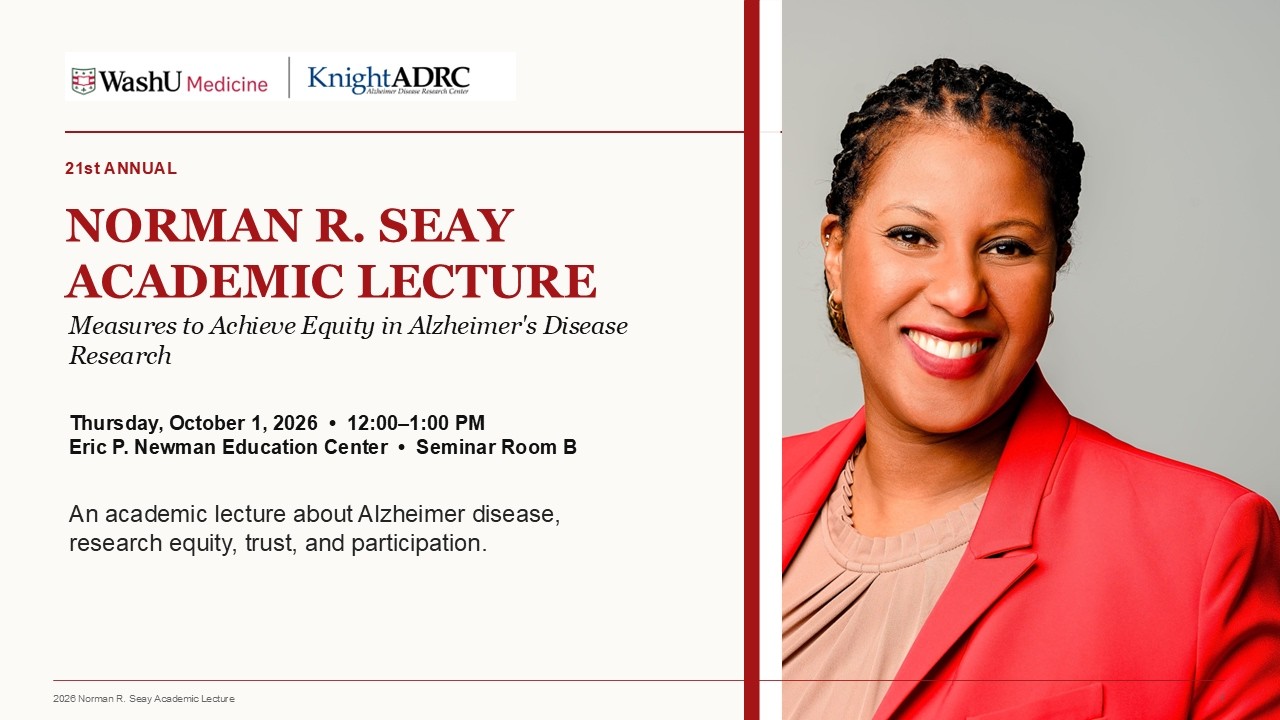
The 2026 Norman R. Seay Academic Lecture with Lecturer Renã A. S. Robinson, PhD
Keywords
Summary
295 words
Critical Evaluation
Value of the Information & Strength of the Argument
The informational value lies in the articulation of two normally separate domains: population-level health equity and bench-level analytical chemistry. Robinson supplies concrete, checkable epidemiological anchors (relative risk figures, cost-burden share, trial underrepresentation) and then shows how these translate into methodological choices, namely inclusive study design and biological sampling. The community-engagement section is unusually specific for a lecture of this type: the mobile exhibit, the lifelong-learning course, the undergraduate seminar, and the persona-based storytelling campaign are described with their rationale, their iterative focus-group refinement, and their measured reception. The argument is cumulative rather than polemical: mistrust and access barriers are presented as causes of underrepresentation, and trust and perceived burden as the mediators of willingness to participate. The laboratory section is more compressed but coherent, moving from sample to peptide to instrument to biological inference, and it makes a clear case that genetic risk variants can have population-specific effects, illustrated by ABCA7 versus APOE4. The main argumentative weakness is that the talk remains at the level of narrative synthesis: no effect sizes, sample sizes, or statistical results are presented in the transcript, so the audience must accept the reported associations on the speaker’s authority. The transition from equity framing to proteomic methodology is also somewhat abrupt, leaving the causal chain from community engagement to biomarker discovery implicit rather than demonstrated.
Scientific Rigor, Source Quality, Title Accuracy
Scientifically, the lecture stays within well-established consensus: amyloid-beta plaques and tau tangles as AD hallmarks, APOE4 as the most discussed risk gene, type 2 diabetes, hypertension, and obesity as risk-modifying comorbidities, and ABCA7 as a locus with stronger relevance in African-American populations. The disparity figures are attributed to the Alzheimer’s Association, and the community-engagement work is explicitly credited to named collaborators (Jennifer Lingler, Judy Cameron, Sean Williams, Consuela Wilkins, Germaine Davis), which is good practice for attribution even though no formal citations appear in the transcript. The only link provided in the description is the Knight ADRC event page for the Seay Lecture, which documents the event itself rather than the underlying studies; the transcript does not supply DOIs, journal names, or publication years for the cited findings. The title-to-content match is strong: the video is indeed the 2026 Norman R. Seay Academic Lecture, and the speaker delivers on the announced theme of measures to achieve equity in Alzheimer’s disease research, with the proteomics material serving as supporting depth rather than a departure. No viewer comments were supplied for analysis.
414 words
Title / Content Match
The title accurately announces an academic lecture by Renã A. S. Robinson within the Norman R. Seay Lecture series; the delivered content matches the announced theme of equity in Alzheimer's disease research, with a substantial methodological section on proteomics.
Quality & Reliability
8/10
Lecture delivered by a recognized specialist (professor of chemistry, Vanderbilt, PI of an internationally recognized proteomics/lipidomics program on aging and Alzheimer's disease). The content is grounded in established epidemiological data (Alzheimer's Association figures on risk and cost burden in African-American and Hispanic/Latino populations), in published community-engagement work (Lingler, Williams, Cameron), and in mainstream AD biology (amyloid-beta plaques, tau tangles, APOE4, ABCA7). No primary data tables, effect sizes, or confidence intervals are shown in the transcript, and the talk is a general academic lecture rather than a peer-reviewed study, which caps the reliability score.
Key Moments
Markers derived by PSI from the transcript: the creator did not define chapters.
- Welcome and housekeeping by Dave Holtzman, director of the Knight ADRC, introducing the 21st Norman R. Seay Lecture.
- Recorded tribute by Dr. John Morris recounting Norman R. Seay's civil-rights activism and his role in founding the African-American Advisory Board in 2000.
- Introduction of Dr. Renã A. S. Robinson: analytical chemistry PhD, Vanderbilt professor, proteomics and lipidomics program on aging and AD.
- Framing of AD disparities: two-to-threefold higher risk for African-American adults, 1.5-fold for Hispanic/Latino adults, and a third of national care costs.
- Barriers to research participation: historical mistrust, awareness gaps, and access to research sites.
- Community engagement tools: the 18-wheel mobile brain-science exhibit and participation in the Walk to End Alzheimer's.
- Education initiatives: an AD prevention course through the Osher Center and a first-year undergraduate seminar on science communication.
- Positive-storytelling campaign: interviews with participants and study partners turned into personas, brochures, and NIH-adopted videos.
- Findings from virtual campaign pilots: prior research experience and trust predict willingness to enroll; trust lowers perceived research burden.
- Laboratory methods: mass-spectrometry proteomics on blood, urine, cells, and post-mortem brain; ABCA7 variants and comorbidity interactions in African-American risk.
Cited Sources
- Knight Alzheimer's Disease Research Center — Seay Lecture event page — Official page for the Norman R. Seay Lecture series, the event from which this video was captured.
Concurring Sources
- Alzheimer's Association — Facts and Figures — Provides the epidemiological baseline for the disparity figures cited in the lecture.
- National Institute on Aging — Alzheimer's Disease Research Centers — Institutional framework for the ADRC network to which the Knight ADRC and the speaker's collaborators belong.
Contribution & Novelties
The lecture’s distinctive contribution is the explicit bridging of two research cultures that rarely appear in the same presentation: community-based participatory engagement and high-throughput analytical chemistry. Robinson does not treat equity as a recruitment add-on but as a design constraint that shapes which questions are asked, which samples are collected, and which genetic variants are prioritized. The ABCA7 work is presented as a case where population-specific biology justifies population-specific study design, and the storytelling campaign is presented as an intervention whose effects on trust and perceived burden were actually measured through iterative focus groups and virtual pilots. The result is a coherent argument that inclusive science is both an ethical requirement and an epistemic advantage.
Pour aller plus loin :
- Alzheimer’s disease — Overview of pathology, risk factors, and the amyloid/tau framework referenced in the talk.
- APOE — Background on the APOE4 allele and its population-dependent effects.
- ABCA7 — Transporter gene repeatedly associated with Alzheimer’s risk, particularly in African-American cohorts.
- Proteomics — Methodological context for the mass-spectrometry workflows described in the laboratory section.
- Tuskegee Syphilis Study — Historical episode explicitly invoked by the speaker as a driver of mistrust in Southern communities.
- Alzheimer’s Association — Facts and Figures — Source of the prevalence, risk, and cost-burden statistics cited in the lecture.
211 words
Radar Profile
The profile is that of a high-credibility academic lecture: strong on information quality and overall reliability, moderate on technical depth because the methodological section is deliberately accessible, and solid but not maximal on information quantity given the absence of primary data. The imbalance between reliability and technicality reflects a talk designed to serve both a scientific and a community audience.