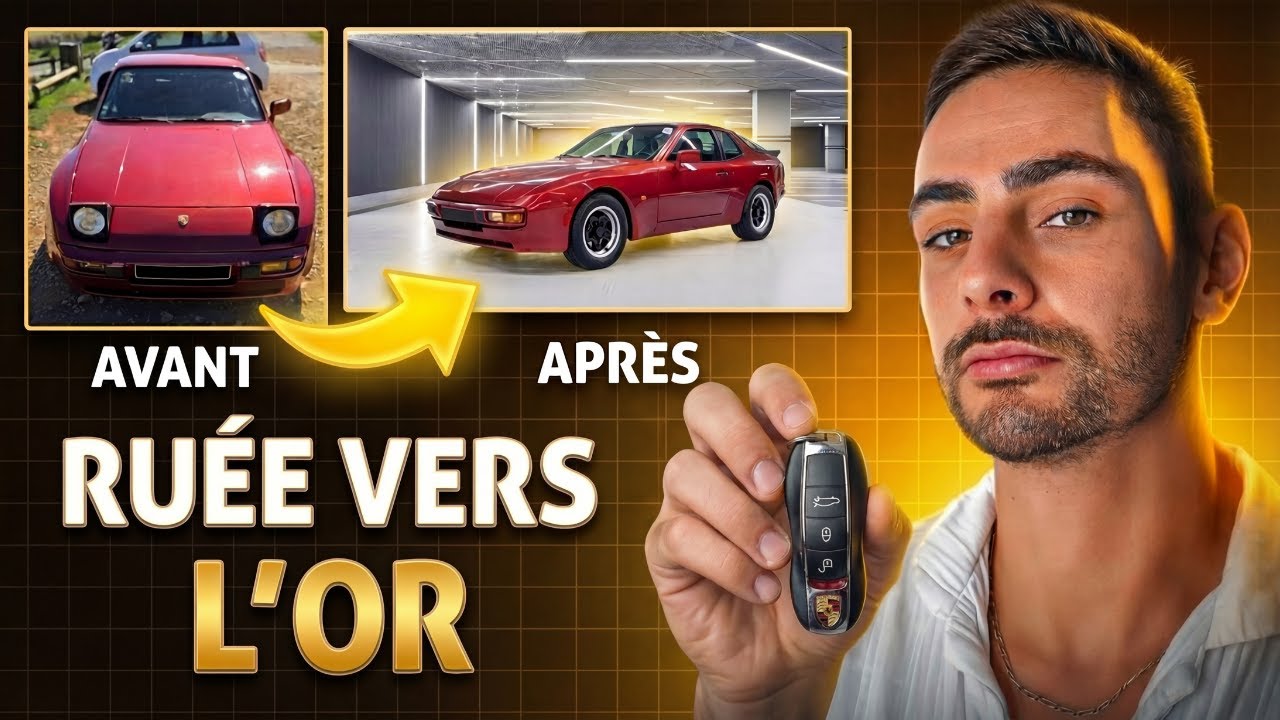
Crée des Pubs avec Nano Banana Pro (sans studio)
Create ads with Nano Banana Pro (without a studio)
Title history
- Crée des Pubs avec Nano Banana Pro (sans studio) — observed on 20261112-0057 UTC (YouTube)
Keywords
Summary
184 words
Critical Evaluation
Value of the Information & Strength of the Argument
The video provides valuable, actionable information for small business owners and marketers who want to create high-quality product visuals without a professional studio. The argumentation is based on live demonstrations, showing before/after results and concrete cost comparisons (e.g., charging 30 cents for a video, and comparing Nano Banana Pro’s 24 cents per generation to Seedream’s 4 cents). However, the argument is one-sided, presenting only benefits while omitting potential drawbacks such as inconsistencies, ethical considerations, or the risk of over-reliance on AI. The presenter’s claims about ‘revolutionizing’ advertising are supported only by anecdotal success from his agency, and he frequently prompts viewers to join his paid community, which tempers the objectivity of the tutorial.
Scientific Rigor, Source Quality, Title Accuracy
The video is not a scientific source; it is a promotional tutorial. No peer-reviewed studies or official documentation are cited; the only references are third-party platforms (Wave Speed AI, Kai AI) and the creator’s own links. The title accurately matches the content, but the subtitle ‘without studio’ is fair, as the entire process is digital. The description includes several outbound links, but these are mostly to the creator’s community, course, or agency, which function as promotional materials rather than evidence. For a rigorous evaluation, the viewer would need to cross-check the claimed capabilities of Nano Banana Pro and Kling via independent reviews or official documentation from Google or ByteDance.
237 words
Title / Content Match
The title accurately reflects the content: the video demonstrates how to create professional-quality ads using the Nano Banana Pro model, with an emphasis on not requiring a studio. The content aligns well with the promise.
Quality & Reliability
6/10
The video offers a practical, hands-on demonstration of AI image and video generation techniques, but it is also a promotional vehicle for the creator's agency and community. Claims about model performance and costs are not independently verified, and the presentation is largely anecdotal with no comparative benchmarks or academic references. The tutorial is useful for practitioners but lacks critical evaluation of limitations.
Chapters
- Intro
- Transformer une photo basique en photo studio e-commerce
- La technique des 2 images (Produit + Environnement)
- Ajouter des éléments à vos photos produits
- Les modèles et techniques pour créer des vidéos produit
- Technique 1 de prompting avancées pour Vidéos
- Technique 2 de prompting avancées pour Vidéos
- Technique 3 de prompting avancées pour Vidéos
- Technique 4 de prompting avancées pour Vidéos
- Technique 5 : first and last frame pour Vidéos
- Seedream v4.5 le modèle 5x moins cher que Nano Banana Pro
- Technique BONUS pour Veo3
- Pour aller plus loin
Cited Sources
- AIOS – AI Operating System — Mentioned as a service offered by the presenter for building AI systems.
- Azuro AI – Contact — Call-to-action for businesses to contact the agency for custom AI solutions.
- Thomas Berton – LinkedIn — Professional profile of the presenter.
- Le Club IA (Skool) — Free community where prompts and resources are shared.
- Le Club IA VIP (Skool) — Paid membership offering more in-depth training and automation systems.
- Related video by same creator — Suggested related video from the same channel.
- Related video by same creator — Suggested related video from the same channel.
- Related video by same creator — Suggested related video from the same channel.
Contribution & Novelties
The video’s main contribution is a practical, step-by-step guide to using a specific AI model (Nano Banana Pro) for a commercial application—product photography and advertising—emphasizing low cost and accessibility. It also offers comparative cost analysis with an alternative model (Seedream 4.5) and demonstrates advanced prompting techniques for video generation. However, the novelty is limited: similar tutorials exist on YouTube, and the information is largely anecdotal. The video does not provide original research or benchmarking, but it synthesizes current tools in an actionable way for beginners.
Pour aller plus loin :
- Generative artificial intelligence — Broader context on generative models and their evolution.
- Text-to-image model — Explains how models like Nano Banana Pro work under the hood.
- Video generation — Covers techniques and evolution of AI video synthesis, relevant to the video portion.
132 words
Radar Profile
The radar profile shows strong scores in quantity of information and technical level, reflecting the hands-on, detail-rich demonstration. Reliability is weaker due to the promotional framing and lack of external verification. Overall, the content is useful for practitioners but not a rigorous scientific source.