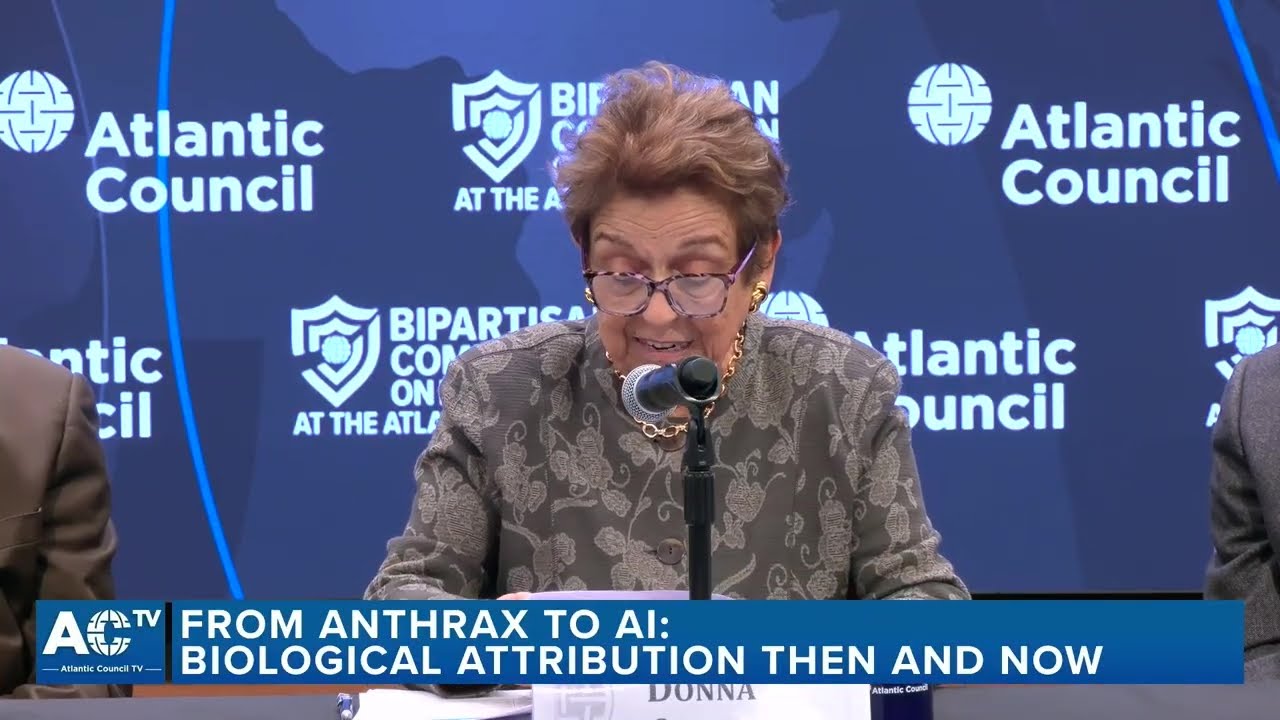
From anthrax to AI: Biological attribution then and now
Title history
- From anthrax to AI: Biological attribution then and now — observed on 20261119-2048 UTC (YouTube)
Keywords
Summary
156 words
Critical Evaluation
Value of the Information & Strength of the Argument
The video provides valuable high-level insights into the ongoing challenges of biological attribution, particularly the intersection with AI. The speakers draw on personal experience and policy expertise, making a compelling case that attribution capabilities lag behind nuclear and chemical counterparts. The argumentation is persuasive in highlighting the urgent need for bipartisan action and legislative measures, but it leans heavily on anecdotal evidence and expert opinion rather than systematic data. The discussion is coherent and well-structured, but the lack of concrete examples of AI-enabled threats or mitigation reduces the depth of technical analysis.
Scientific Rigor, Source Quality, Title Accuracy
The video relies on well-documented historical events and the speakers’ direct involvement, lending credibility to the factual claims. However, no external sources are cited, and the discussion is driven by personal narratives and policy assertions. The title appropriately signals the content, though it could imply a more technical focus than delivered. The announcement of the commission’s report suggests a structured output, but without referencing specific findings or methodologies, the rigor is moderate. Overall, the title aligns well with the theme, and the lack of citations reflects a policy-oriented, rather than academic, format.
199 words
Title / Content Match
The title accurately captures the video's content, which traces the historical anthrax attacks to the modern challenges posed by AI in biological attribution. The narrative flows logically from past events to future implications.
Quality & Reliability
6/10
The video presents a high-level panel of political and national security figures, including a congresswoman, a former governor, a senator, and the co-chairs of the Bipartisan Commission on Biodefense. While the historical account of the 2001 anthrax attacks is accurate and well-known, the discussion is largely qualitative, and the speculative aspects about AI's impact on attribution are presented without rigorous scientific backing. The content is informative for policy audiences but lacks peer-reviewed citations or novel empirical data.
Key Moments
Markers derived by PSI from the transcript: the creator did not define chapters.
- Congresswoman Houlahan introduces the topic and highlights legislative efforts like the Biosecurity Modernization and Innovation Act.
- Governor McCrory discusses the importance of communication and teamwork during emergencies, referencing his experiences with hurricanes and other crises.
- Senator Daschle recounts the 2001 anthrax attack on his office and the subsequent FBI investigation, emphasizing the personal and systemic impacts.
- Co-chair Ridge and Shalala announce the release of the commission's report on biological attribution and AI, noting the persistent gaps in capabilities.
Contribution & Novelties
The video serves as a platform for releasing a new commission report on biological attribution, bringing together influential policymakers to discuss the intersection of anthrax lessons and AI. Its originality lies in the high-level political consensus on the urgency of improving attribution capabilities, though the specifics of the report are not detailed. The discussion underscores a call for legislative action and interagency cooperation.
Pour aller plus loin :
- 2001 anthrax attacks — Historical context directly referenced throughout.
- Biosecurity — Core concept underlying the discussion.
- Artificial intelligence — Key technology with implications for both threats and defense.
96 words
Radar Profile
The scores indicate a moderate overall quality, with quantitative information higher than technical depth. The video is richer in policy context than in hard evidence, reflecting a discussion-oriented format rather than a technical analysis.