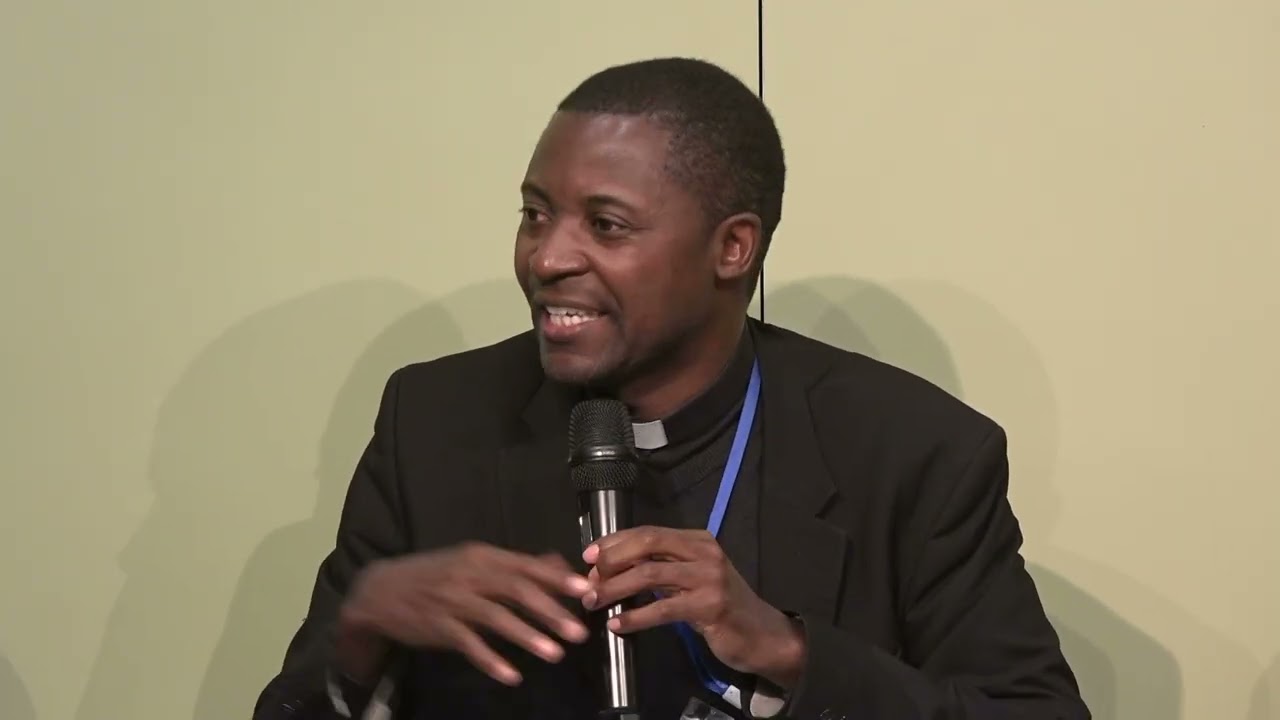
Day 1, Panel 1 — Beyond GDP: Alternative Visions of Human Development and Human Flourishing
Title history
- Day 1, Panel 1 — Beyond GDP: Alternative Visions of Human Development and Human Flourishing — observed on 20261120-1940 UTC (YouTube)
Keywords
Summary
150 words
Critical Evaluation
Value of the Information & Strength of the Argument
The value of the information lies in its integration of theological and economic perspectives, providing a rich, multi-layered understanding of development. The speakers offer strong argumentative frameworks: Father Avelino grounds his case in authoritative church documents, Katherine Marshall draws on decades of practical experience and identifies key institutional barriers, and Adrian Pabst provides a cogent critique of economic orthodoxy. However, the arguments are largely normative and theoretical; they do not provide empirical evidence or quantitative data. The panel is valuable for its conceptual clarity and the breadth of viewpoints, but its claims are not subjected to rigorous testing.
Scientific Rigor, Source Quality, Title Accuracy
The title is accurate and aptly reflects the content. The speakers are credible scholars and practitioners from reputable institutions. However, the discussion relies heavily on personal interpretation and historical documents rather than peer-reviewed research. While sources like encyclicals and academic works are cited, the video does not provide verifiable links or further reading. The rigor is moderate; it is more of an opinion-based panel than a data-driven analysis. The absence of quantitative evidence and specific citations to recent studies limits its scientific robustness.
196 words
Title / Content Match
The title accurately reflects the content: a panel exploring alternative visions of human development and human flourishing beyond GDP.
Quality & Reliability
7/10
The panel features prominent experts from respected institutions (Georgetown, Atlantic Council, the Vatican's Dicastery for Promoting Integral Human Development, NIESR). The discussion is conceptually rich and well-argued, but largely based on personal expertise and interpretation rather than empirical data. While the sources referenced are authoritative, the video does not provide verifiable citations or links, limiting its scientific rigor.
Key Moments
Markers derived by PSI from the transcript: the creator did not define chapters.
- Introduction and framing of the panel by the moderator.
- Father Avelino Chico discusses integral human development from Catholic social teaching.
- Katherine Marshall presents her nuanced view on religion and development, including the 'three D's' and 'five E's'.
- Adrian Pabst critiques mainstream economics and GDP, advocating for a more ethical and relational approach.
- Q&A session begins with audience participation.
Cited Sources
- Populorum Progressio — Encyclical cited by Father Avelino as foundational for integral human development.
- Caritas in Veritate — Encyclical by Pope Benedict XVI mentioned as contributing to the understanding of development.
- Washington Consensus — Referenced by Katherine Marshall as a misnomer and a starting point for discussing development strategies.
- Why Nations Fail — Book by Acemoglu and Robinson mentioned in the context of institutional role in development.
- Human Development Index — Mentioned as an alternative measure of development beyond GDP.
Concurring Sources
- Stiglitz-Sen-Fitoussi Commission report — Supports the panel's critique of GDP and the need for broader measures of well-being.
Contribution & Novelties
The video provides a unique interdisciplinary dialogue between Catholic social teaching, development economics, and practical faith-based engagement. It synthesizes theological definitions of integral human development with critical economic analysis, highlighting the gaps in mainstream approaches. The panel offers a roadmap for integrating faith-based organizations into development policy by acknowledging their distinct visions and capacities. Its novelty lies in the explicit comparison of religious and secular frameworks, and the identification of mutual suspicions (’three D’s’ and ‘five E’s’).
Pour aller plus loin :
- Integral human development — A concept central to Catholic social teaching, linking material and spiritual progress.
- Capability approach — Amartya Sen’s framework for evaluating well-being beyond income, relevant to alternatives to GDP.
- Gross domestic product — The standard measure critiqued in the panel; understanding its limitations is key.
- Stiglitz-Sen-Fitoussi Commission — A prominent official report on measuring economic performance and social progress beyond GDP.
146 words
Radar Profile
The scores indicate high quantity and quality of information, good reliability due to expert participants, but moderate technical depth. This profile suggests a highly informative and credible discussion suitable for a general audience interested in economic alternatives.