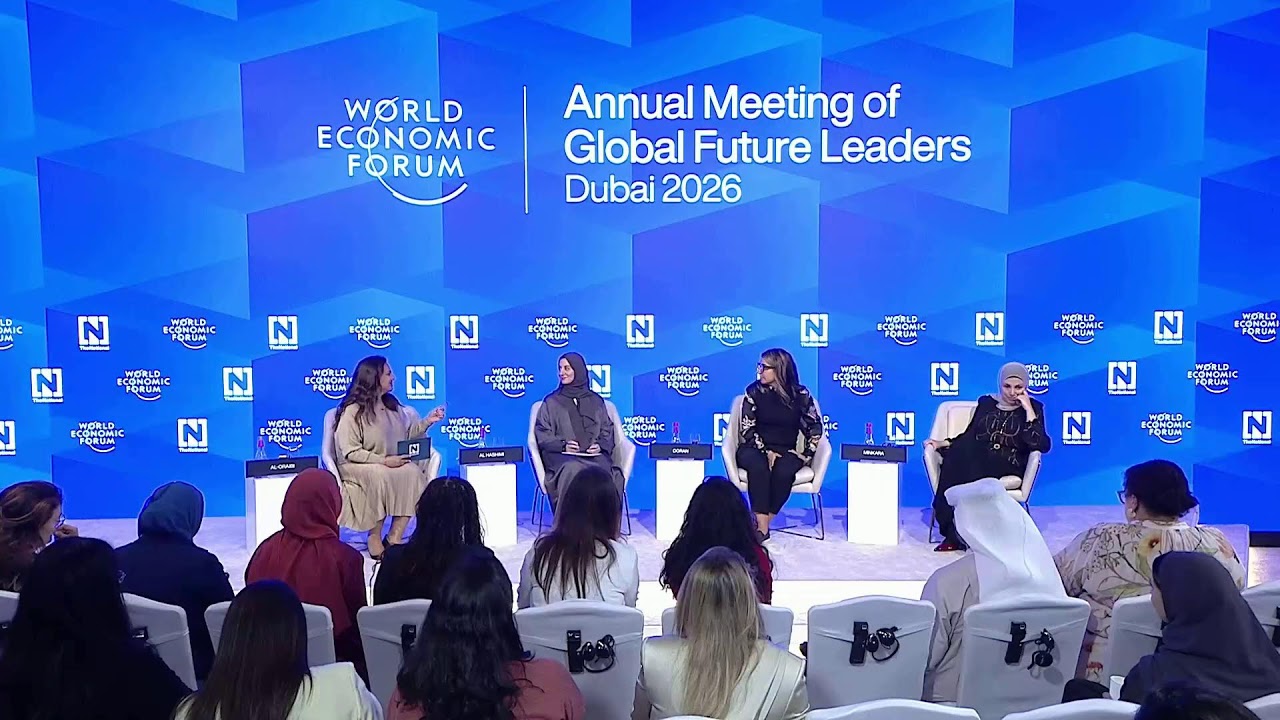
Fair by Design
Keywords
Summary
199 words
Critical Evaluation
Value of the Information & Strength of the Argument
The discussion provides valuable personal insights and concrete examples from both public and private sectors. The argumentation is persuasive in highlighting that fairness requires intentional design, not just policy statements. Speakers effectively illustrate failures of generic approaches, such as quotas that lead to tokenism. However, the reasoning relies heavily on anecdote and individual case studies rather than systematic evidence. The point about AI bias is important, but the research mentioned (e.g., resume screening eliminating disability candidates) is not cited, weakening the argument. The panel’s collective argument is coherent and built on shared values, but lacks empirical depth and rigorous causal analysis.
Scientific Rigor, Source Quality, Title Accuracy
The scientific rigor is moderate. Speakers refer to ‘research’ and ‘studies’ without providing specific citations or URLs, making it impossible for the audience to verify claims. The discussion is more opinion-based than evidence-based. The title adequately reflects the content, as the entire session revolves around designing fairness into organizations. The affiliation with the World Economic Forum and the credentials of the speakers lend some authority. No external links are provided in the video description, further limiting source quality. While the content is thought-provoking, it would benefit from referencing specific reports or data to strengthen credibility.
211 words
Title / Content Match
The title 'Fair by Design' accurately captures the central theme of intentionally structuring organizations to embed fairness, particularly in relation to women, disability, and AI.
Quality & Reliability
7/10
The panel features credible experts from government and corporate sectors, but arguments rely heavily on anecdotal evidence and personal experience rather than rigorous, citable research. The discussion references studies (e.g., on AI bias and disability inclusion) without providing specific sources, limiting verifiability.
Key Moments
Markers derived by PSI from the transcript: the creator did not define chapters.
- Mina Al-Oraibi introduces the panel and states the session's focus on fairness in organizations.
- Huda Al Hashimi identifies three main barriers: inconsistent leadership action, lack of women in decision-making roles, and confusion between equality and fairness.
- Kelsi Doran discusses Cisco's culture as a northstar and gives examples like paternity leave and sharing personal stories to normalize inclusion.
- Sara Minkara explains how societal narratives about disability feed into AI bias, citing research on video interviews and resume screening that discriminate against disabled candidates.
- Discussion on designing teams with diverse thinking, using examples from Huda's team and Cisco's approach to cross-pollinating local perspectives.
- Sara Minkara emphasizes the importance of asking each employee what they need to thrive and adapting leadership accordingly to break down barriers.
Contribution & Novelties
This video contributes to the discourse on fairness by integrating gender, disability, and AI bias into a single framework of ‘design’ rather than isolated issues. It highlights practical examples from the UAE government and Cisco that illustrate institutionalization and cultural norms. The discussion offers the novel suggestion that AI could democratize economic empowerment if intentional access is ensured, and warns that without including disability in AI audits, bias will persist.
Pour aller plus loin :
- Algorithmic bias — Relevant to understanding how AI systems can perpetuate discrimination in hiring.
- Disability rights — Provides context on the advocacy and legal frameworks for disability inclusion.
- Gender equality — Broader issues of gender parity in leadership and employment.
115 words
Radar Profile
The radar profile shows moderate-to-high scores in quantity of information and fiabilite_globale, but lower in niveau_technique and qualite_information. This indicates a discussion that is rich in content and authoritative in speakers, but lacks depth in technical/scientific grounding and source citations.