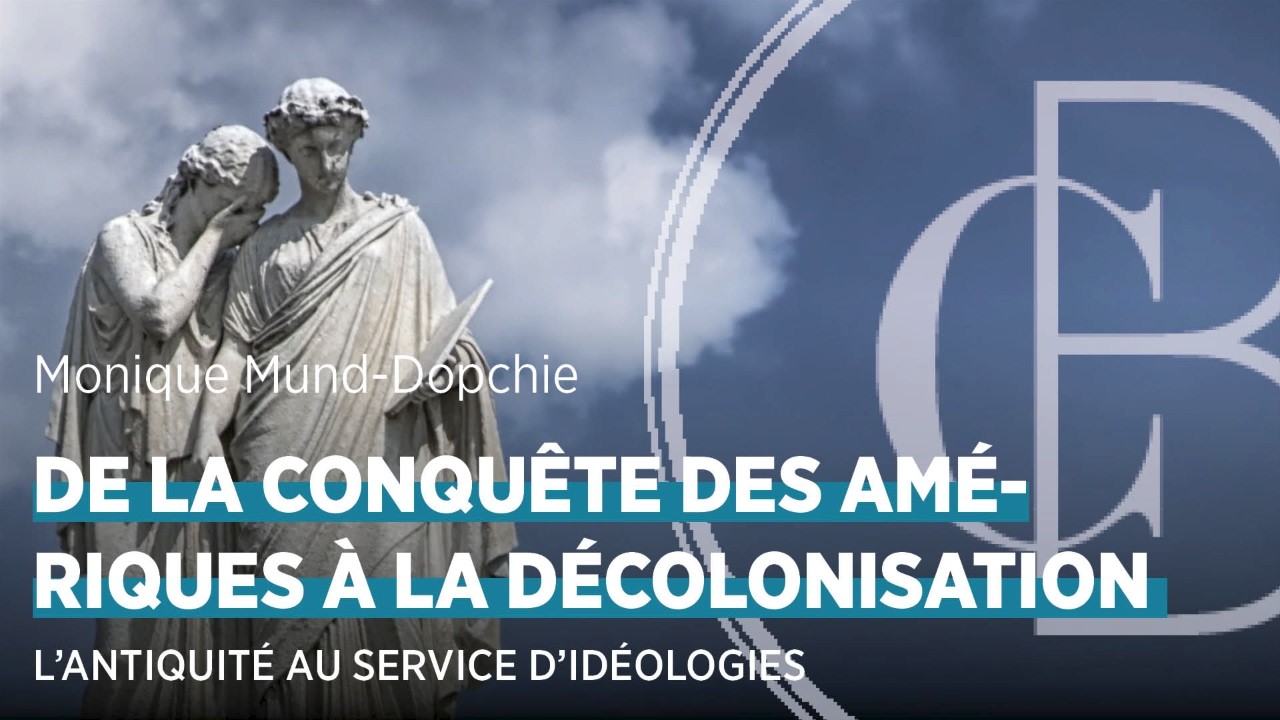
De la conquête des Amériques à la décolonisation : l’Antiquité au service d’idéologies
From the Conquest of the Americas to Decolonization: Antiquity in the Service of Ideologies
Title history
- De la conquête des Amériques à la décolonisation : l’Antiquité au service d’idéologies — observed on 20261117-1426 UTC (YouTube)
Keywords
Summary
190 words
Critical Evaluation
Value of the Information & Strength of the Argument
The lecture provides substantial value by demonstrating that references to antiquity were not monolithic but served diverse and often contradictory purposes. The argumentation is careful and well-supported: the speaker quotes primary texts and situates them in their historical and juridical contexts. She convincingly shows how the Atlantis myth was deployed by Spanish chroniclers like López de Gómara and Zarate to support different claims, while Fernando Colón used it to defend his father’s privileges. The analysis of Aristotle’s doctrine of natural slavery and its application in the Valladolid controversy is particularly illuminating, as it contrasts Sepúlveda’s dehumanizing interpretation with Las Casas’ defense of Amerindian rationality. The lecture also acknowledges the limitations of her scope (French case) and the ongoing reception by formerly colonized peoples, which adds depth. The argumentation is logically structured and avoids oversimplification, making a compelling case for the enduring political malleability of classical texts.
Scientific Rigor, Source Quality, Title Accuracy
The lecture demonstrates high scientific rigor. The speaker, an emeritus professor and member of the Royal Academy, relies on a corpus of primary texts, including works by López de Gómara, Zarate, Sarmiento de Gamboa, and the writings of the Valladolid disputants. She engages critically with these sources, noting biases and contextual factors. The sources mentioned are relevant to the argument and are quoted accurately. The title is well matched to the content: it explicitly promises an analysis of antiquity’s role in colonial and post-colonial ideologies, and the lecture delivers exactly that. However, the focus on the French colonial period is a deliberate limitation, which is disclosed early. The presentation also touches on post-colonial reactions, though briefly. Overall, the sources and their use meet scholarly standards, and the title faithfully represents the scope.
293 words
Title / Content Match
The title accurately reflects the content, which systematically explores how classical Greek and Roman references were employed to justify colonial and post-colonial ideologies, from the conquest of the Americas to the modern era.
Quality & Reliability
9/10
The lecture is delivered by a distinguished professor of classical philology and history, based on a thorough analysis of primary sources. The arguments are well documented and historically grounded, with clear references to specific texts and debates. The presentation is balanced and acknowledges alternative viewpoints, though it focuses on the French colonial case in the modern period.
Key Moments
Markers derived by PSI from the transcript: the creator did not define chapters.
- Introduction: the lecture aims to analyze how ancient Greek and Roman texts were used to justify colonial and post-colonial domination.
- Context before 1492: the world was seen as three continents, and Christophe Colomb's voyages did not change this view; Amerigo Vespucci's discovery of a new continent is discussed.
- Use of Atlantis and other antique texts to claim prior knowledge or rights over American territories; examples from Spanish chroniclers like Lopez de Gómara and Zarate.
- Aristotle's doctrine of natural slavery and its application to Amerindians; the encomienda system and the Valladolid controversy between Sepúlveda and Las Casas.
- Montaigne's perspective on the Americas as an autonomous world, and reflection on the transmission of ancient heritage in the globalized era.
Cited Sources
- Collège Belgique – Programme and resources — The official page of the Collège Belgique where the lecture was given, providing institutional context and access to other lectures.
- Playlist of lectures 2026 — A playlist containing recordings of other lectures from the Collège Belgique in 2026, offering related academic content.
Contribution & Novelties
This lecture offers an original synthesis of how classical antiquity was weaponized in colonial ideologies, moving beyond a simple condemnation to show the nuanced and sometimes contradictory uses of ancient texts. It fills a gap by systematically comparing sixteenth-century Spanish justifications with later French imperialist discourse, and by incorporating the perspective of formerly colonized peoples. The analysis of the Valladolid debate is particularly fresh, as it highlights the role of Aristotle’s Politics as a foundational text in legal and moral arguments.
Pour aller plus loin :
- School of Salamanca — A key intellectual movement that influenced debates about the nature and rights of indigenous peoples, directly relevant to the Valladolid controversy.
- Natural slavery — The Aristotelian concept central to Sepúlveda’s argument, with its historical impact on colonial ideology.
- Reception studies — A theoretical framework for understanding how ancient texts are reinterpreted in different eras, pertinent to the lecture’s overall method.
150 words
Radar Profile
The radar profile shows high scores for information quality and reliability, reflecting the lecture's scholarly depth and strong sourcing. The quantity of information is also high, though the technical level is moderate, as the content is accessible to an informed general audience. The overall profile suggests a well-balanced, authoritative presentation.