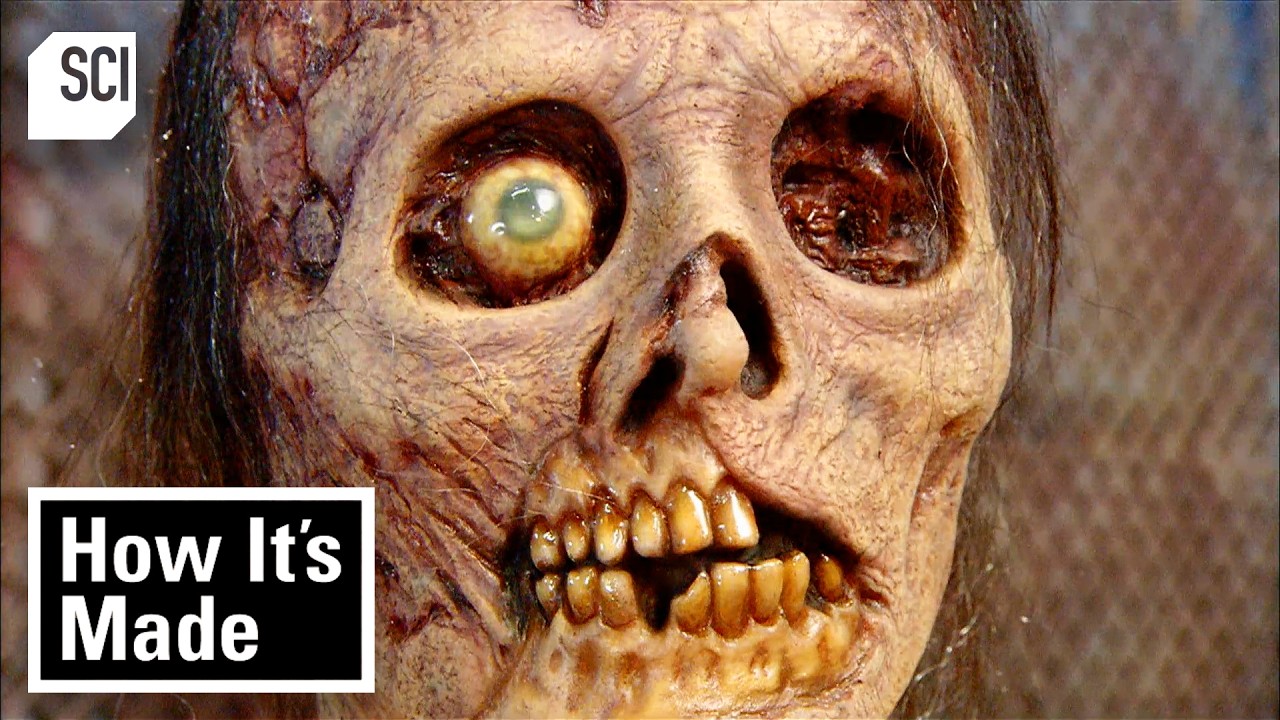
A How It's Made Halloween! | How It's Made | Science Channel
Title history
- A How It's Made Halloween! | How It's Made | Science Channel — observed on 20261027-1851 UTC (YouTube)
Keywords
Summary
112 words
Critical Evaluation
Value of the Information & Strength of the Argument
The value of this documentary lies in its clear, methodical explanation of diverse manufacturing processes, making complex industrial techniques accessible to a broad audience. The argumentation is solid, as each segment follows a logical sequence from raw material to finished product, often explaining the purpose of each step (e.g., tempering chocolate for texture, adding fiberglass cores for sword flexibility). The use of concrete numbers (temperatures, pressures, quantities) enhances credibility and informational depth. The visual demonstrations support the narration effectively, providing strong evidence for the claims made.
Scientific Rigor, Source Quality, Title Accuracy
The scientific rigor is moderate: while the processes are accurately described from an observational standpoint, the video does not cite primary studies or academic sources. It relies on industrial expertise and standard manufacturing knowledge, which are generally reliable but not explicitly verified. The title ‘A How It’s Made Halloween!’ aptly captures the content, as it groups items associated with Halloween (costumes, candy, horror props). The timing and pacing of segments match the description, and the title does not mislead. Overall, the content is trustworthy for general educational purposes, though not at a level of academic citation.
197 words
Title / Content Match
Title accurately reflects the Halloween-themed compilation of manufacturing segments.
Quality & Reliability
8/10
The video provides detailed, step-by-step explanations of various manufacturing processes, and the production is professionally made by a reputable channel. However, it lacks cited external sources, relying on internal knowledge.
Key Moments
Markers derived by PSI from the transcript: the creator did not define chapters.
- Cap guns manufacturing; injection molding and zinc die casting shown.
- Latex swords made from foam, fiberglass core, and latex coating.
- Medieval axes forged with layered steel, forge welding, and power hammer.
- Chocolate coins: tempering, punching, foil wrapping, and embossing.
- Chocolate hearts: epoxy molds, filling, cooling, and packaging.
- Metal caskets: stamping, welding, powder coating, and lining.
- Gummy candies and licorice: extrusion, starch molding, and coating.
- Jelly beans: starch impressions, center formation, sugar coating, and polishing.
- Candy wafers: classic confection production (description cut off in transcript).
Contribution & Novelties
This compilation provides a comprehensive overview of manufacturing processes for Halloween-related items, offering viewers a behind-the-scenes look at industrial production. While the content is not novel research, it effectively synthesizes knowledge about materials and techniques in an engaging format. The value lies in the clear demonstration of processes like die casting, injection molding, and chocolate tempering, which are often opaque to the public.
Pour aller plus loin :
- Injection molding — Essential for understanding plastic part production, as seen with cap gun grips.
- Die casting — Explains the zinc casting processes used for cap gun bodies.
- Tempering (chocolate) — Highlights the science behind chocolate crystal structure, key for coins and hearts.
- Latex — Material used for swords, relevant to the flexible prop making.
- Starch molding — Technique used for gummy candies and jelly beans.
134 words
Radar Profile
The radar chart likely shows a fairly balanced profile with high scores in information quantity and quality, moderate technical level, and high reliability. This indicates a content-rich and dependable documentary, though not highly specialized in theoretical depth.