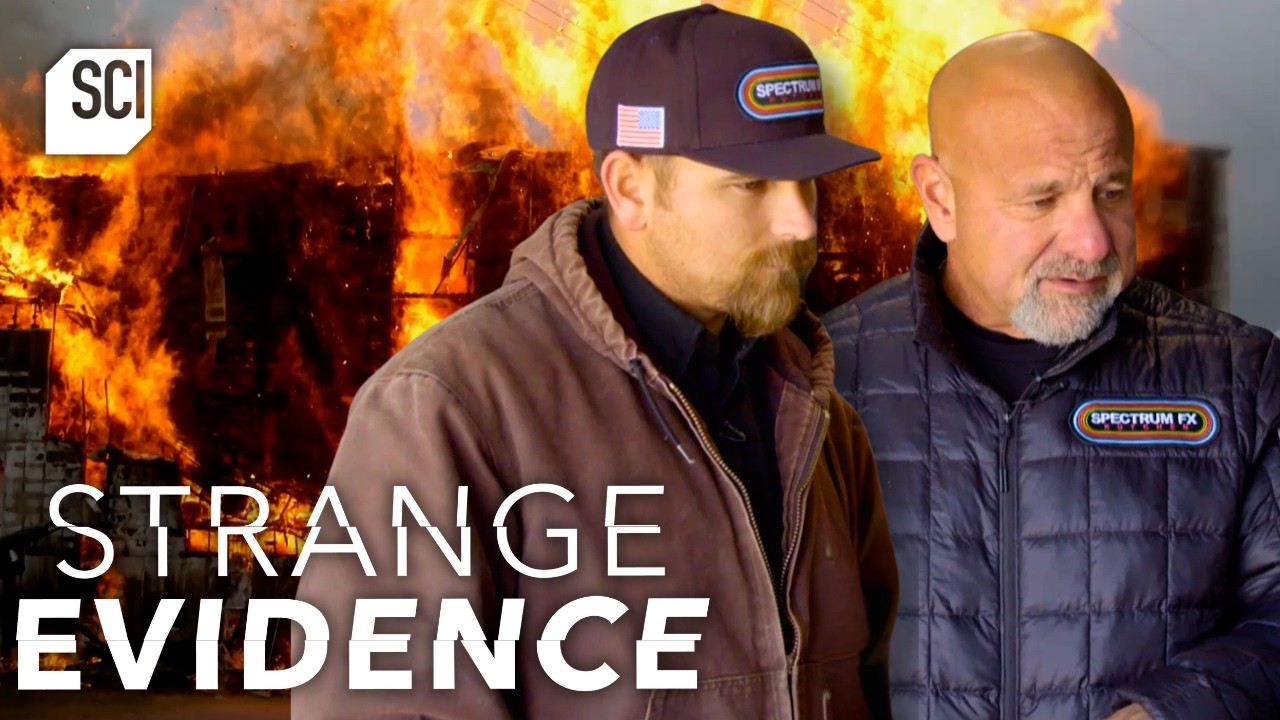
The Science Behind Fire and Explosions 🔥💥 Strange Evidence | Science Channel
Keywords
Summary
130 words
Critical Evaluation
Value of the Information & Strength of the Argument
The video provides substantial educational value by demonstrating the scientific method applied to puzzling phenomena. It uses experiments and expert analysis to support each explanation, effectively conveying concepts like fire whirl behavior, combustion, and high-voltage electrical arcs. The argumentation is generally solid, though some segments rely on plausible but not definitive evidence, such as the cause of the fire tornado. The narrative is engaging and reinforces critical thinking about viral footage.
Scientific Rigor, Source Quality, Title Accuracy
The scientific rigor is moderate: the show employs qualified experts and recreates experiments, but the sources behind the claims are not explicitly referenced on-screen or in the description, which limits verifiability. The title is accurate and matches the content, consisting of a series of case studies. The production values are high, and the explanations are accessible, but the lack of citable sources reduces its scholarly reliability.
152 words
Title / Content Match
The title accurately reflects the content, which explores the scientific explanations behind various fire and explosion phenomena observed in surveillance footage.
Quality & Reliability
7/10
The video presents expert analyses and experimental replications, but some hypotheses are speculative and lack explicit sources. The production is from a reputable science channel, but the lack of detailed citations reduces its scholarly rigor.
Key Moments
Markers derived by PSI from the transcript: the creator did not define chapters.
- Fire tornado on a lake in Bardstown, Kentucky, captured by helicopter surveillance.
- Researcher Michael Gollner recreates a fire tornado in the lab to study its formation.
- Investigation of the burning crater in Turkmenistan, ruling out volcanic and nuclear causes.
- Blue flame sulfur fire in Worland, Wyoming, linked to an abandoned sulfur mine.
- Experiment recreating a highway fire in China caused by a leaking fuel tanker.
Cited Sources
- Stream Strange Evidence on Discovery+ — Official streaming platform for the Strange Evidence show
- The Science Behind Fire and Explosions - YouTube Video — The video itself
Contribution & Novelties
The video offers original analysis of rarely documented events, combining professional expertise with practical experiments. It provides clear explanations for phenomena that might otherwise be misinterpreted.
Pour aller plus loin :
- Fire whirl — A direct concept related to the fire tornado segment.
- Trinitite — Connects to the nuclear test theory in Turkmenistan.
- Yellowstone Caldera — Relevant to the possible supervolcano threat.
- Sulfur — Explains the blue flame phenomenon.
69 words
Radar Profile
The scores indicate a balanced profile with strong information quantity and reliability, moderate technical level, and good quality. The video excels in providing diverse examples and experiments, while maintaining a level accessible to general audiences.