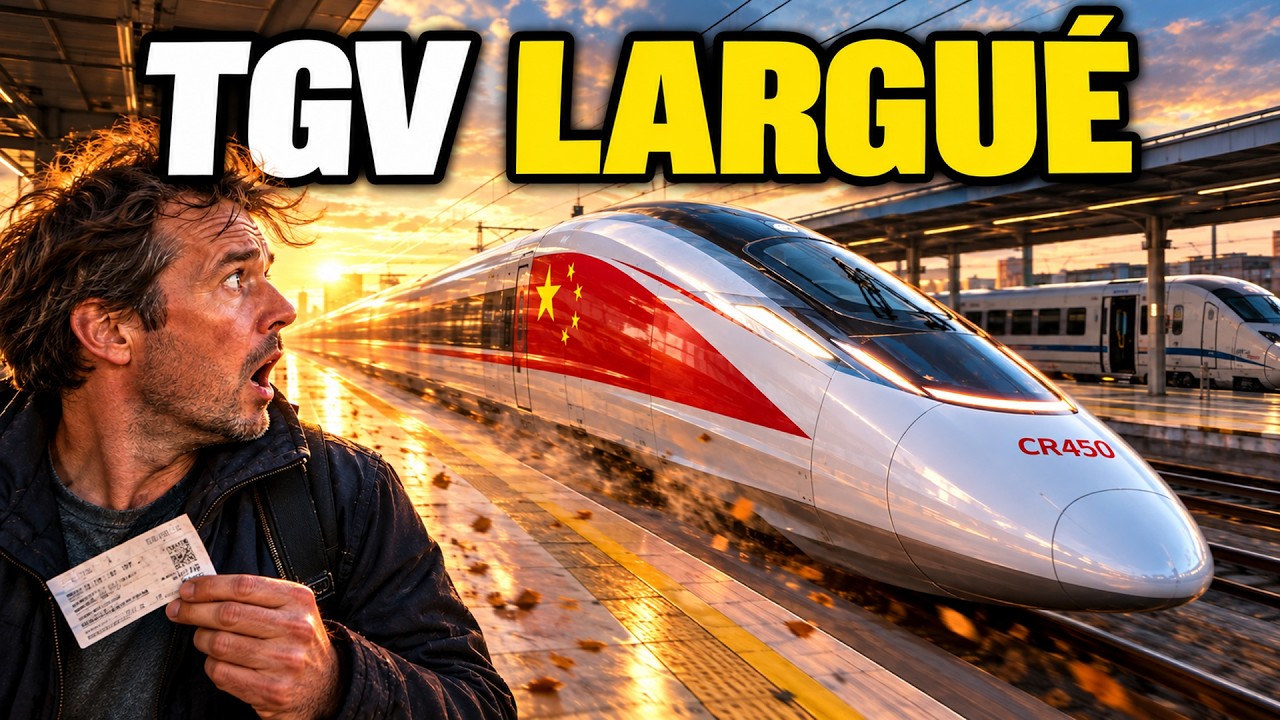
Le Train Chinois À 400 km/h Qui Ridiculise Le TGV
The 400 km/h Chinese Train That Puts the TGV to Shame
Title history
- Le Train Chinois À 400 km/h Qui Ridiculise Le TGV — observed on 20261025-0950 UTC (YouTube)
Keywords
Summary
185 words
Critical Evaluation
Value of the Information & Strength of the Argument
The video provides valuable insights into the geopolitical dimensions of high-speed rail, moving beyond simplistic comparisons of train speeds to examine industrial strategy, subsidies, and market access. It argues convincingly that while China leads in raw performance metrics, Alstom’s export success and European legal protections level the playing field. The argument is well-structured, with each assertion backed by cited sources, and it successfully challenges a one-sided narrative. The analysis of China’s debt-ridden railway model adds depth, showing that high-speed rail expansion is not purely a technical triumph but a costly state project.
Scientific Rigor, Source Quality, Title Accuracy
The video demonstrates strong scientific rigor by consistently citing credible sources such as Reuters, the World Bank, industry journals, and official reports. It transparently distinguishes between verified facts and interpreted data, and avoids speculative claims. However, the title is somewhat sensational and may mislead viewers into expecting a one-sided critique, while the content offers a balanced assessment. This slight mismatch is common in documentary journalism but detracts from the otherwise rigorous approach.
179 words
Title / Content Match
The title implies a clear defeat of the TGV, but the content presents a nuanced comparison, acknowledging China's speed and network advantages while highlighting Alstom's export strength and legal protections. The tone is more balanced than the title suggests.
Quality & Reliability
8/10
The video is well-researched, citing multiple industry publications, news agencies, and institutional reports. It clearly distinguishes between test, design, and commercial speeds and provides context for every figure. Some sources are secondary media reports, but the overall analysis is balanced and transparent.
Chapters
Cited Sources
- Boursorama — Reported the SNCF and Alstom announcement of TGV M delays and the latest schedule.
- Wikipedia — Used for compiled data on CR450 specifications, TGV M timeline, and Chinese rail history.
- World Bank — Study on the cost of high-speed rail lines in China versus Europe.
- Reuters — Coverage of Morocco's TGV M order and other industry news.
- Asia Times — Report on China State Railway's debt and profitability of high-speed lines.
- Rolling Stock World — Article providing CRRC financial data and R&D spending.
- Railway News — Report on China's high-speed rail network reaching 50,000 km.
- International Railway Journal — Report on CRRC withdrawing from Bulgarian tender.
- Caixin — Report on Lisbon metro contract and CRRC replacement.
- Railway Age — Report on CRRC's delivery issues in Boston.
- Cleary Gottlieb — Law firm advising on Alstom's acquisition of Bombardier.
- TradingSat — Source for Alstom's financial results and order book.
- Express — Report on Moroccan tender where CRRC was eliminated.
Concurring Sources
- Wikipedia — Confirms CR450 test speed and design speed with other sources.
- Rolling Stock World — Provides financial data consistent with other industry reports.
Contribution & Novelties
The video’s contribution lies in its balanced analysis of the high-speed rail rivalry, demonstrating that while China holds a technical lead in terms of speed and network size, Alstom maintains competitiveness through export contracts and European regulatory protection. It highlights the role of subsidies and debt in China’s model and the legal barriers that keep CRRC out of the EU market.
Pour aller plus loin :
- High-speed rail in China — Provides an overview of China’s high-speed network expansion and technology.
- TGV — Historical and technical background on France’s TGV system.
- Alstom — Company profile and market position.
- CRRC — Details on the Chinese rolling stock conglomerate.
107 words
Radar Profile
The radar chart shows strong scores on information quantity and reliability, with slightly lower technical depth and validity, reflecting a well-researched but accessible analysis.