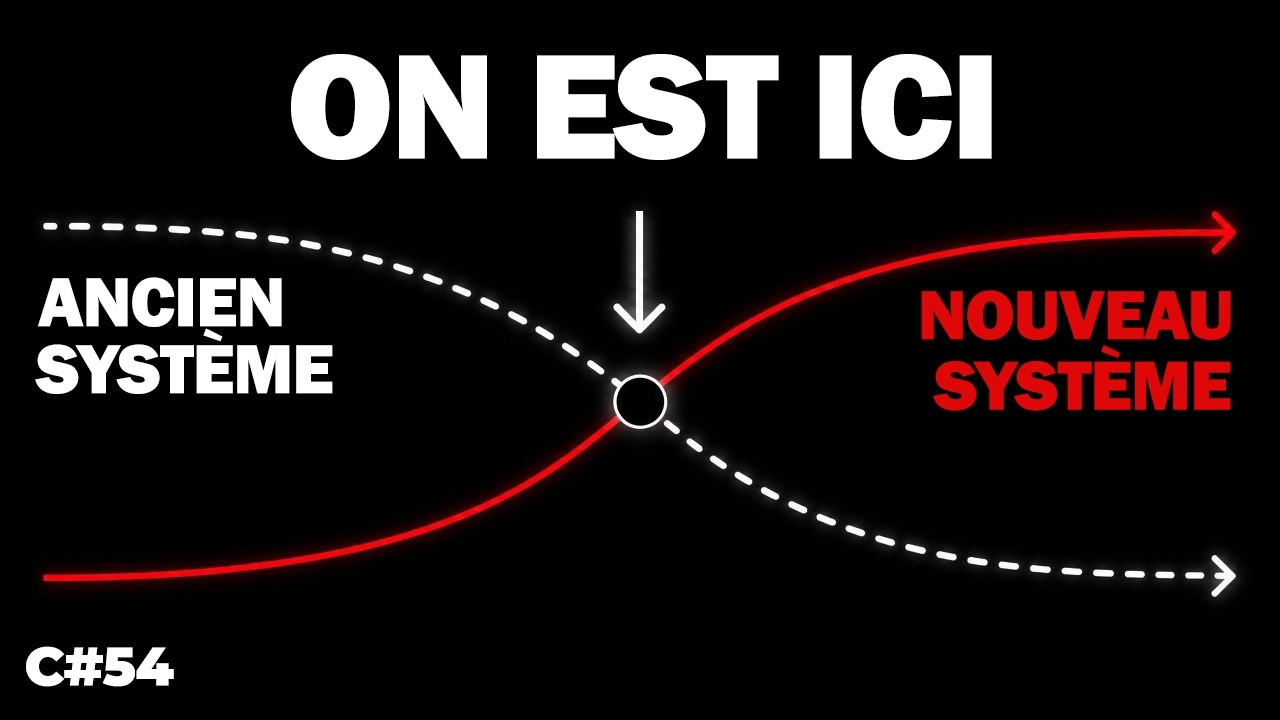
2027 va être (très) compliquée
2027 is going to be (very) complicated
Title history
- 2027 va être (très) compliquée — observed on 20261102-0910 UTC (YouTube)
- Pourquoi l’économie mondiale entre dans la zone rouge — observed on 20261101-0854 UTC (YouTube)
Keywords
Summary
138 words
Critical Evaluation
Value of the Information & Strength of the Argument
The video provides a coherent narrative linking bond yields to macroeconomic forces, offering a useful overview of how supply chains, state debt, and tech investments interact. The argumentation is structured and accessible, but it oversimplifies complex relationships (e.g., the direct causal chain from bond yields to stock market crashes) and relies on selective historical parallels. The value is mainly in stimulating critical thinking about interest rates and investment strategy, though it lacks depth and rigorous evidence. The investment advice is practical but subjective, and the presentation of specific company metrics is informative yet promotional.
Scientific Rigor, Source Quality, Title Accuracy
Scientific rigor is limited: the video cites only vague references (e.g., ‘Bloomberg analysis’, ‘JPMorgan’) without providing specific URLs or reports. The data seems plausible but cannot be easily verified from the transcript. The description links are exclusively affiliate/promotional, offering no scholarly sources. The title is somewhat clickbaity but not entirely inaccurate. No critical evaluation of alternative viewpoints is provided. Overall, the content is more opinionated commentary than rigorous analysis.
178 words
Title / Content Match
The title is dramatic but reflects the video's central thesis that rising global bond yields signal serious economic strain. The content matches the alarmist tone while also offering investment advice.
Quality & Reliability
4/10
The video presents specific numerical claims (bond yields, debt levels, spending figures) but provides no explicit citations for most data. The reasoning is largely plausible but simplified, and the content is heavily promotional, especially the Freedom24 segment. The overall reliability is moderate; factual claims are not independently verifiable from the material itself.
Key Moments
Markers derived by PSI from the transcript: the creator did not define chapters.
- Introduction of the alarming chart showing global bond yields at 4%.
- First force: inflation persists due to supply chain issues (Ormuz, Ukraine, El Niño).
- Second force: record government borrowing and interest costs.
- Third force: tech companies borrowing heavily for AI infrastructure.
- Consequences: historical bond yield thresholds and shift to free cash flow focus.
- Stock analysis and purchases of Fastenal, Visa, Microsoft on Freedom24.
Cited Sources
- Freedom24 Brokerage — Used to execute trades and access financial data for analysis.
- Invvest Portfolio Tracker — Free tool for tracking investments and dividend income.
Contribution & Novelties
The video’s original contribution lies in framing tech companies’ massive borrowing as a competitive force against sovereign debt, a perspective not widely discussed. It offers a practical investment strategy centered on free cash flow. However, its novelty is limited by a lack of deep research and reliance on commonly known economic principles.
Pour aller plus loin :
- Free Cash Flow – Wikipedia — Concept central to the investment approach.
- United States 10-Year Treasury Note – Wikipedia — The bond yield discussed as a key indicator.
- El Niño – Wikipedia — Climatic phenomenon cited as a supply-side shock.
- Strait of Hormuz – Wikipedia — Chokepoint affecting oil and gas trade.
109 words
Radar Profile
The radar profile shows moderate quantity of information and technical level, but low quality and reliability due to promotional biases and lack of verifiable sources. The video is informative for beginners but not robust for rigorous analysis.