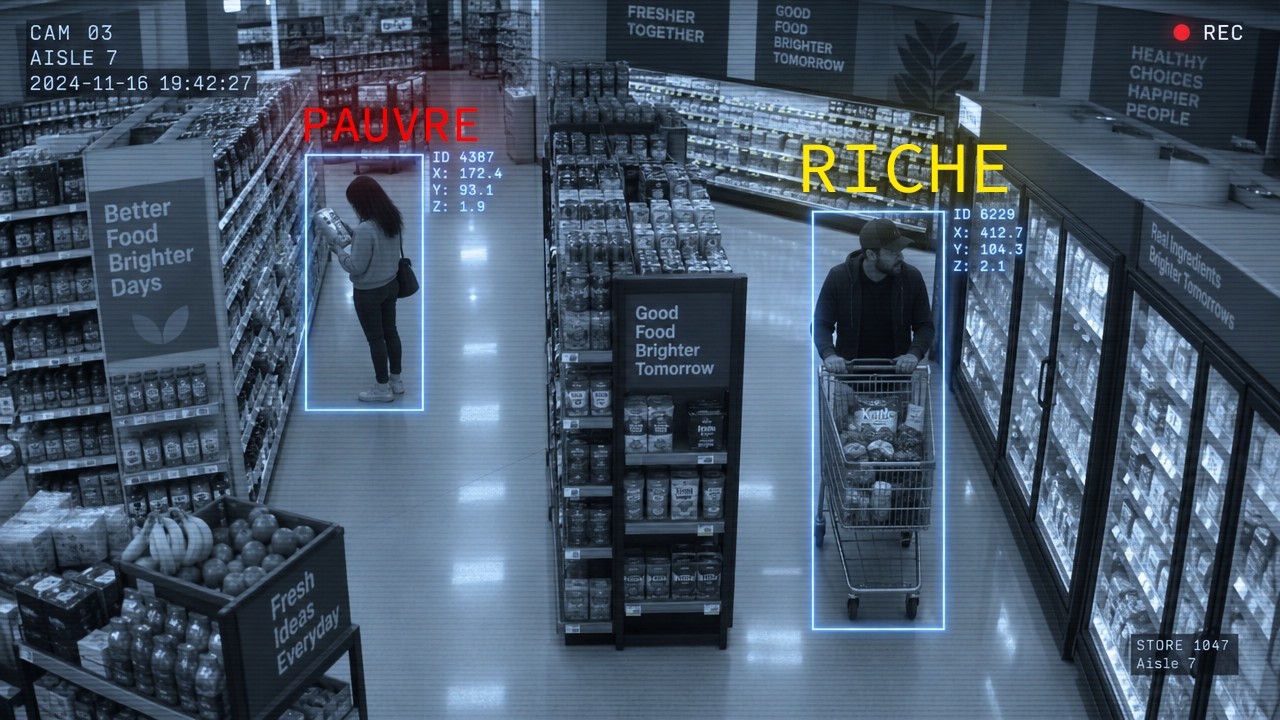
La machine cachée qui décide du prix de vos courses
The Hidden Machine That Decides Your Grocery Prices
Title history
- La machine cachée qui décide du prix de vos courses — observed on 20261115-0829 UTC (YouTube)
Keywords
Summary
183 words
Critical Evaluation
Value of the Information & Strength of the Argument
The video provides substantial value by synthesizing complex industry practices into understandable explanations, highlighting the often invisible influence of data analytics on everyday purchases. The argumentation is well-structured, starting with historical context, detailing data collection methods, and demonstrating practical applications through concrete examples. However, the narrative occasionally leans toward sensationalism, potentially overstating the manipulative power of these systems without balanced counterpoints. The evidence is largely anecdotal and lacks direct citations, but the logical progression of ideas supports a convincing case about the opaque nature of retail data exploitation.
Scientific Rigor, Source Quality, Title Accuracy
The scientific rigor is moderate; the video presents factual claims about historical events and company practices, but offers no verifiable sources except for a personal tool link in the description. While the information aligns with known industry knowledge, the lack of references undermines its academic credibility. The title accurately describes the content, and the video stays on topic throughout, even when mentioning additional related videos.
168 words
Title / Content Match
The title accurately reflects the video's focus on the hidden data infrastructure and algorithmic decision-making that determines retail prices, aligning well with the content.
Quality & Reliability
8/10
The video presents a well-researched and coherent investigation into the data-driven mechanisms behind retail pricing, but relies heavily on general knowledge and personal commentary without formal citations or peer-reviewed references.
Key Moments
Markers derived by PSI from the transcript: the creator did not define chapters.
- Introduction to the mystery of retail pricing and the hidden company behind it
- Historical origins: Arthur Nielsen and the first store audits in the 1930s
- The 1974 barcode breakthrough and beginning of electronic data collection
- Digital data harvesting via apps like Cleanfox and Rakuten Intelligence
- Explanation of the four pricing levers: algorithmic pricing, planograms, promotions, and negotiations
- Future trends: dynamic pricing, electronic shelf labels, and AI-driven demand prediction
- Conclusion and teaser for a related video on the eyeglasses market
Cited Sources
- Invvest - free investment tracking tool — Mentioned in the video description as a free tool by the creator.
Contribution & Novelties
This video offers a comprehensive overview of an often opaque industry, connecting historical data collection methods with modern algorithms and highlighting the ethical implications for consumer autonomy. It synthesizes public knowledge about NielsenIQ and related practices into a single accessible narrative. The original contribution lies in framing these practices as a unified ‘machine’ that controls supermarket shelves, making the issue tangible for average viewers. It also contributes by detailing the use of mobile apps as overlooked data sources. For further reading:
Pour aller plus loin :
- NielsenIQ Wikipedia article — Provides background on the company’s history and operations.
- Price elasticity of demand — Explains the economic concept central to algorithmic pricing.
- Dynamic pricing — Discusses the practice of real-time price adjustments, as mentioned in the video.
- Cleanfox app official page — The app is cited as an example of digital data collection via email scanning.
145 words
Radar Profile
The radar profile shows a high quantity of information with moderate technical depth and reliability, indicating a broad overview suited for general audiences.