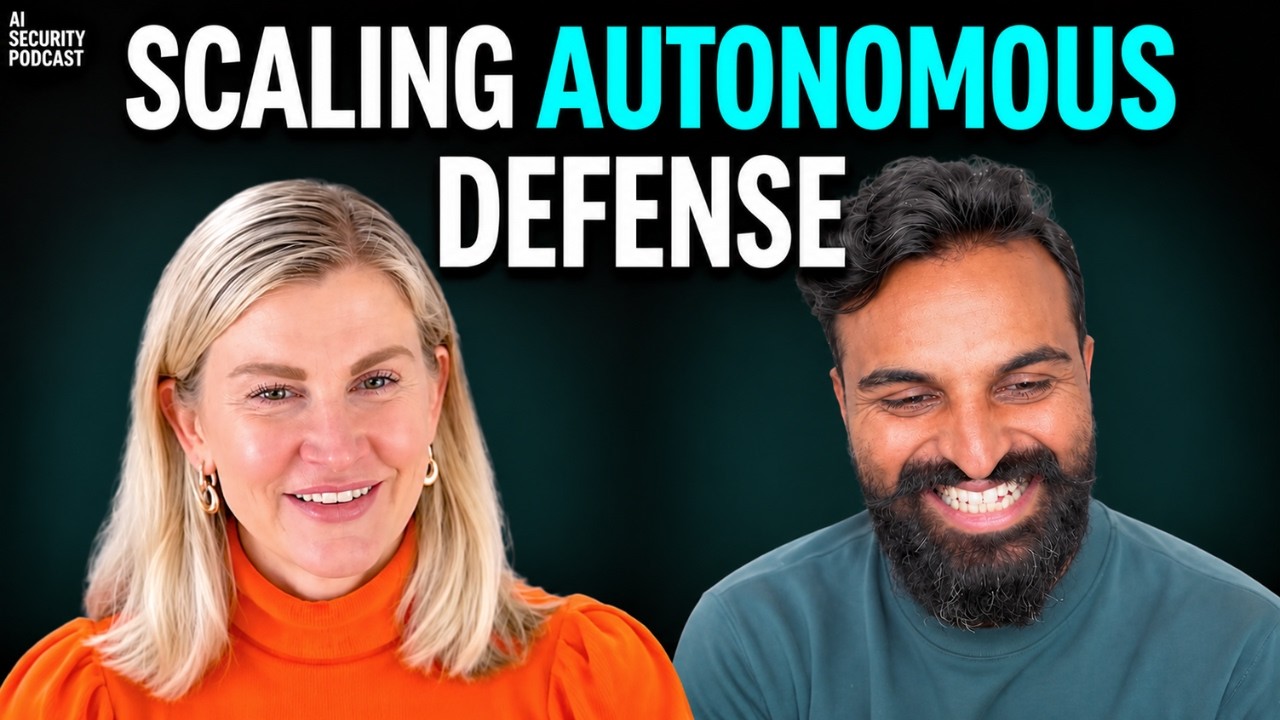
How Fortune 500 CISOs Are Achieving Autonomous Defense | Galina Antova, Kai
Title history
- How Fortune 500 CISOs Are Achieving Autonomous Defense | Galina Antova, Kai — observed on 20261119-1958 UTC (YouTube)
Keywords
Summary
190 words
Critical Evaluation
Value of the Information & Strength of the Argument
The video offers valuable insights from a seasoned entrepreneur in cybersecurity, with concrete examples and practical advice. Antova’s argumentation is coherent, drawing on her experience at Claroty and current engagement with Fortune 500 clients. She effectively contrasts past and present security operations, illustrating the urgency of adopting autonomous defense. However, claims are often anecdotal and lack quantitative evidence, limiting their generalizability. The discussion is persuasive but not empirically rigorous.
Scientific Rigor, Source Quality, Title Accuracy
The podcast does not cite specific external sources, but the guest’s credentials and the podcast’s official links (website, newsletter, research lab) lend some credibility. The content is based on expert opinion rather than peer-reviewed research, which is acceptable for a practitioner-oriented discussion. The title accurately represents the topic, aligning well with the content. The description and chapters provide structure, enhancing clarity. Overall, scientific rigor is moderate, adequate for an industry podcast.
155 words
Title / Content Match
The title accurately reflects the content, which focuses on how large enterprises are implementing autonomous defense strategies, as discussed with the CEO of Kai.
Quality & Reliability
7/10
The discussion is based on the guest's direct experience as a CEO in cybersecurity, offering practical insights. However, it is an opinion-based podcast with no empirical data or external validation. Claims about costs and trends are anecdotal.
Chapters
- Introduction to Autonomous Defense and AI Security
- Galina Antova’s Background from Claroty to Kai
- The Accelerated Pace of AI Security Adoption in the Enterprise
- Shifting Mindsets Around Auto-Remediation and Production Risk
- Defining the Boundary Between Human Trust and Autonomous Agents
- How to Start Scaling Autonomous Workflows in Exposure Management
- Maintaining Accountability and Determinism in AI Security
- The Financial Reality of Building In-House AI Security
- Integrating Agentic Layers with Existing Cybersecurity Tools
- The Inevitable Consolidation of the Security Tool Ecosystem
- How Autonomous Defense Elevates the Strategic Role of the CISO
Cited Sources
- AI Security Podcast — Official podcast website for episodes and resources.
- AI Security Lab — Research lab associated with the podcast.
- AI Cybersecurity Newsletter — Newsletter for staying updated on AI security.
- AI Security Podcast LinkedIn — LinkedIn page for the podcast.
Concurring Sources
- AI Security Lab — The podcast's research lab may offer supporting analysis on AI attack vectors and defense.
Contribution & Novelties
The episode provides a practitioner’s perspective on how leading enterprises are operationalizing AI-driven autonomous defense, sharing specific adoption timelines and cost considerations. It highlights the strategic shift in CISO roles and the consolidation of security tools, offering a forward-looking view. The discussion of human trust boundaries and deterministic automation adds nuance to common narratives about AI replacing human decision-making.
Pour aller plus loin :
- Autonomous security — Relevance: Explores the concept of self-managing security systems, aligning with the topic.
- Vulnerability management — Relevance: Provides background on the process of identifying and remediating vulnerabilities, central to the discussion.
- Agentic AI — Relevance: Discusses AI agents capable of autonomous action, a key theme in the episode.
114 words
Radar Profile
The radar profile shows balanced scores across quantity, quality, technical level, and reliability, with technical level slightly lower. This indicates a substantive discussion that is approachable for a general security audience, relying on expert opinion rather than deep technical detail or verified data.