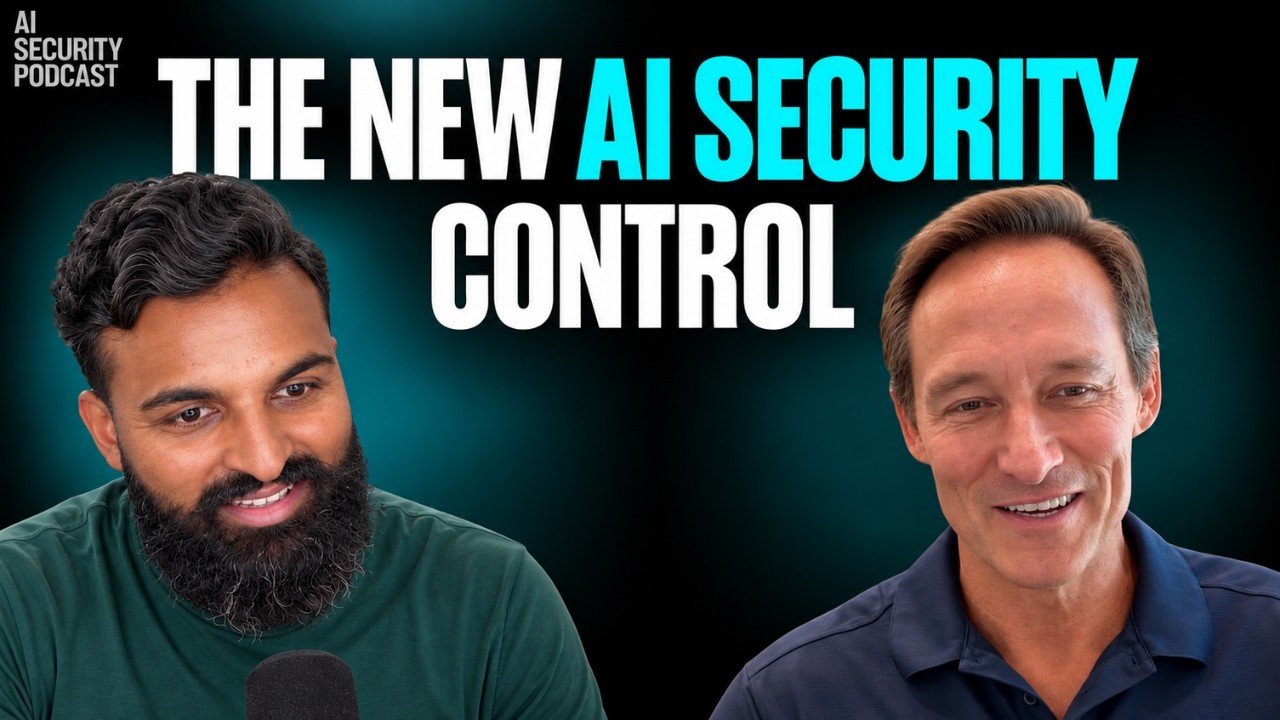
How to Secure Egress for AI Workloads | Doug Merritt, Aviatrix
Keywords
Summary
165 words
Critical Evaluation
Value of the Information & Strength of the Argument
The video provides valuable insights into a critical yet often overlooked aspect of cloud and AI security: egress control. Merritt effectively argues that traditional prevention and detection approaches are inadequate against sophisticated attackers who use legitimate credentials and zero-day exploits. He proposes containment as the fallback, emphasized through the concepts of reachability, blast radius, and network segmentation. The argumentation is coherent and grounded in real-world incidents, such as the Hugging Face/OpenAI attack, and industry statistics from CrowdStrike. However, some explanations are high-level and could benefit from more technical depth for practitioners. Overall, the discussion offers a compelling case for prioritizing network-based containment in modern security strategies.
Scientific Rigor, Source Quality, Title Accuracy
The video relies on the professional experience of Doug Merritt, providing an expert opinion rather than formally cited research. Statistical claims, such as ‘over 80% of attacks used valid credentials’, are attributed to CrowdStrike without a specific report reference. The discussion references the OSI model and shared responsibility model, which are standard industry concepts. The title accurately matches the content, focusing on egress security for AI workloads. The video also mentions the Hugging Face incident, but without a detailed citation. While the information is practically useful, the lack of verifiable sources and empirical evidence reduces its scientific rigor. The presentation is engaging and structured, with clear chapters, but lacks peer-reviewed backing.
232 words
Title / Content Match
The title accurately reflects the content: a discussion on securing egress for AI workloads, focusing on containment, blast radius, and network segmentation.
Quality & Reliability
7/10
Interview with Doug Merritt, CEO of Aviatrix and former CEO of Splunk, providing expert insights on network security. While based on extensive professional experience, the content is subjective opinion rather than peer-reviewed research. The claims are consistent with well-known security concepts, but specific statistics are cited without detailed sources.
Chapters
- Introduction to Containment and Network Security
- Doug Merritt's Background and Journey from Splunk to Aviatrix
- The Evolution from Prevention to Detection and Response
- Why Detection Must Be Paired with Blast Radius Management
- Implementing Cloud Egress Controls and Network Segmentation
- Overcoming the Fear of System Downtime in Network Security
- Applying the OSI Model to Modern Cloud and AI Workloads
- Managing Default-Permissive Architectures in Public Clouds
- Identity-Based Network Policies for Serverless and Kubernetes
- The Reality of the Cloud Shared Responsibility Model
- Using Monitor Mode for Safe Egress Implementation
- Presenting Reachability and Blast Radius as Board-Level Metrics
Cited Sources
- AI Security Podcast — Official podcast website.
- AI Cybersecurity Newsletter — Newsletter for security updates.
- AI Security Podcast LinkedIn — LinkedIn page for the podcast.
Contribution & Novelties
The video brings a fresh perspective by advocating for a paradigm shift from detection-centric security to proactive containment, specifically applied to AI workloads. It argues that in the age of AI-driven attacks, where zero-day exploits and credential misuse are common, the only reliable defense is limiting the blast radius through strict egress controls and segmentation. The concept of using monitor mode to safely deploy egress controls, and presenting reachability and blast radius as board-level metrics, are practical innovations for security leadership.
Pour aller plus loin :
- Principle of least privilege — Core idea behind restricting egress and access.
- Network segmentation — Fundamental technique discussed for limiting lateral movement.
- Zero trust security model — Framework that aligns with the containment approach.
- Shared responsibility model — Related to cloud security discussions.
- Egress filtering — Concept, without URL, but relevant.
137 words
Radar Profile
The radar profile shows a balanced distribution with high scores in technical level and information quantity, reflecting the depth and breadth of the discussion. Quality and reliability scores are slightly lower due to the opinion-based nature, but overall the video provides a solid overview of egress security strategies.